Aoifinn Devitt: This series is kindly supported by GCM Grosvenor. GCM Grosvenor is a global alternative asset management firm with a longstanding commitment to supporting small, emerging, and diverse investment managers. For over 30 years, the firm has developed expertise in funding and guiding these managers as part of its broader activity across alternative investments. With over $20 billion in AUM dedicated to small and emerging managers and $16 billion in AUM dedicated to diverse managers, GCM Grosvenor leverages its experienced team, broad network, and proprietary sourcing capabilities to support their success. Through the Small, Emerging, and Diverse Manager Program, the firm creates opportunities for investors to access a wide range of talent while seeking to drive strong returns and impact. For more information, visit www.gcmgrovenor.com. Our next guest has a passion for learning. Hear from him about his career, which saw him cycle through finance, found a private equity firm, fulfill a role as Deputy Secretary and Chief Operating Officer in the US Department of Education, and now found a private equity firm focused on education startups. I’m.
Tony Miller: Aoifinn.
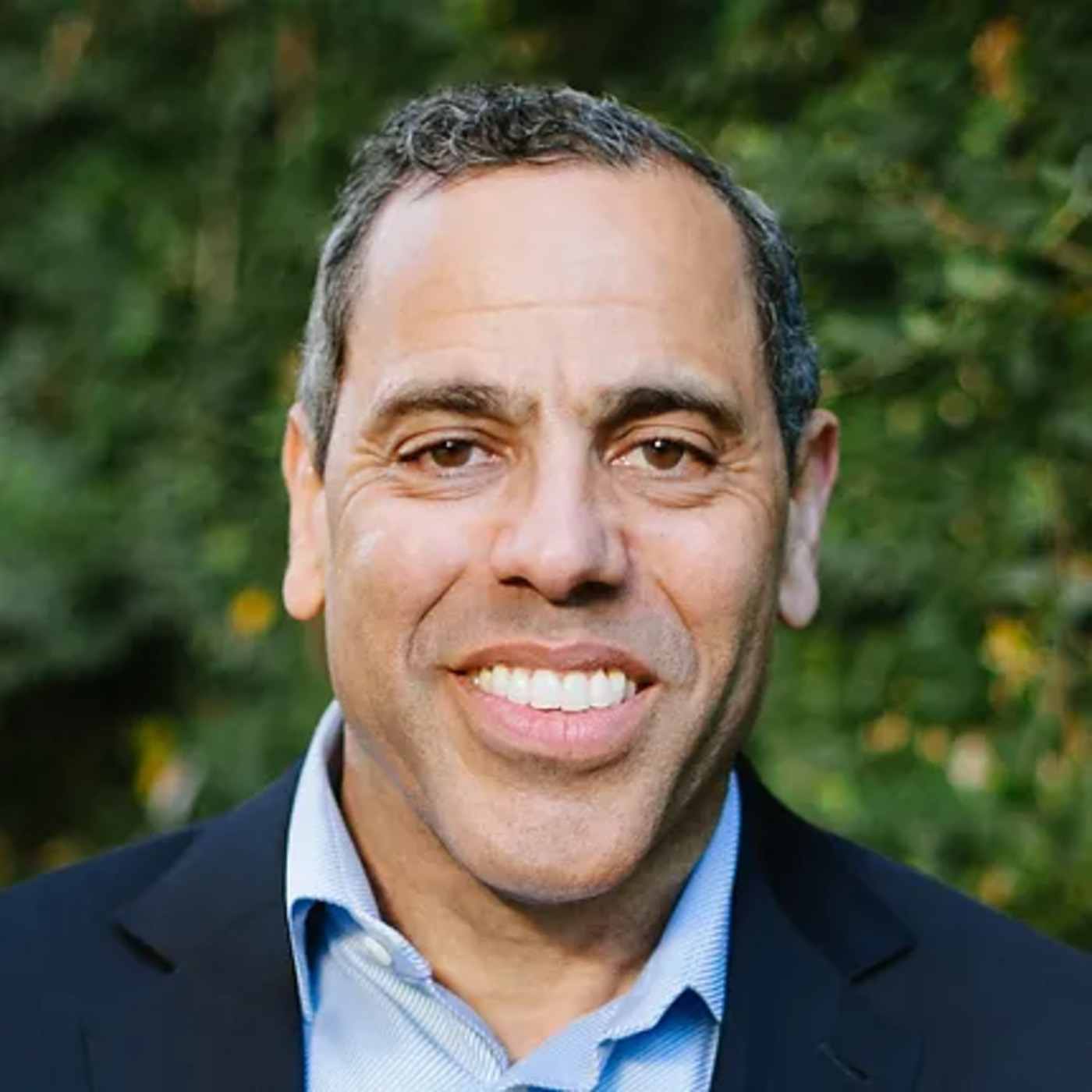
Aoifinn Devitt: Devitt, and welcome to the 50 Faces Podcast, a podcast committed to revealing the richness and diversity of the world of investment by focusing on its people and their stories. I’m joined today by Tony Miller, who is Managing Director of Excolari Equity Partners, a private equity firm focused on the education space. He holds a number of board roles, including Apollo Education Group, ACT, Criteria Corp, and GoGuardian. He was co-founder of the Vistria Group, a Chicago-based private equity firm, and prior to that was Deputy Secretary and Chief Operating Officer in the US Department of Education. Welcome, Tony. Thanks for joining me today.
Tony Miller: Thank you so much. I’m so happy to be able to join you today.
Aoifinn Devitt: Well, you’ve had extensive background that it’s kind of hard to know where to begin, but let’s start with where we are today. So why education? How did you become so interested in this area and what excites you? About the education area right now?
Tony Miller: I must say, I arrived at the education, which I would almost characterize as a capstone of my professional career. I mean, the short answer is I believe there’s tremendous opportunity to deploy private capital in education and to do so in such a way that you not only meet the demanding expectations of your investors, but frankly, you can have impact at a scale that’s both needed and can be lasting. And that’s a very fulfilling and satisfying place to be in one’s career. It also happens to be the culmination of a set of, if you will, career opportunities that have, I think, almost perfectly prepared me for this opportunity and our firm for this opportunity. And what I mean by that is we learn more about my background, having been an operator and kind of learned the importance of being an operator and growing and scaling a company to then transitioning to private equity and the importance of deploying capital. And then for me, having a stint serving in a public service role at the highest levels in the US Department of Education, really allowed me now to blend all 3 of those kind of experiences along with my colleagues to deploy capital again at a scale that really can deliver like significant impact. I think that’s very, very satisfying.
Aoifinn Devitt: Let’s just dig into that a little bit. So delivering capital at a scale that can deliver impact. What do you mean by that kind of scale? And is it in terms of countrywide? Because sometimes we’ll say like making impact one school at a time, one educator at a time. What does scale mean to you in this context?
Tony Miller: For me, what it means is it’s measured in the students, but in the thousands or tens of thousands in students. And I think one of the challenges in education in particular, human capital broadly, is having an innovative solution, having a better product, right, is necessary but not sufficient. It needs to be a product that can improve learning, but it’s got to be a product that improves learning and can scale across 10,000 school districts if you’re talking K-12, across 3,000 higher education institutions, across small, medium, and large enterprises if you’re talking about assessment and skill-building practices in the enterprise space. And so oftentimes what you find is they say, how do you actually then, you know, take an idea that has the potential to be disruptive, to potentially be significant value add, but really can scale to be something that’s, you know, servicing thousands, tens of thousands, hundreds of thousands? I think that’s the aspiration. And then for us, when you’re looking at the scale of enterprises in which we typically invest, companies that may have on the low end $50 million in revenue, on the higher end, you know, several hundred millions of dollars of revenue, you’re talking about how do they go to the next level of scale again. And so that’s what puts you in the, you know, tens of thousands, if not hundreds of thousands of satisfied customers or students or adult learners.
Aoifinn Devitt: I’d love to trace just how your prior career kind of trained you for this role, or at least, what aspects of it you bring to it. So McKinsey, public service, private equity, and the order, I think I’m probably getting that wrong. McKinsey, industry, private equity, public service. Can you talk us a little bit through the journey and what motivated each change?
Tony Miller: Sure. Yeah, for me, McKinsey was very satisfying, but like many consultants, even successful consultants, I never consider myself a lifelong consultant, meaning the notion of being able to influence a company of scale is not quite the same thing as being able to be an operator and to do it at scale. And so I was always intrigued with going back into an operating role. And so for me, I had the opportunity to join a founder entrepreneur at a growth equity stage company that was in the technology space. And I’d been doing work in software and say we’re a compliance software company. And it just so happened, an e-learning company serving the enterprise sector. And so for me, this was a unique opportunity to scale down all the things you learn as a consultant and then kind of how do you actually scale? What you realize very quickly is scaling a company, you have to have your products and services, of course, and that’s paramount. But you also have to build the team and you have to build your processes that can scale, that can systematically capture customer feedback, that can evolve the product to meet those needs. And so it’s those elements of, okay, it’s very different to have a working product versus having a working company that’s 3 times. And so that was kind of very formative for me. And having had that success, which you also realize is, boy, you know, the investor and their view and their ability to influence and align incentives is very, very compelling. And as an investor, you get the benefit of being able to have, if you will, a portfolio effect. So you actually be able to, in fact, you know, deploy these sets of skills across multiple enterprises in a portfolio. And that to me was very tempting and compelling. So that’s what led my transition. That coupled with an opportunity when I transitioned to Silver Lake. This was when Silver Lake, a leading global technology investment firm, this is in the mid-2000s, they were a Fund II. I think today they’re over $100 billion in assets under management. They were on Fund II, which was a $3 billion firm. And so again, this notion that the management and the leadership team there recognized that you could combine technology sector expertise and a whole kind of access to the ecosystem of Silicon Valley and technology trends and really understanding that at a time when people saw technology as risk and cycles. As investors, they say if you really bring the technical understanding and the industry understanding and network, you can develop strategic themes and invest behind them. But they also realize that if you really could bring an operator’s know-how and their founding partner, some of them had an operator’s know-how, you know how to not just have the strategic understanding, but the operating understanding of how in fact you react and exploit those themes. ‘Cause we all know, right? Planning is everything. But plans themselves, it’s about how do we react. And so having that operator’s understanding, I thought was very critical. And so that was my journey into private equity, an appreciation that if you had a long-term view of private equity, not the classic public equities, that you really could capture significant value. So that was very, very compelling to me. And I have said, I might have ended my career at Silver Lake, which is a great firm. I was afforded the opportunity to pause that part of my career move to Washington, D.C., and serve our newly elected president and his team, President Obama at the time, to help improve public education. And so it was something that through the network I had done work in previously in my career in education, I was politically active, but not you a, know, huge bundler or not a huge politico. This really was an outreach of an opportunity. And so if we go back in time to late December 2008, We’re at the kind of the peak of the greatest recession since the Depression. It’s a notion of newly incoming president trying to put together a trillion-plus stimulus package in order to reinvigorate the economy. And a president and his team recognizing that getting that kind of authority from Congress was kind of a once-in-a-term opportunity. And so the notion that if we get this ask from Congress, how can we allow it to have the maximum good? And so part of that was from a domestic policy agenda, How do we think about what we can use, what we can do in education, right? Being a policy general, what can we use this for in education? And that was the context of a $100 billion one-time infusion in public education as part of the global stimulus package that passed in February 2009. And that was the context of we need a new type of leadership and leadership team who could organize us and move at a pace and scale that has been unprecedented, to kind of who can get the complexity of government but not be constrained by some of those restrictions. And so they wanted somebody in a team that was, again, more diverse, if you will, not just in terms of, you know, typical diversity, but diversity in terms of true experience and recognizing the value of that. And that really was what afforded me the opportunity to come serve something that I became very passionate about. And to have success in that role for me is what said, boy, if there’s a way to do this back in the private sector, deploying private capital, not just public dollars, this could be quite sustainable. And the potential to have impact at scale is very real.
Aoifinn Devitt: And were there any lessons learned there during— from this phase in public service, having been in the private sector and moved back in subsequently? Anything that surprised you, maybe?
Tony Miller: Oh, yeah. I mean, well, things that surprised me— first of all, what surprised me actually was the quality of some of the senior executives who were not political appointees. And so I think oftentimes your career civil servants, you know, will get mischaracterized as completely risk-averse, not really caring, just showing up to take a paycheck. And I couldn’t find that. To be anything more than just completely untrue for a significant subset. We were talking about highly educated, many with master’s and PhD programs. You’re talking about people who took utmost pride in their profession in terms of stewarding public resources, insulating, in fact, the programs from underqualified and perhaps a set of political leaders that may vary in integrity. Because you have to remember, these people serve year after year, decade after decade. So they see a lot of senior political appointees come and go with their own personal agendas, and they really do see themselves safeguarding the public interest, not in a partisan way, but in a professional way. And so I say first surprise for me was myself being subject to some of those stereotypes to say, wow, that’s just not true. And so I really do have a set of professional colleagues that I can collaborate with, which helped me be much more effective because again, instead of, if you will, not taking their advice, I’m like, hey, tell me everything you possibly can. How can I be more effective? And so built mutual trust. So that was a big surprise, but also a big advantage that I found. Being able to forge those relationships. Another surprise, quite candidly, is oftentimes you come up with the belief that you can’t have change at scale. Now admittedly, we had a number of factors going in our advantage in terms of this unprecedented level of spending at a time when resources at the heat of the recession, depth of the recession were scarce. So every dollar was magnified in its potential impact. So again, be able to exploit that, if you will, to influence behavior. The other thing that oftentimes you don’t realize, and I didn’t until you really study it in the US economy, is that the federal government in US education, in K-12 education, represents 7 to 9% of total annual spend. By statute, if you will, by authorizing statute, cannot affect curriculum, cannot affect standards. And so some would say it’s a role that lacks a lot of direct influence. And again, If at 7%, you’re not even using, if you will, the budget to drive. And so even with all those things said, the idea that with this level of one-time funding, with the ability to align the statutory authorities that you do have in a strategic way. So again, the terminology I might say, if you really are intentional of putting more wood behind the arrow, that’s how you can have significantly more impact than you might otherwise have. And if you couple that with, I’d say, in the department and in the White House more broadly, I’d like to say I don’t think I’ve ever met more authentic leadership. And so these were leaders who I work with directly, and I can honestly say the refrain was, what’s the right policy? Let’s not worry about the politics. You could say perhaps to a fault, but they’re like, we have this once in a generation opportunity to do what we think is the right thing. We’ll make mistakes, but let’s make mistakes because we’re trying to do the right thing. Not for any other reason. And that can be very inspiring. It mobilizes the team. So I think those are some of the surprises in terms of it’s not necessarily what I expected. And it’s one of the reasons why I decided what was going to be a 1-year stint, come in and come out, I ultimately accepted the offer to go through Senate confirmation, a little painful but not too, and to actually stay for the, for the full first term.
Aoifinn Devitt: And taking that forward now to your move back into the private sector, Can you talk us through what motivated you to start Excolare and what is the problem you’re designed to solve, maybe including that scaling potential?
Tony Miller: Yeah, I’d say at Excolare, we believe that if you do deploy capital and you can align it with an understanding, I’d say, of public policy, but not in so much the governmental sense strictly, but more in the outcomes, right? We want superior learning. We want adults who have the requisite skills that employers demand., right? You recognize that processes are being kind of re-engineered or being complemented with AI technology and are fundamentally transforming. And so how do I you then, know, ensure that my workforce can adapt, right, appropriately to that? Go at the other end of the spectrum. How do I ensure that one of the best investments is early childhood education so that truly the most formative years, right, of our youngest infants, right, that they’re preparing, right, to grow both socially, economically, intellectually, Right? How do you do that? And what you find is, and what we found during my time in government, is there were not many investors who had the breadth or depth of sector expertise. And that’s perhaps not surprising, but that’s just the reality of it. It’s technical. You have to have a real appreciation for pedagogy. You have to have the patience to understand the complexity of a very fragmented distribution system, be that K-12, be that higher ed, be that the learning and development, if you will, capability within enterprises that operated in a staff, but then with decentralized operator support. And so that’s something that is hard to just come by unless you— from experience. I’d say that would be one. I think two, what we found, and it’s changed quite a bit post-COVID, but what you found was the development adoption of data and technology at scale had been lacking. And so this notion of how do you actually deploy technology that are adaptive, How can you have a more personalized approach to learning? How can you you have, know, more real-time feedback from the labor market in terms of what’s needed? Those things didn’t characterize public education or human capital management 20 years ago, right? And so thinking about— and oftentimes I like to compare it to healthcare, right? If you think about kind of how healthcare has evolved in the last 20 years, I’d say education is similarly evolving, but starting at an earlier starting point. And so when you then think about the potential to deploy capital, to leverage data, to leverage technology, and candidly, as you move through this fragmented system, as momentum builds, you get to this notion of, of some of the traditional barriers of, you know, change management and getting people to change, right? The more penetration you had, the more examples of proven effective approaches, the easier it gets.. And I think that’s the opportunity that we saw. And I think that’s very much what we’re experiencing now at XLR is the ability to leverage all this expertise in such a way that you can make a difference. And I think the last thing I would say, which is from a customer’s perspective, I do think it’s oftentimes very, very important to align this notion of outcomes to the financial returns. And I think that can be easier said than done. And what I mean by that is not that people necessarily don’t want good outcomes, but the reality is financial returns are easier and more directly measurable, and outcomes can often lag, hard to get direct attribution. And so therefore you can use proxies. You can use a proxy like NPS or customer satisfaction. Does your customer really like your product? And the answer could be yes. That’s not the same as your product works as it’s intended to work.. And oftentimes you can say, as long as we got great NPS, I’m not really measuring if my learning outcomes are actually improving. And I think as a control investor, as we are, we are much better positioned to ensure and create a feedback loop of not just are our customers satisfied, but is learning actually improving at a rate that differentiates us versus competitive offerings? And we think that is incredibly sustaining. And that’s the basis, if you will, for not just differentiation, But if you do it as a capability, a real moat for some of the portfolio companies that we like to have in our portfolio.
Aoifinn Devitt: How do you square that with some of the controversy that sometimes attaches itself to education? We think of exploitation, for-profit colleges. There’s some stuff that went on in China, and it’s a very sensitive area, obviously. I’m sure you’re well aware in terms of reputation risk. And then also the portfolio approach at Excolare. How are you ensuring that that is an all-weather portfolio across different sectors.
Tony Miller: With respect to having margin, making a surplus, right, in education, is that fundamentally unprincipled? And unfortunately, right, you could say, and I will say it this way, unfortunately it’s not. And what do I mean by that? That having seen the capabilities of the public sector and its frankly inability to drive innovation, and to drive creative solutions to almost intractable problems of students 2 and 3 grade levels behind, right, with limited time to accelerate their learning. How in fact do you do that, right? It needs a level of innovation. It needs a level of investment. And so if not for the private sector and being able to drive some of these things with the appropriate financial incentives, I don’t know how we actually solve this problem. So I think it’s quite appropriate. The question is, is it exploitive and can you make a lot of money without actually improving outcomes? And I think that’s the risk. And that’s where people appropriately have gotten upset. And I would say as a regulator, frankly, we were kind of instrumental in leading some of the regulatory crackdown of for-profit higher education. You know, that said, I don’t believe in throwing the baby out with the bathwater. And so the notion of were there abuses and should they be curtailed? Yes. But should the entire higher education system be held more accountable for better outcomes? Yes. And, you know, should you think about outcomes on a risk-adjusted basis? Because again, somebody going, you know, well-prepared high school, elementary education, high school education with all the supports, are they likely going to do much better than somebody who is just struggling, right, to exit high school, maybe not have exited high school and come back, gotten a high school degree, now as a young adult, you know, years out of any math course saying, now I want to go back to school, higher risk factors, working full-time, right? Do you need to have a solution that meets them where they are? Yes. Has our traditional higher education system done that? No. And so therefore, do you need to put not just the instructional delivery but the wraparound services? Yes. On average, will they have lower outcomes? Perhaps yes. But do we still need that level of innovation? And I would argue yes. And so I say all that because I do think now from an Excolari standpoint, if you really are holding yourselves accountable to delivering the right outcomes and you do that at the expense of just maximum growth, I think that is in fact a path forward that mitigates the risk of reputational if you will, exposure. And I would say quite the opposite. I’d say both public policymakers are looking for those kinds of solutions. So again, the apprehension is more because they don’t see a lot of that, right? And they’re not familiar with a lot of those at-scale models. When they see it, they celebrate it. I think the concern is, no, we’re more concerned about the incentives just driving growth at the expense of children. And I think they’re rightfully guarded. We believe we are in the best position to navigate both those worlds quite successfully.
Aoifinn Devitt: And tying it together then to the typical private equity time horizon. I sit on the board of the MDRC and the social policy research they do, some of it’s over many, many years before they can ascertain impact of interventions around education. And then the private equity timeframe is a little bit, sometimes can be shorter than that, is longer term than other kinds of capital there. So how do you marry the two in terms of, you know, how soon are you measuring impact? And how do you ensure that that does, you know, deliver?
Tony Miller: Yeah, I think we have the benefit of selecting the companies in which we invest based on the impact that they’ve already been able to demonstrate. And so we start, if you will, kind of not from scratch. And we’re also selecting themes where the ability to measure impact, even if not directly, at least indirectly, we have a lot of confidence in. And I think so part of this is a, well, it’s a filtering, it’s a sample bias that we purposely bias the sample so that the investments we’re making are predisposed to having measurable impact in a defined period of time. And so an example, right now we are actively considering an investment that provides dropout recovery services in partnership with school districts. And so clearly a need, right? Unfortunately, with chronic absenteeism also growing, you have many students who for different reasons drop out of high school. The question is, or the impact opportunity as we know, is the impact on lifetime earnings, on potential, you know, demand for social services support for non-high school degree completers is tremendous. So tremendous costs, right, to society, opportunity cost to the individual, well, well documented. The question is, can you reach these dropouts, right? And can you get them re-engaged constructively such that they can complete their high school degree and put them on a path? That is something that’s very quantifiable, right? They’re currently dropped out. First of all, can you get them re-enrolled? Can you get them back in and to sustain some kind of progression in an instructional environment where heretofore they have not been successful in doing that? So that’s kind of an easy thing to measure. Then it is, well, if you’re, you know, 2.5 years behind, if you will, grade level, so you’re not going to make it through the social promotion because you’re not going to have a 20-year-old, right, in your senior class. What you’re trying to then do is say, okay, can I put them on an accelerated pathway and can I have a flexible delivery and the supports to do that? Well, that’s a combination of technology and people, right, that actually allows them to be successful. And then you can measure, are they actually persisting? They’re not gonna graduate in 12 months, but they should have an accelerated pace that gives you confidence that they will graduate before they age out of the system completely. And then ultimately, you’re also looking at overall outcomes. And so in my mind, that is a case where Yes, if you can demonstrate demonstrable outcomes over the period of your hold, let’s say a typical 5-year hold period, we think you can do that. You should hold yourself accountable to doing that. And if you do that successfully, we think— and what we’ve seen is there’s significant appetite on the, if you will, on the exit side for the next level of investment. Oftentimes strategic acquirers is what we find, what we begin to gear towards, or frankly other financial sponsors who, again, you’ve de-risked this investment from a reputational standpoint. Because you demonstrated consistent and sustained outcomes.
Aoifinn Devitt: And what has the response been to this as an investment proposition? I know we speak with a lot of early-stage funds and founders, or what might be called emerging in some lexicons. How would you say your fundraising experience or just that fund management experience has gone so far?
Tony Miller: I’d say in the context of probably the most challenging fundraising environment, right, that we’ve seen for at least a decade, if not two, I think we have been pleased with the level of success and momentum we’ve been able to build. And so I think that’s a number of things I can attribute that to. I think first of all, as someone once described, we’re an emerging firm, right? But we’re not emerging managers, meaning having launched a private equity firm and co-founded a very successful private equity firm when I immediately left government in Chicago, my partners have had the benefit of working together, deploying capital successfully. And so again, as Excolare, right, a new entity, but not a new team and a set of investment experiences consistent with what we’re trying to do at Excolare. And so I think that helps a lot. And I think investors appreciate that. Has a team worked together? Are you working together on a strategy that you’ve had success in in the past? And is that strategy and opportunity relevant? And I think people are realizing it’s probably more relevant today because in a post-COVID world, people have said, wow, like the needs of the employer, work from home, how do I engage employees? How do I upskill them? Like we see that need, right? And so we have to hire differently, we have to train differently, we have to job configure differently. And so you see the demand on the work from home and people have realized it. Similarly, you’ve seen it in both higher ed and traditional education in that not only is instruction different, but what had been a heretofore barrier, which is the build out of the digital infrastructure, right? People didn’t do Zooms, right? So like, wait, Zoom and Teams. Now that is very much a part of the normal experience. And so that’s not to say that everything is online and virtual. It’s to say you have the flexibility to leverage in-person, hybrid, online in different ways. And so people now see the opportunity for some of these business models to scale. And then even going back to early childhood. So I’d say the demand has— people personally, right? At the end of the day, we’re still talking about people. You’re talking about limited partners who have their own experiences. And they see the relevancy of education and the scalability of some of the models they’ve experienced with. And I think we’ve been, again, not a new team and a need that’s growingly relevant at the personal level that people can relate to, right, with I think a thoughtful strategy that’s backed up by our individual capabilities, I think has been well received notwithstanding this very tough marketplace.
Aoifinn Devitt: And I want to ask the diversity question in a slightly different way here. Because clearly education is key to social mobility. And part of this podcast, we speak generally about investment professionals who are within, and we ask them about diversity within the world of investment. And diversity also means social mobility and socioeconomic diversity. And I’d love to know just from your, over the course of your career, what have you seen in terms of that piece being, you know, where you would like us to see it in terms of diversity and inclusion? And any progress that you’ve seen over the course of your career?
Tony Miller: Yeah, I’m— there are different facets to that question, of course. And so if I just say from my investment hat, we see that as tremendous opportunity and we would say we’re the 2.0 opportunity. And what I mean by that is oftentimes what you’ve seen is it’s been an access issue, right? People who’ve not had access to education, to a certain set of jobs, to a certain set of skill development. And so how do you provide access? I think the concern, as we touched on before, is you can provide access, but if you’re not improving outcomes, it’s kind of a false hope. And I think, and that’s where you can be kind of accused of being exploitive because you’re like, yes, I’d love, and then I incur debt and I don’t actually get the benefit of degree. I’m actually worse off than what I was. Or I spent a lot of time recruiting and I’m still facing bias because How I’m perceived, right, is subject to bias. Our view is more of, yes, now imagine the best of both worlds where you are in fact creating more opportunities, more viable opportunities on the access side that have real outcomes differential. Now you get the benefit of growth because you’re tapping into an under-marketed-to subsegment, right? Not exclusively, but it complements the value proposition to the full market. And you’re being able to deliver actual outcomes. And I would say in a world where Employers are looking for truly qualified talent. And to the degree that, yes, there may be bias in processes, but they would say, I would just as soon not have that. I don’t know how to move out of the biases. But if you could tell me you can deliver me 10 highly qualified candidates, that’s what I want. I’m not purposely trying to narrow my candidate pool, right? That’s just a byproduct of my current process. And so you see employers saying, I would like— again, I have a need for talented individuals. If you have solutions that can do that, I’m I’m a buyer. You have higher education institutions that say, hey, given the demographics, the more highly qualified people who are likely to persist in my institution, I would welcome that. And your K-12 system, similar. Boy, if you can help me improve progression and completion from some of those most at risk, that’s exactly what I’m accountable for. So I think that is the potential, right, to actually really commit yourself to being successful with a diverse customer base student population that’s inclusive. So I think on that dimension, we see this very much aligned with if you will, business incentives, growth incentives. And I think that’s helpful because again, you don’t see it as a zero sum. I think if you go on now as an investment firm, right? I still think unfortunately, you know, we are committed to diversity at our firm and I think many represent that they are. And I’m not saying that’s disingenuous. I’m saying what the challenge is, you know, investing is successfully, it’s a very, very challenging,, if you will, business. It’s very, very competitive, very, very challenging. You’re confronted with more, if you will, supply than demand, meaning LPs are always inundated. They’re always trying to say, who are my most highest performing on a risk-adjusted basis GP? And I think whenever you have that kind of market dynamic, it lends you to be risk-averse. There’s no penalty to being risk-averse. And so I think that’s the challenge with creating a more inclusive investment environment. Because again, if we just work backwards to de-risk it, it’s like, yes, I want everybody who’s worked for Goldman Sachs or Morgan Stanley, who went to the top business schools, who’ve either been a, you know, maybe they were a successful venture, you know, their own business was venture for going to the venture, or they’ve been with an established banking and private equity firm. And when you look at the pipeline, that doesn’t yield a very diverse talent pool, right? In traditional metrics. And I think that’s the challenge that We see in firms like ours who are, you know, we’re led by a diverse managing partner and we’re committed to creating an environment of diversity. And we truly believe that on all dimensions. So it’s not just race, but it’s gender. It’s not just gender, it’s the whatever characteristics. We want everybody to feel like they can be themselves and thrive here. They don’t have to be anybody different. They just have to be talented. But then we say, this is an environment where you can make the best out of who you are without being anything other than who you are. And I think that’s the kind of environment we thrive. And I think as a new firm, that’s easier to do than as an existing firm with years of culture to change. So admittedly, I think we have an advantage.
Aoifinn Devitt: Yeah, absolutely. And I love how you tied all that together. And we probably would need to dedicate a separate podcast to this, and I’m gonna plant a flag there and, and a seed because hopefully you’ll do that. And that’s around AI and education. But maybe just for the purpose of this and the brevity of this podcast, on a scale of 1 to 10, how much of an impact is AI and its advancement having on your product and outcomes and the work you’re doing?
Tony Miller: Oh, I’d say today, I’d say in actuality, 2.5, in perception, 3.5. But I think soon to you be, know, over some not too distant future, both of those will double. And so what we are seeing in AI, I’d say you’re seeing the actual application at the portfolio company level to improve operations. And so that’s what we’re seeing it where you’ve got large data. And so how do I take an advisor, right, of different functional? Now I am getting significantly higher productivity because I’m leveraging data, right, and technology to better coach them, arm them, route calls, et cetera, that allows them to be much more effective. You’re using AI on the development side that allows the software engineering team to be much more productive, right? So we’re seeing that today, right, across portfolio companies in different functions. So that’s why I say that’s a 2.5. Is it of the scale across all of them? No, but it is real. It’s tangible and it’s not pie in the sky. The 3.5 I would say is people, especially in education, right? I think they say, boy, there’s a huge potential and isn’t it just around the corner? And I think as hopeful as we might be, I think it’s hard to appreciate the incredible EQ that’s needed, right, to really educate children. It matters if a student is having a bad day. It matters if they’re hungry. It matters if they’re distracted because There’s a rivalry in there with their team. Like all these other factors actually influence learning. And what we’ve seen, if nothing but the pandemic, it’s a— there’s only a subset of people who can truly thrive in a self-paced, automated fashion where they’re interacting with technology. That is not the norm. We’ve actually seen learning loss. We’ve seen socioeconomic skill atrophy. And so again, the next generation of AI that will bring not just adaptive content, but these other factors in conjunction with qualified instructors, I do think has real, real power. I think that’s more on the horizon. That’s just not here today. And so I think it’s a little bit less disruptive in the immediate term in traditional education. But I don’t think it’s far where you’re going to see similar dual process improvements, not so much substituting the instructor, but complementing the instructor.
Aoifinn Devitt: I have heard that’s the complementary part that is going to be the first to take off. I’d love to move to a few closing reflection questions. And having had such a varied career as you have, private sector, various forms, public service, now back to the private sector. What would you say were some highs and lows or one high, one low, and maybe a lesson from that low or that setback?
Tony Miller: Yeah, I’d say the highs are somewhat consistent, right? And for me, they’ve been when there’s been that milestone kind of recognition at some point in your career that you worked hard for and it was a validation of sorts. And so you That’s, know, elected partner at McKinsey. It’s you being, know, confirmed by the Senate, actually probably appointed by the president more than confirmed by the Senate. That’s not a knock on my professional colleagues, but where it really is, again, a validation. And so one of the highs we experienced at Expelare was with our first close. And frankly, almost preceding that, it was with the selection by Grovner, right, to be an anchor investor in the firm. Now Grovner is, you know, well known for being a sophisticated investor and working with emerging managers. They were in a highly selective process by which they were considering new anchor investments to make. And so engaging with them, having been familiar with Grovernor from my prior firm, and to have them in essence validate both the strategy, the team that we had brought together, and the potential that they saw was especially satisfying. And so We couldn’t be more appreciative. And the kind of partner when you’re trying to build a world-class firm, not just a fund, but truly a world-class firm, you want to have a partner like Grovner who can really help you start off with the institutional quality, but which you’re committed to building. So those would be examples of some of the highs in my career. And again, with the notion of validation of a lot of hard work, but at the front end of the next chapter, I think the lows would be similar in terms of there was a characteristics. It was where the career took a change and it wasn’t completely anticipated. And so if I think about the dot-com bust, 9/11, and how that went from a very growth economy to then a nuclear winter, people were talking about it. And it really forces you to have an introspection of, okay, like, okay, what I was doing leading up to this is just gonna— it stalled. There’s incredible amount of headwinds. What’s next? And so that’s kind of a mindset that you have to In have. Terms of what are you gonna do next? I remember having that kind of similar perspective. I’d gotten promoted earlier in my career and took on a great opportunity. This was when I was at the division of General Motors Hughes Electronics post their merger and took on at a young age kind of a leadership responsibility for the western half of the United States. And then the company made a decision to frankly reduce investment in the whole field infrastructure. And again, very rational, but these things like, oh, I didn’t quite see that coming. And so those were some of the lows in my career only because, again, macro forces that you didn’t see and you weren’t fully prepared for. And each one of those, when I look back, they all seem to have led to something better. And so I think that’s one of the lessons learned, that as you face setbacks, they can actually be an opportunity for not just growth, but true inflection. And so in each of these, it led me to stints, you know, making transitions to very attractive, you know, next opportunities. The, the last example I gave was the catalyst for me to go back to grad school, go to Stanford, and that changed the professional arc of my career. Would I have done that?
Aoifinn Devitt: Sure.
Tony Miller: But at that time, that was the trigger for me. And so, like, it worked out kind of very, very well. When I think about what happened in the dot-com, it led me to a unique opportunity born out of the Enron crisis, which kind of correlated to that and led me to a great opportunity on the operating side, which then led me into private equity. So again, sometimes you can’t always appreciate the headwind when you see it.. But what I’ve learned is to, like classic, you know, as Rahm Emanuel said when we were in Washington at times, he’s like, hey, never let a crisis go to waste. And so that’s one of the things, you know, the lows really can be opportunities if you have the right attitude.
Aoifinn Devitt: Absolutely wonderful analysis of And, that. You know, of course, many of the, I ask this question on every podcast about key people in someone’s life. And so many times that comes down to a teacher or a Well, I coach. Say the person that played some sport, for example. So given you are now immersed in the world of education, Have there been any people throughout the course of your career that made a lasting impression on you?
Tony Miller: Sure.
Aoifinn Devitt: And this is not an exhaustive list.
Tony Miller: So what I can— Not an exhaustive list, right? So we’ll stipulate my parents. And so for all the reasons that you can’t choose your parents, I must say I had a teacher in 3rd grade who recognized my academic potential and steered me to a different academic journey. And so I’m very supportive of Mrs. Gay. And so that changed my belief in myself quite you candidly, know? And so that was early on, which had a huge impact. I’d say similarly for me, post-undergrad, I had a boss who had come from the corporate HR, right? Was a very senior executive in corporate HR who then relocated. I had a chance to work for him and it was similar. It’s where he helped calibrate me as a young undergrad or a recent undergrad to say, hey, you need to understand like how talent in the corporation gets tracked, identified, mapped. Right? There’s high potential. Here are the career paths. It was just an education for me that I had not had any exposure to. And two things. One, it allowed me to realize early on, right, in a professional sense, how important and how systematic people were with identifying and developing and nurturing talent. If you’re not aware of it, you needed to be. And then two, I really give them a lot of credit for calibrating me to, like anything, almost like my parents, to giving you the confidence and the belief that you are or could be a just, you’re only limited by your own capability. That the opportunities would present themselves. And I think that was a very influential experience that I had because again, it was from that point on, it had you been, know, what you do in your home or in school setting, but to have that same kind of guidance in a true professional setting was the first time I had that in my career. It’s been very lasting.
Aoifinn Devitt: Inspiring stuff indeed. And that brings me to the last question, which is around some of that inspiration. Is there any creed or motto that you live by or advice that maybe that you would give your younger self?
Tony Miller: I guess there’s probably two things, right? And part of this is with maturity. One, it is nothing is a substitute for hard work. And I think that’s always important to keep in mind in that you can be talented, right? And you should take advantage of all the talent you have. But this notion of just a work ethic and working really hard, I’m a firm, firm believer in that, and it served me well. And so you have to kind of embrace that. I know a lot of the, you know, Gen Zers and et cetera, they get criticized for not fully embracing a work ethic. And, and you can get out of track of work-life balance. But I think it’s very important to truly under— and appreciate the value of hard work. That would be one. I think the other thing that I realize, and this applies to all facets of life, and again, maybe it’s, you know, Eastern philosophy, but it’s very simply put, it’s you’re very much in control of your own happiness. It has a lot to do with your expectations. And I remember earlier in my career, actually at McKinsey, when we were young associates, right, right out of business school, and you can imagine a bunch of somewhat professionally immature, high ego, very self-centered view of, you know, what the firm should do for you and how hard we had it, yada yada. And I remember the firm had started recruiting from outside of MBAs, and there was a young Army officer who had been recruited into the firm. He had been working in Europe, in Germany, and he said, hey, you know, to all of my classmates, you’d be a heck of a lot happier if you just lowered your expectations. You don’t know what it’s like to kind of have to bivouac, right, in the cold area, right? Even with success. And it was very telling. It was absolutely true that it’s not about settling, but it’s about the mindset. You can either have it to be constructive or less than constructive, and you control a lot of that. And I think that’s something that I constantly remind myself and tell my son and some of my younger colleagues.
Aoifinn Devitt: Fascinating, that concept of expectations, because I think tied to that, not only managing expectations as the individual. I think educators need to have high expectations of the individual though, of the potential of of the, the student. I think that is key, and hopefully there will not be that tyranny of low expectations as to what can be achieved by an individual. Clearly your third grade teacher saw it in you, and I do think that expecting the most from our student body will hopefully allow many to achieve their potential.
Tony Miller: Well said, and I couldn’t agree more.
Aoifinn Devitt: Well, thank you so much, Tony. It has been a pleasure to draw together the various fascinating strands of your career into this complex and often intractable area of education and reform. Because really, I think some of the impact you’re seeking to create will constitute reform. So I hope this is a conversation that we can keep having. And I’ll put a flag, as I said, in talking about the transformative effect of AI and where we go from here. But as at least a starter, a primer on the topic, it’s been excellent. Thank you so much for coming here and sharing your insights with us.
Tony Miller: Thank you very much for the opportunity. I’ve enjoyed our time together.
Aoifinn Devitt: I’m Aoifinn Devitt. Thank you for listening to the 50 Faces Podcast. If you liked what you heard and would like to tune in to hear more inspiring professionals on their personal journey, please subscribe on Apple Podcasts, wherever you get your podcasts. This podcast is for informational purposes only and should not be construed as investment advice, and all views are personal and should should not be attributed to the organizations and affiliations of the host or any guest.
Aoifinn Devitt: This series is kindly supported by GCM Grosvenor. GCM Grosvenor is a global alternative asset management firm with a longstanding commitment to supporting small, emerging, and diverse investment managers. For over 30 years, the firm has developed expertise in funding and guiding these managers as part of its broader activity across alternative investments. With over $20 billion in AUM dedicated to small and emerging managers and $16 billion in AUM dedicated to diverse managers, GCM Grosvenor leverages its experienced team, broad network, and proprietary sourcing capabilities to support their success. Through the Small, Emerging, and Diverse Manager Program, the firm creates opportunities for investors to access a wide range of talent while seeking to drive strong returns and impact. For more information, visit www.gcmgrovenor.com. Our next guest has a passion for learning. Hear from him about his career, which saw him cycle through finance, found a private equity firm, fulfill a role as Deputy Secretary and Chief Operating Officer in the US Department of Education, and now found a private equity firm focused on education startups. I’m.
Tony Miller: Aoifinn.
Aoifinn Devitt: Devitt, and welcome to the 50 Faces Podcast, a podcast committed to revealing the richness and diversity of the world of investment by focusing on its people and their stories. I’m joined today by Tony Miller, who is Managing Director of Excolari Equity Partners, a private equity firm focused on the education space. He holds a number of board roles, including Apollo Education Group, ACT, Criteria Corp, and GoGuardian. He was co-founder of the Vistria Group, a Chicago-based private equity firm, and prior to that was Deputy Secretary and Chief Operating Officer in the US Department of Education. Welcome, Tony. Thanks for joining me today.
Tony Miller: Thank you so much. I’m so happy to be able to join you today.
Aoifinn Devitt: Well, you’ve had extensive background that it’s kind of hard to know where to begin, but let’s start with where we are today. So why education? How did you become so interested in this area and what excites you? About the education area right now?
Tony Miller: I must say, I arrived at the education, which I would almost characterize as a capstone of my professional career. I mean, the short answer is I believe there’s tremendous opportunity to deploy private capital in education and to do so in such a way that you not only meet the demanding expectations of your investors, but frankly, you can have impact at a scale that’s both needed and can be lasting. And that’s a very fulfilling and satisfying place to be in one’s career. It also happens to be the culmination of a set of, if you will, career opportunities that have, I think, almost perfectly prepared me for this opportunity and our firm for this opportunity. And what I mean by that is we learn more about my background, having been an operator and kind of learned the importance of being an operator and growing and scaling a company to then transitioning to private equity and the importance of deploying capital. And then for me, having a stint serving in a public service role at the highest levels in the US Department of Education, really allowed me now to blend all 3 of those kind of experiences along with my colleagues to deploy capital again at a scale that really can deliver like significant impact. I think that’s very, very satisfying.
Aoifinn Devitt: Let’s just dig into that a little bit. So delivering capital at a scale that can deliver impact. What do you mean by that kind of scale? And is it in terms of countrywide? Because sometimes we’ll say like making impact one school at a time, one educator at a time. What does scale mean to you in this context?
Tony Miller: For me, what it means is it’s measured in the students, but in the thousands or tens of thousands in students. And I think one of the challenges in education in particular, human capital broadly, is having an innovative solution, having a better product, right, is necessary but not sufficient. It needs to be a product that can improve learning, but it’s got to be a product that improves learning and can scale across 10,000 school districts if you’re talking K-12, across 3,000 higher education institutions, across small, medium, and large enterprises if you’re talking about assessment and skill-building practices in the enterprise space. And so oftentimes what you find is they say, how do you actually then, you know, take an idea that has the potential to be disruptive, to potentially be significant value add, but really can scale to be something that’s, you know, servicing thousands, tens of thousands, hundreds of thousands? I think that’s the aspiration. And then for us, when you’re looking at the scale of enterprises in which we typically invest, companies that may have on the low end $50 million in revenue, on the higher end, you know, several hundred millions of dollars of revenue, you’re talking about how do they go to the next level of scale again. And so that’s what puts you in the, you know, tens of thousands, if not hundreds of thousands of satisfied customers or students or adult learners.
Aoifinn Devitt: I’d love to trace just how your prior career kind of trained you for this role, or at least, what aspects of it you bring to it. So McKinsey, public service, private equity, and the order, I think I’m probably getting that wrong. McKinsey, industry, private equity, public service. Can you talk us a little bit through the journey and what motivated each change?
Tony Miller: Sure. Yeah, for me, McKinsey was very satisfying, but like many consultants, even successful consultants, I never consider myself a lifelong consultant, meaning the notion of being able to influence a company of scale is not quite the same thing as being able to be an operator and to do it at scale. And so I was always intrigued with going back into an operating role. And so for me, I had the opportunity to join a founder entrepreneur at a growth equity stage company that was in the technology space. And I’d been doing work in software and say we’re a compliance software company. And it just so happened, an e-learning company serving the enterprise sector. And so for me, this was a unique opportunity to scale down all the things you learn as a consultant and then kind of how do you actually scale? What you realize very quickly is scaling a company, you have to have your products and services, of course, and that’s paramount. But you also have to build the team and you have to build your processes that can scale, that can systematically capture customer feedback, that can evolve the product to meet those needs. And so it’s those elements of, okay, it’s very different to have a working product versus having a working company that’s 3 times. And so that was kind of very formative for me. And having had that success, which you also realize is, boy, you know, the investor and their view and their ability to influence and align incentives is very, very compelling. And as an investor, you get the benefit of being able to have, if you will, a portfolio effect. So you actually be able to, in fact, you know, deploy these sets of skills across multiple enterprises in a portfolio. And that to me was very tempting and compelling. So that’s what led my transition. That coupled with an opportunity when I transitioned to Silver Lake. This was when Silver Lake, a leading global technology investment firm, this is in the mid-2000s, they were a Fund II. I think today they’re over $100 billion in assets under management. They were on Fund II, which was a $3 billion firm. And so again, this notion that the management and the leadership team there recognized that you could combine technology sector expertise and a whole kind of access to the ecosystem of Silicon Valley and technology trends and really understanding that at a time when people saw technology as risk and cycles. As investors, they say if you really bring the technical understanding and the industry understanding and network, you can develop strategic themes and invest behind them. But they also realize that if you really could bring an operator’s know-how and their founding partner, some of them had an operator’s know-how, you know how to not just have the strategic understanding, but the operating understanding of how in fact you react and exploit those themes. ‘Cause we all know, right? Planning is everything. But plans themselves, it’s about how do we react. And so having that operator’s understanding, I thought was very critical. And so that was my journey into private equity, an appreciation that if you had a long-term view of private equity, not the classic public equities, that you really could capture significant value. So that was very, very compelling to me. And I have said, I might have ended my career at Silver Lake, which is a great firm. I was afforded the opportunity to pause that part of my career move to Washington, D.C., and serve our newly elected president and his team, President Obama at the time, to help improve public education. And so it was something that through the network I had done work in previously in my career in education, I was politically active, but not you a, know, huge bundler or not a huge politico. This really was an outreach of an opportunity. And so if we go back in time to late December 2008, We’re at the kind of the peak of the greatest recession since the Depression. It’s a notion of newly incoming president trying to put together a trillion-plus stimulus package in order to reinvigorate the economy. And a president and his team recognizing that getting that kind of authority from Congress was kind of a once-in-a-term opportunity. And so the notion that if we get this ask from Congress, how can we allow it to have the maximum good? And so part of that was from a domestic policy agenda, How do we think about what we can use, what we can do in education, right? Being a policy general, what can we use this for in education? And that was the context of a $100 billion one-time infusion in public education as part of the global stimulus package that passed in February 2009. And that was the context of we need a new type of leadership and leadership team who could organize us and move at a pace and scale that has been unprecedented, to kind of who can get the complexity of government but not be constrained by some of those restrictions. And so they wanted somebody in a team that was, again, more diverse, if you will, not just in terms of, you know, typical diversity, but diversity in terms of true experience and recognizing the value of that. And that really was what afforded me the opportunity to come serve something that I became very passionate about. And to have success in that role for me is what said, boy, if there’s a way to do this back in the private sector, deploying private capital, not just public dollars, this could be quite sustainable. And the potential to have impact at scale is very real.
Aoifinn Devitt: And were there any lessons learned there during— from this phase in public service, having been in the private sector and moved back in subsequently? Anything that surprised you, maybe?
Tony Miller: Oh, yeah. I mean, well, things that surprised me— first of all, what surprised me actually was the quality of some of the senior executives who were not political appointees. And so I think oftentimes your career civil servants, you know, will get mischaracterized as completely risk-averse, not really caring, just showing up to take a paycheck. And I couldn’t find that. To be anything more than just completely untrue for a significant subset. We were talking about highly educated, many with master’s and PhD programs. You’re talking about people who took utmost pride in their profession in terms of stewarding public resources, insulating, in fact, the programs from underqualified and perhaps a set of political leaders that may vary in integrity. Because you have to remember, these people serve year after year, decade after decade. So they see a lot of senior political appointees come and go with their own personal agendas, and they really do see themselves safeguarding the public interest, not in a partisan way, but in a professional way. And so I say first surprise for me was myself being subject to some of those stereotypes to say, wow, that’s just not true. And so I really do have a set of professional colleagues that I can collaborate with, which helped me be much more effective because again, instead of, if you will, not taking their advice, I’m like, hey, tell me everything you possibly can. How can I be more effective? And so built mutual trust. So that was a big surprise, but also a big advantage that I found. Being able to forge those relationships. Another surprise, quite candidly, is oftentimes you come up with the belief that you can’t have change at scale. Now admittedly, we had a number of factors going in our advantage in terms of this unprecedented level of spending at a time when resources at the heat of the recession, depth of the recession were scarce. So every dollar was magnified in its potential impact. So again, be able to exploit that, if you will, to influence behavior. The other thing that oftentimes you don’t realize, and I didn’t until you really study it in the US economy, is that the federal government in US education, in K-12 education, represents 7 to 9% of total annual spend. By statute, if you will, by authorizing statute, cannot affect curriculum, cannot affect standards. And so some would say it’s a role that lacks a lot of direct influence. And again, If at 7%, you’re not even using, if you will, the budget to drive. And so even with all those things said, the idea that with this level of one-time funding, with the ability to align the statutory authorities that you do have in a strategic way. So again, the terminology I might say, if you really are intentional of putting more wood behind the arrow, that’s how you can have significantly more impact than you might otherwise have. And if you couple that with, I’d say, in the department and in the White House more broadly, I’d like to say I don’t think I’ve ever met more authentic leadership. And so these were leaders who I work with directly, and I can honestly say the refrain was, what’s the right policy? Let’s not worry about the politics. You could say perhaps to a fault, but they’re like, we have this once in a generation opportunity to do what we think is the right thing. We’ll make mistakes, but let’s make mistakes because we’re trying to do the right thing. Not for any other reason. And that can be very inspiring. It mobilizes the team. So I think those are some of the surprises in terms of it’s not necessarily what I expected. And it’s one of the reasons why I decided what was going to be a 1-year stint, come in and come out, I ultimately accepted the offer to go through Senate confirmation, a little painful but not too, and to actually stay for the, for the full first term.
Aoifinn Devitt: And taking that forward now to your move back into the private sector, Can you talk us through what motivated you to start Excolare and what is the problem you’re designed to solve, maybe including that scaling potential?
Tony Miller: Yeah, I’d say at Excolare, we believe that if you do deploy capital and you can align it with an understanding, I’d say, of public policy, but not in so much the governmental sense strictly, but more in the outcomes, right? We want superior learning. We want adults who have the requisite skills that employers demand., right? You recognize that processes are being kind of re-engineered or being complemented with AI technology and are fundamentally transforming. And so how do I you then, know, ensure that my workforce can adapt, right, appropriately to that? Go at the other end of the spectrum. How do I ensure that one of the best investments is early childhood education so that truly the most formative years, right, of our youngest infants, right, that they’re preparing, right, to grow both socially, economically, intellectually, Right? How do you do that? And what you find is, and what we found during my time in government, is there were not many investors who had the breadth or depth of sector expertise. And that’s perhaps not surprising, but that’s just the reality of it. It’s technical. You have to have a real appreciation for pedagogy. You have to have the patience to understand the complexity of a very fragmented distribution system, be that K-12, be that higher ed, be that the learning and development, if you will, capability within enterprises that operated in a staff, but then with decentralized operator support. And so that’s something that is hard to just come by unless you— from experience. I’d say that would be one. I think two, what we found, and it’s changed quite a bit post-COVID, but what you found was the development adoption of data and technology at scale had been lacking. And so this notion of how do you actually deploy technology that are adaptive, How can you have a more personalized approach to learning? How can you you have, know, more real-time feedback from the labor market in terms of what’s needed? Those things didn’t characterize public education or human capital management 20 years ago, right? And so thinking about— and oftentimes I like to compare it to healthcare, right? If you think about kind of how healthcare has evolved in the last 20 years, I’d say education is similarly evolving, but starting at an earlier starting point. And so when you then think about the potential to deploy capital, to leverage data, to leverage technology, and candidly, as you move through this fragmented system, as momentum builds, you get to this notion of, of some of the traditional barriers of, you know, change management and getting people to change, right? The more penetration you had, the more examples of proven effective approaches, the easier it gets.. And I think that’s the opportunity that we saw. And I think that’s very much what we’re experiencing now at XLR is the ability to leverage all this expertise in such a way that you can make a difference. And I think the last thing I would say, which is from a customer’s perspective, I do think it’s oftentimes very, very important to align this notion of outcomes to the financial returns. And I think that can be easier said than done. And what I mean by that is not that people necessarily don’t want good outcomes, but the reality is financial returns are easier and more directly measurable, and outcomes can often lag, hard to get direct attribution. And so therefore you can use proxies. You can use a proxy like NPS or customer satisfaction. Does your customer really like your product? And the answer could be yes. That’s not the same as your product works as it’s intended to work.. And oftentimes you can say, as long as we got great NPS, I’m not really measuring if my learning outcomes are actually improving. And I think as a control investor, as we are, we are much better positioned to ensure and create a feedback loop of not just are our customers satisfied, but is learning actually improving at a rate that differentiates us versus competitive offerings? And we think that is incredibly sustaining. And that’s the basis, if you will, for not just differentiation, But if you do it as a capability, a real moat for some of the portfolio companies that we like to have in our portfolio.
Aoifinn Devitt: How do you square that with some of the controversy that sometimes attaches itself to education? We think of exploitation, for-profit colleges. There’s some stuff that went on in China, and it’s a very sensitive area, obviously. I’m sure you’re well aware in terms of reputation risk. And then also the portfolio approach at Excolare. How are you ensuring that that is an all-weather portfolio across different sectors.
Tony Miller: With respect to having margin, making a surplus, right, in education, is that fundamentally unprincipled? And unfortunately, right, you could say, and I will say it this way, unfortunately it’s not. And what do I mean by that? That having seen the capabilities of the public sector and its frankly inability to drive innovation, and to drive creative solutions to almost intractable problems of students 2 and 3 grade levels behind, right, with limited time to accelerate their learning. How in fact do you do that, right? It needs a level of innovation. It needs a level of investment. And so if not for the private sector and being able to drive some of these things with the appropriate financial incentives, I don’t know how we actually solve this problem. So I think it’s quite appropriate. The question is, is it exploitive and can you make a lot of money without actually improving outcomes? And I think that’s the risk. And that’s where people appropriately have gotten upset. And I would say as a regulator, frankly, we were kind of instrumental in leading some of the regulatory crackdown of for-profit higher education. You know, that said, I don’t believe in throwing the baby out with the bathwater. And so the notion of were there abuses and should they be curtailed? Yes. But should the entire higher education system be held more accountable for better outcomes? Yes. And, you know, should you think about outcomes on a risk-adjusted basis? Because again, somebody going, you know, well-prepared high school, elementary education, high school education with all the supports, are they likely going to do much better than somebody who is just struggling, right, to exit high school, maybe not have exited high school and come back, gotten a high school degree, now as a young adult, you know, years out of any math course saying, now I want to go back to school, higher risk factors, working full-time, right? Do you need to have a solution that meets them where they are? Yes. Has our traditional higher education system done that? No. And so therefore, do you need to put not just the instructional delivery but the wraparound services? Yes. On average, will they have lower outcomes? Perhaps yes. But do we still need that level of innovation? And I would argue yes. And so I say all that because I do think now from an Excolari standpoint, if you really are holding yourselves accountable to delivering the right outcomes and you do that at the expense of just maximum growth, I think that is in fact a path forward that mitigates the risk of reputational if you will, exposure. And I would say quite the opposite. I’d say both public policymakers are looking for those kinds of solutions. So again, the apprehension is more because they don’t see a lot of that, right? And they’re not familiar with a lot of those at-scale models. When they see it, they celebrate it. I think the concern is, no, we’re more concerned about the incentives just driving growth at the expense of children. And I think they’re rightfully guarded. We believe we are in the best position to navigate both those worlds quite successfully.
Aoifinn Devitt: And tying it together then to the typical private equity time horizon. I sit on the board of the MDRC and the social policy research they do, some of it’s over many, many years before they can ascertain impact of interventions around education. And then the private equity timeframe is a little bit, sometimes can be shorter than that, is longer term than other kinds of capital there. So how do you marry the two in terms of, you know, how soon are you measuring impact? And how do you ensure that that does, you know, deliver?
Tony Miller: Yeah, I think we have the benefit of selecting the companies in which we invest based on the impact that they’ve already been able to demonstrate. And so we start, if you will, kind of not from scratch. And we’re also selecting themes where the ability to measure impact, even if not directly, at least indirectly, we have a lot of confidence in. And I think so part of this is a, well, it’s a filtering, it’s a sample bias that we purposely bias the sample so that the investments we’re making are predisposed to having measurable impact in a defined period of time. And so an example, right now we are actively considering an investment that provides dropout recovery services in partnership with school districts. And so clearly a need, right? Unfortunately, with chronic absenteeism also growing, you have many students who for different reasons drop out of high school. The question is, or the impact opportunity as we know, is the impact on lifetime earnings, on potential, you know, demand for social services support for non-high school degree completers is tremendous. So tremendous costs, right, to society, opportunity cost to the individual, well, well documented. The question is, can you reach these dropouts, right? And can you get them re-engaged constructively such that they can complete their high school degree and put them on a path? That is something that’s very quantifiable, right? They’re currently dropped out. First of all, can you get them re-enrolled? Can you get them back in and to sustain some kind of progression in an instructional environment where heretofore they have not been successful in doing that? So that’s kind of an easy thing to measure. Then it is, well, if you’re, you know, 2.5 years behind, if you will, grade level, so you’re not going to make it through the social promotion because you’re not going to have a 20-year-old, right, in your senior class. What you’re trying to then do is say, okay, can I put them on an accelerated pathway and can I have a flexible delivery and the supports to do that? Well, that’s a combination of technology and people, right, that actually allows them to be successful. And then you can measure, are they actually persisting? They’re not gonna graduate in 12 months, but they should have an accelerated pace that gives you confidence that they will graduate before they age out of the system completely. And then ultimately, you’re also looking at overall outcomes. And so in my mind, that is a case where Yes, if you can demonstrate demonstrable outcomes over the period of your hold, let’s say a typical 5-year hold period, we think you can do that. You should hold yourself accountable to doing that. And if you do that successfully, we think— and what we’ve seen is there’s significant appetite on the, if you will, on the exit side for the next level of investment. Oftentimes strategic acquirers is what we find, what we begin to gear towards, or frankly other financial sponsors who, again, you’ve de-risked this investment from a reputational standpoint. Because you demonstrated consistent and sustained outcomes.
Aoifinn Devitt: And what has the response been to this as an investment proposition? I know we speak with a lot of early-stage funds and founders, or what might be called emerging in some lexicons. How would you say your fundraising experience or just that fund management experience has gone so far?
Tony Miller: I’d say in the context of probably the most challenging fundraising environment, right, that we’ve seen for at least a decade, if not two, I think we have been pleased with the level of success and momentum we’ve been able to build. And so I think that’s a number of things I can attribute that to. I think first of all, as someone once described, we’re an emerging firm, right? But we’re not emerging managers, meaning having launched a private equity firm and co-founded a very successful private equity firm when I immediately left government in Chicago, my partners have had the benefit of working together, deploying capital successfully. And so again, as Excolare, right, a new entity, but not a new team and a set of investment experiences consistent with what we’re trying to do at Excolare. And so I think that helps a lot. And I think investors appreciate that. Has a team worked together? Are you working together on a strategy that you’ve had success in in the past? And is that strategy and opportunity relevant? And I think people are realizing it’s probably more relevant today because in a post-COVID world, people have said, wow, like the needs of the employer, work from home, how do I engage employees? How do I upskill them? Like we see that need, right? And so we have to hire differently, we have to train differently, we have to job configure differently. And so you see the demand on the work from home and people have realized it. Similarly, you’ve seen it in both higher ed and traditional education in that not only is instruction different, but what had been a heretofore barrier, which is the build out of the digital infrastructure, right? People didn’t do Zooms, right? So like, wait, Zoom and Teams. Now that is very much a part of the normal experience. And so that’s not to say that everything is online and virtual. It’s to say you have the flexibility to leverage in-person, hybrid, online in different ways. And so people now see the opportunity for some of these business models to scale. And then even going back to early childhood. So I’d say the demand has— people personally, right? At the end of the day, we’re still talking about people. You’re talking about limited partners who have their own experiences. And they see the relevancy of education and the scalability of some of the models they’ve experienced with. And I think we’ve been, again, not a new team and a need that’s growingly relevant at the personal level that people can relate to, right, with I think a thoughtful strategy that’s backed up by our individual capabilities, I think has been well received notwithstanding this very tough marketplace.
Aoifinn Devitt: And I want to ask the diversity question in a slightly different way here. Because clearly education is key to social mobility. And part of this podcast, we speak generally about investment professionals who are within, and we ask them about diversity within the world of investment. And diversity also means social mobility and socioeconomic diversity. And I’d love to know just from your, over the course of your career, what have you seen in terms of that piece being, you know, where you would like us to see it in terms of diversity and inclusion? And any progress that you’ve seen over the course of your career?
Tony Miller: Yeah, I’m— there are different facets to that question, of course. And so if I just say from my investment hat, we see that as tremendous opportunity and we would say we’re the 2.0 opportunity. And what I mean by that is oftentimes what you’ve seen is it’s been an access issue, right? People who’ve not had access to education, to a certain set of jobs, to a certain set of skill development. And so how do you provide access? I think the concern, as we touched on before, is you can provide access, but if you’re not improving outcomes, it’s kind of a false hope. And I think, and that’s where you can be kind of accused of being exploitive because you’re like, yes, I’d love, and then I incur debt and I don’t actually get the benefit of degree. I’m actually worse off than what I was. Or I spent a lot of time recruiting and I’m still facing bias because How I’m perceived, right, is subject to bias. Our view is more of, yes, now imagine the best of both worlds where you are in fact creating more opportunities, more viable opportunities on the access side that have real outcomes differential. Now you get the benefit of growth because you’re tapping into an under-marketed-to subsegment, right? Not exclusively, but it complements the value proposition to the full market. And you’re being able to deliver actual outcomes. And I would say in a world where Employers are looking for truly qualified talent. And to the degree that, yes, there may be bias in processes, but they would say, I would just as soon not have that. I don’t know how to move out of the biases. But if you could tell me you can deliver me 10 highly qualified candidates, that’s what I want. I’m not purposely trying to narrow my candidate pool, right? That’s just a byproduct of my current process. And so you see employers saying, I would like— again, I have a need for talented individuals. If you have solutions that can do that, I’m I’m a buyer. You have higher education institutions that say, hey, given the demographics, the more highly qualified people who are likely to persist in my institution, I would welcome that. And your K-12 system, similar. Boy, if you can help me improve progression and completion from some of those most at risk, that’s exactly what I’m accountable for. So I think that is the potential, right, to actually really commit yourself to being successful with a diverse customer base student population that’s inclusive. So I think on that dimension, we see this very much aligned with if you will, business incentives, growth incentives. And I think that’s helpful because again, you don’t see it as a zero sum. I think if you go on now as an investment firm, right? I still think unfortunately, you know, we are committed to diversity at our firm and I think many represent that they are. And I’m not saying that’s disingenuous. I’m saying what the challenge is, you know, investing is successfully, it’s a very, very challenging,, if you will, business. It’s very, very competitive, very, very challenging. You’re confronted with more, if you will, supply than demand, meaning LPs are always inundated. They’re always trying to say, who are my most highest performing on a risk-adjusted basis GP? And I think whenever you have that kind of market dynamic, it lends you to be risk-averse. There’s no penalty to being risk-averse. And so I think that’s the challenge with creating a more inclusive investment environment. Because again, if we just work backwards to de-risk it, it’s like, yes, I want everybody who’s worked for Goldman Sachs or Morgan Stanley, who went to the top business schools, who’ve either been a, you know, maybe they were a successful venture, you know, their own business was venture for going to the venture, or they’ve been with an established banking and private equity firm. And when you look at the pipeline, that doesn’t yield a very diverse talent pool, right? In traditional metrics. And I think that’s the challenge that We see in firms like ours who are, you know, we’re led by a diverse managing partner and we’re committed to creating an environment of diversity. And we truly believe that on all dimensions. So it’s not just race, but it’s gender. It’s not just gender, it’s the whatever characteristics. We want everybody to feel like they can be themselves and thrive here. They don’t have to be anybody different. They just have to be talented. But then we say, this is an environment where you can make the best out of who you are without being anything other than who you are. And I think that’s the kind of environment we thrive. And I think as a new firm, that’s easier to do than as an existing firm with years of culture to change. So admittedly, I think we have an advantage.
Aoifinn Devitt: Yeah, absolutely. And I love how you tied all that together. And we probably would need to dedicate a separate podcast to this, and I’m gonna plant a flag there and, and a seed because hopefully you’ll do that. And that’s around AI and education. But maybe just for the purpose of this and the brevity of this podcast, on a scale of 1 to 10, how much of an impact is AI and its advancement having on your product and outcomes and the work you’re doing?
Tony Miller: Oh, I’d say today, I’d say in actuality, 2.5, in perception, 3.5. But I think soon to you be, know, over some not too distant future, both of those will double. And so what we are seeing in AI, I’d say you’re seeing the actual application at the portfolio company level to improve operations. And so that’s what we’re seeing it where you’ve got large data. And so how do I take an advisor, right, of different functional? Now I am getting significantly higher productivity because I’m leveraging data, right, and technology to better coach them, arm them, route calls, et cetera, that allows them to be much more effective. You’re using AI on the development side that allows the software engineering team to be much more productive, right? So we’re seeing that today, right, across portfolio companies in different functions. So that’s why I say that’s a 2.5. Is it of the scale across all of them? No, but it is real. It’s tangible and it’s not pie in the sky. The 3.5 I would say is people, especially in education, right? I think they say, boy, there’s a huge potential and isn’t it just around the corner? And I think as hopeful as we might be, I think it’s hard to appreciate the incredible EQ that’s needed, right, to really educate children. It matters if a student is having a bad day. It matters if they’re hungry. It matters if they’re distracted because There’s a rivalry in there with their team. Like all these other factors actually influence learning. And what we’ve seen, if nothing but the pandemic, it’s a— there’s only a subset of people who can truly thrive in a self-paced, automated fashion where they’re interacting with technology. That is not the norm. We’ve actually seen learning loss. We’ve seen socioeconomic skill atrophy. And so again, the next generation of AI that will bring not just adaptive content, but these other factors in conjunction with qualified instructors, I do think has real, real power. I think that’s more on the horizon. That’s just not here today. And so I think it’s a little bit less disruptive in the immediate term in traditional education. But I don’t think it’s far where you’re going to see similar dual process improvements, not so much substituting the instructor, but complementing the instructor.
Aoifinn Devitt: I have heard that’s the complementary part that is going to be the first to take off. I’d love to move to a few closing reflection questions. And having had such a varied career as you have, private sector, various forms, public service, now back to the private sector. What would you say were some highs and lows or one high, one low, and maybe a lesson from that low or that setback?
Tony Miller: Yeah, I’d say the highs are somewhat consistent, right? And for me, they’ve been when there’s been that milestone kind of recognition at some point in your career that you worked hard for and it was a validation of sorts. And so you That’s, know, elected partner at McKinsey. It’s you being, know, confirmed by the Senate, actually probably appointed by the president more than confirmed by the Senate. That’s not a knock on my professional colleagues, but where it really is, again, a validation. And so one of the highs we experienced at Expelare was with our first close. And frankly, almost preceding that, it was with the selection by Grovner, right, to be an anchor investor in the firm. Now Grovner is, you know, well known for being a sophisticated investor and working with emerging managers. They were in a highly selective process by which they were considering new anchor investments to make. And so engaging with them, having been familiar with Grovernor from my prior firm, and to have them in essence validate both the strategy, the team that we had brought together, and the potential that they saw was especially satisfying. And so We couldn’t be more appreciative. And the kind of partner when you’re trying to build a world-class firm, not just a fund, but truly a world-class firm, you want to have a partner like Grovner who can really help you start off with the institutional quality, but which you’re committed to building. So those would be examples of some of the highs in my career. And again, with the notion of validation of a lot of hard work, but at the front end of the next chapter, I think the lows would be similar in terms of there was a characteristics. It was where the career took a change and it wasn’t completely anticipated. And so if I think about the dot-com bust, 9/11, and how that went from a very growth economy to then a nuclear winter, people were talking about it. And it really forces you to have an introspection of, okay, like, okay, what I was doing leading up to this is just gonna— it stalled. There’s incredible amount of headwinds. What’s next? And so that’s kind of a mindset that you have to In have. Terms of what are you gonna do next? I remember having that kind of similar perspective. I’d gotten promoted earlier in my career and took on a great opportunity. This was when I was at the division of General Motors Hughes Electronics post their merger and took on at a young age kind of a leadership responsibility for the western half of the United States. And then the company made a decision to frankly reduce investment in the whole field infrastructure. And again, very rational, but these things like, oh, I didn’t quite see that coming. And so those were some of the lows in my career only because, again, macro forces that you didn’t see and you weren’t fully prepared for. And each one of those, when I look back, they all seem to have led to something better. And so I think that’s one of the lessons learned, that as you face setbacks, they can actually be an opportunity for not just growth, but true inflection. And so in each of these, it led me to stints, you know, making transitions to very attractive, you know, next opportunities. The, the last example I gave was the catalyst for me to go back to grad school, go to Stanford, and that changed the professional arc of my career. Would I have done that?
Aoifinn Devitt: Sure.
Tony Miller: But at that time, that was the trigger for me. And so, like, it worked out kind of very, very well. When I think about what happened in the dot-com, it led me to a unique opportunity born out of the Enron crisis, which kind of correlated to that and led me to a great opportunity on the operating side, which then led me into private equity. So again, sometimes you can’t always appreciate the headwind when you see it.. But what I’ve learned is to, like classic, you know, as Rahm Emanuel said when we were in Washington at times, he’s like, hey, never let a crisis go to waste. And so that’s one of the things, you know, the lows really can be opportunities if you have the right attitude.
Aoifinn Devitt: Absolutely wonderful analysis of And, that. You know, of course, many of the, I ask this question on every podcast about key people in someone’s life. And so many times that comes down to a teacher or a Well, I coach. Say the person that played some sport, for example. So given you are now immersed in the world of education, Have there been any people throughout the course of your career that made a lasting impression on you?
Tony Miller: Sure.
Aoifinn Devitt: And this is not an exhaustive list.
Tony Miller: So what I can— Not an exhaustive list, right? So we’ll stipulate my parents. And so for all the reasons that you can’t choose your parents, I must say I had a teacher in 3rd grade who recognized my academic potential and steered me to a different academic journey. And so I’m very supportive of Mrs. Gay. And so that changed my belief in myself quite you candidly, know? And so that was early on, which had a huge impact. I’d say similarly for me, post-undergrad, I had a boss who had come from the corporate HR, right? Was a very senior executive in corporate HR who then relocated. I had a chance to work for him and it was similar. It’s where he helped calibrate me as a young undergrad or a recent undergrad to say, hey, you need to understand like how talent in the corporation gets tracked, identified, mapped. Right? There’s high potential. Here are the career paths. It was just an education for me that I had not had any exposure to. And two things. One, it allowed me to realize early on, right, in a professional sense, how important and how systematic people were with identifying and developing and nurturing talent. If you’re not aware of it, you needed to be. And then two, I really give them a lot of credit for calibrating me to, like anything, almost like my parents, to giving you the confidence and the belief that you are or could be a just, you’re only limited by your own capability. That the opportunities would present themselves. And I think that was a very influential experience that I had because again, it was from that point on, it had you been, know, what you do in your home or in school setting, but to have that same kind of guidance in a true professional setting was the first time I had that in my career. It’s been very lasting.
Aoifinn Devitt: Inspiring stuff indeed. And that brings me to the last question, which is around some of that inspiration. Is there any creed or motto that you live by or advice that maybe that you would give your younger self?
Tony Miller: I guess there’s probably two things, right? And part of this is with maturity. One, it is nothing is a substitute for hard work. And I think that’s always important to keep in mind in that you can be talented, right? And you should take advantage of all the talent you have. But this notion of just a work ethic and working really hard, I’m a firm, firm believer in that, and it served me well. And so you have to kind of embrace that. I know a lot of the, you know, Gen Zers and et cetera, they get criticized for not fully embracing a work ethic. And, and you can get out of track of work-life balance. But I think it’s very important to truly under— and appreciate the value of hard work. That would be one. I think the other thing that I realize, and this applies to all facets of life, and again, maybe it’s, you know, Eastern philosophy, but it’s very simply put, it’s you’re very much in control of your own happiness. It has a lot to do with your expectations. And I remember earlier in my career, actually at McKinsey, when we were young associates, right, right out of business school, and you can imagine a bunch of somewhat professionally immature, high ego, very self-centered view of, you know, what the firm should do for you and how hard we had it, yada yada. And I remember the firm had started recruiting from outside of MBAs, and there was a young Army officer who had been recruited into the firm. He had been working in Europe, in Germany, and he said, hey, you know, to all of my classmates, you’d be a heck of a lot happier if you just lowered your expectations. You don’t know what it’s like to kind of have to bivouac, right, in the cold area, right? Even with success. And it was very telling. It was absolutely true that it’s not about settling, but it’s about the mindset. You can either have it to be constructive or less than constructive, and you control a lot of that. And I think that’s something that I constantly remind myself and tell my son and some of my younger colleagues.
Aoifinn Devitt: Fascinating, that concept of expectations, because I think tied to that, not only managing expectations as the individual. I think educators need to have high expectations of the individual though, of the potential of of the, the student. I think that is key, and hopefully there will not be that tyranny of low expectations as to what can be achieved by an individual. Clearly your third grade teacher saw it in you, and I do think that expecting the most from our student body will hopefully allow many to achieve their potential.
Tony Miller: Well said, and I couldn’t agree more.
Aoifinn Devitt: Well, thank you so much, Tony. It has been a pleasure to draw together the various fascinating strands of your career into this complex and often intractable area of education and reform. Because really, I think some of the impact you’re seeking to create will constitute reform. So I hope this is a conversation that we can keep having. And I’ll put a flag, as I said, in talking about the transformative effect of AI and where we go from here. But as at least a starter, a primer on the topic, it’s been excellent. Thank you so much for coming here and sharing your insights with us.
Tony Miller: Thank you very much for the opportunity. I’ve enjoyed our time together.
Aoifinn Devitt: I’m Aoifinn Devitt. Thank you for listening to the 50 Faces Podcast. If you liked what you heard and would like to tune in to hear more inspiring professionals on their personal journey, please subscribe on Apple Podcasts, wherever you get your podcasts. This podcast is for informational purposes only and should not be construed as investment advice, and all views are personal and should should not be attributed to the organizations and affiliations of the host or any guest.