Aoifinn Devitt: This episode is supported by PIMCO, a global leader in active fixed income with deep expertise across public and private markets. PIMCO invests their clients’ capital in income and credit opportunities that span the liquidity spectrum, leveraging their decades of experience navigating complex debt markets. Their flexible capital base and deep relationships with issuers have helped them become one of the world’s largest providers of traditional and alternative investment solutions a valued financing partner. Visit pimco.com to learn more.
Tony: The only constant in our business is change. You sort of anticipate change. In some cases you prompt change, but you know that things are going to continually evolve. And so I describe the evolution from an asset allocation point of view, from a style point of view, from a globalization point of view. But over the last 10 to 12 years, there’s been a movement into private equity. Private credit back into real estate, different types of real estate. So I think this evolution is sort of taking place now on the private side.
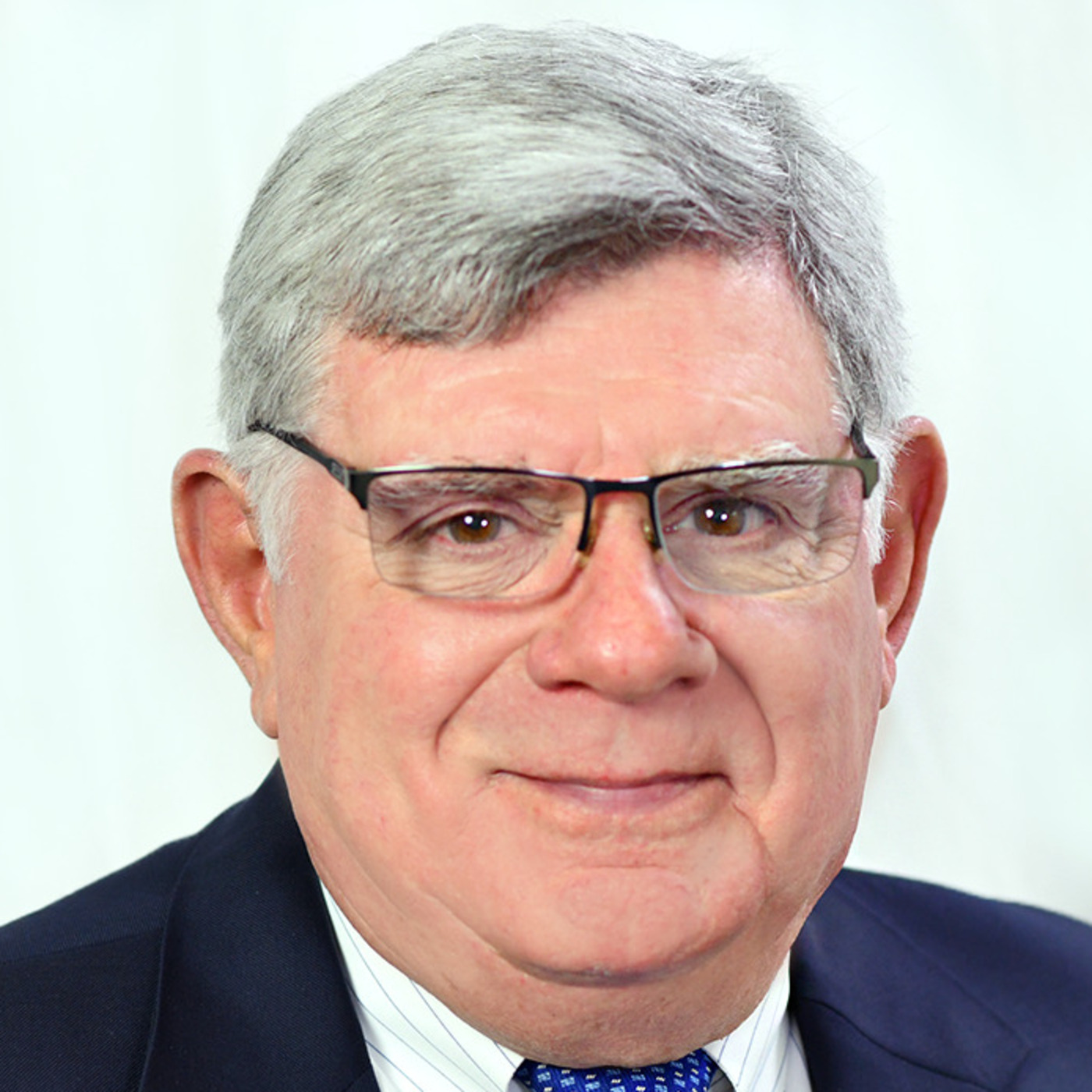
Aoifinn Devitt: I’m Aoifinn Devitt, and welcome to the 50 Faces Podcast, a podcast committed to revealing the richness and diversity of the world of investment by focusing on its people and their stories. I’m joined today by Tony Doherty, who just recently retired from a role of Managing Director at Lazard Asset Management, where he spent over 40 years. He started his career in insurance and then investment consulting, where he spent 13 years. Welcome, Tony. Thanks for joining me today.
Tony: Thank you, Aoifinn. And how are you?
Aoifinn Devitt: Great, and great to see you. It’s been such a wait to have you here, and I’ve been fascinated by your career to date, in awe at your ability to build relationships and trust. I knew I had to have you as a guest, so thank you.
Tony: Well, thank you for having me. I appreciate it.
Aoifinn Devitt: Well, let’s start with your background. So you have had a long and fascinating career. Can we just go a little bit back to before it started, to where you grew up, what you studied, and how you came to join the world of finance?
Tony: Sure. So I’ve lived in New Jersey and worked in New York for a little over 40 years now. Most of that has been at Lazard Asset Management. Prior to that, I was working for A.G. Becker, which is a pension consulting firm that was located in Chicago, but also had an office in New York City. But I’m originally from Chicago. I’m born and raised in Chicago, and I’m third-generation Italian American. My great-grandfather came to this country in 1901 with his 7 children, and that was the beginning of the Doty family in Chicago. And with that, we sort of lived in a lot of different places in Chicago as Chicago changed after World War II. And we started in the Taylor Street area. We moved to the West Side, we moved to the Austin area, and then after being there for several years, moved to the Southwest Side and When I met my wife and got married, we moved to Oak Lawn. So I’ve been sort of a Southwest sider for most of my life. And before we moved to New York, I was going to buy a house in Palis, so I was going to establish even firmer roots on the Southwest side of Chicago. But growing up in Chicago, having a Midwest background, basically having Midwest values, I thought, you know, served me pretty well throughout most of my career. And I learned a lot not only from my family, but people I was associated with in school and business. And, you know, hard work, honesty, character, integrity, these are all the words that I would say frame most of my life. But it was important to me to work in the finance area, and I’ll get back to that. And then, you know, coming from a large Italian family was also an important thing in terms of growing up and the richness of having a big family. My grandfather had a farm in northeastern Illinois, just south of the Wisconsin border. We spent our summers together up there. And so, you know, we were all very tight with our family. We still are tight. And so moving from Chicago to New Jersey was a big move for my family, for myself. But, you know, it was an enriching step, not only personally, but also in terms of my career.
Aoifinn Devitt: So what drives you throughout your career?
Tony: So growing up, I was pretty much driven by two things. One is I wanted to be the first college graduate in my family. Which I was. Secondly, I sort of vacillated between, from a career point of view, being a stockbroker or a professional baseball player. So those are kind of opposite choices. But I was always fascinated by the markets, by the history of the markets, by economics, by finance, much to my grandfather’s chagrin. He always suggested that I stay away from the stock market because in the ’29 crash he lost a fair amount of money. And so he kind of steered me or tried to steer me away from that. But Growing up in the Southwest Side of Chicago, which was more of a blue-collar area, I really didn’t have many mentors from a professional sense or people that could help me or mentor me in terms of fulfilling my career goals. And my friends, you know, sort of ridiculed me along the way and said, you know, you’ll never get to Wall Street. And that just gave me more determination to get there and to basically work in finance, which, you know, was always something that was very interesting to me. So after I graduated from college, it was in the peak of the Vietnam War and it was very difficult to get a job because men of my age were eligible for the draft. And luckily they came out with the lottery system. I got a high number and so I was not drafted. But, you know, jobs were few and far between in that period of time. And so I took a job at CNA Insurance in Chicago, not because I liked the insurance business, but I needed a job and it was a good way for me to learn about business. And so this was my first formal step into a big business. I learned a lot about the functions of how business works and operates both internally and externally. I did well over the period of time I was going to be there. They were going to send me to Kansas City as a regional administrator. And before I moved to Kansas City, I got a call from a headhunter in Chicago who said that A.G. Becker, which was a regional brokerage firm, was looking for somebody in a management training program.
Aoifinn Devitt: And was this your path into consultancy?
Tony: So I said, well, you know, look, I’m going to be a stockbroker. Do they have any openings? They said, look, you know, they do have stockbrokers there. They’re the biggest commercial paper dealer in the United States. They trade other types of securities. Go over there, go on the interview, which I did. And I met with a fellow, his name was Stu Porter. And Stu was a very nice man and he was very honest. He said to me, look, he said, you know, you have a nice background, good background. We’re looking for people in our funds evaluation department. And I said, well, what’s that? And he said, well, that’s our new pension consulting business. And at the time, A.G. Becker, Frank Russell, and Merrill Lynch were the three providers of consulting services in the US. So I said, well, what about being a stockbroker? He said, well, take the job, “Get a foothold and then let’s see how you do. And if something opens up, you can always transfer.” You know, you always get that, that bait and switch routine. So I did take the job and probably one of the first things that happened after I joined A.G. Becker was the market crash of ’73 and ’74. And after that downdraft in market, I decided that it was probably not in my best interest given the volatility of the markets to be a stockbroker. So I said, “Look, I’ll stick with my career at A.G. Becker.” And I think, you know, what I want to do is become a field consultant. Consultant. So I spent the next 6 or 7 years pretty much on the inside doing all kinds of management jobs, worked in the systems department, the product development department. I started up the customer client servicing department for A.G. Becker and working with a lot of the field consultants. And then in the late ’70s, I got a break. There was a fair amount of turnover in the New York office, and they asked me if I would basically commute and spend the weeks southeast and handle a territory. And they said, you know, it could be up to a year, a year and a half. It turned out it was closer to a year and a half. And so, you know, I did shuttle diplomacy. You know, I would leave on a Sunday night or a Monday morning, come back on a Friday night and spent most of my time working from New York City to Washington, DC. And most of my clients were from, I would say from Baltimore to Washington. But it was probably the best thing that happened in my career because it immersed me in the business of being a field consultant in finance and They dropped me into the deep end of the pool and I wasn’t sure I could swim, but I figured it out pretty quickly. And I had never been on the East Coast. It was a real experience living and working in New York City and traveling up and down the East Coast. And in 18 months, I probably got 5 years’ worth of experience and I made some great contacts. It was a wonderful experience, although being away from the family, I had 2 young children at the time, not being able to spend a lot of time with my kids and my wife was not the easiest thing, but from a career point of view, it was a really good step. So at the end of that period of time, they asked me if I wanted to come back to the Midwest and have a territory in the Midwest or just stay on the East Coast and work the territory I had. And I decided to stay on the East Coast. I figured that I had planted the seeds on the East Coast and our business, the asset management business was pretty much dominated on the East Coast from New York City to Boston. And so I figured I was going to learn a lot more being on the East Coast than I would in the Midwest. And that worked out precisely as I had figured. I then got a call in mid-1982 from the people that had recently joined Lazard Asset Management. They had come over from Oppenheimer Capital and they were basically asked to restructure and redefine and refocus the asset management business. And the 3 people that took over the asset management department contacted me and they wanted me to come over and join them as one of the marketing people. They had hired a person from A.G. Becker who had worked on the Taft-Hartley side, who was a good friend of mine, and he suggested that I follow up and have an interview, which I had a series of interviews and that was very successful. I was hired in December of ’83 to join Lazard Asset Management. And so when I joined, I was glad that I had the consulting experience because that foundation really served me well in terms of knowing the asset management business, our competitors, what you needed to do to be successful, how to basically do marketing, how to set up a client servicing function, how to work with consultants. And so as we got into 1984, we started on that endeavor. When I started with the company, we had about $3 billion under management. About 30 clients. There were 50 employees at the firm. So it was a startup. And when I called people in New York, they had heard of Lazard Frères. They did not hear of Lazard Asset Management. When I talked to people outside of the tri-state area, they didn’t know who I was working for or who Lazard was. But it was a great opportunity from the standpoint that I was working with 3 really senior knowledgeable investment people who had come over from Oppenheimer Capital. They had a defined style of management and we built on that. And when I started, we had 3 strategies, US equity. It was a relative value strategy, fixed income, and something that a lot of people don’t know about, which is balanced funds. But the CIO and I became really good friends and we started working on product development and we decided that if we could replicate what we were doing in the US in the non-US markets, that would be very successful. Because a lot of pension funds were starting to globalize. We also saw and recognized that on the small-cap side, US small-cap side, most of the players were growth players. And so there was no value competition there. So we started a value small-cap strategy. We also started a global strategy, and shortly thereafter we started an emerging market strategy. As we got into the late ’80s, we were hired by General Motors, which is our first big win, which was just amazing. I mean, we, we were all shocked that after a few— in a firm that had a great pedigree and a great reputation that we would be hired by the biggest corporate pension fund in the United States. And then that was shortly followed up by wins at CalPERS, CalSTRS, a number of other public funds. And in the ’90s, we were just off and running. And the foundation I built was really by working with a lot of the consultants. There were 13 or 14 consultants I worked with. We had approvals at most of them. Again, coming from the consulting side was a big benefit to me and to the firm because I knew how the game worked. I knew the language. We had respect for one another. And so it was a great start.
Aoifinn Devitt: It’s exactly what I was hoping for in terms of a history lesson of the evolution of asset allocation, which is really intriguing to me. And I will say that I was born in 1974, so I’m well aware that’s a 50-year arc now that we’re covering. And I suppose just, you know, before we move into sales as a mindset and how you approach that, which I think is fascinating, just love to hear. So back in, in the ’70s and you’re starting to work with around asset allocation, and clearly you’re filling out the complexity of some of these offerings at Lazard there by filling gaps. What were you starting with? Were we starting with very basic kind of balanced funds and then gradually starting to spread those out?
Tony: Yeah. So, you know, in the ’70s, a lot of funds were, you know, I would say the allocation was mostly towards fixed income. The equity was US equity, large cap, mostly growth. As time went on, there was more of an equity allocation, and then I would say a diversification into the non-US markets, into mid-cap, small-cap US. When we started to talk to people about global, know, you they— people thought we were from you Mars, know, talking about global equity. But what happened in the late ’80s, early ’90s is that industries globally started to merged together and the analytical framework that we used at Lazard started off looking at US companies and non-US companies. And then we decided, you know, if you were looking at pharmaceutical companies, auto companies, other global types of businesses, you had to evaluate these companies from a global point of view because they all competed. And so we put together our research team at Lazard to have a global platform. Obviously there were industries like utilities that are more local. So we have people that sort of follow those companies on a local basis and then getting into emerging markets in the mid-’90s. So there was more movement into equities, globalization, and along the way, I mean, you know, one of the things that I think most of us know is that a big part of sales is education. So, you know, you have to educate the buyer before they buy. So we spent a lot of time educating prospects and clients about the benefits of foreign diversification or non-US diversification, moving into different company sizes, investing up and down the cap range. So there was a lot of work that we did in terms of educating not only the buyer, but also the consultants in terms of the benefits of this type of diversification.
Aoifinn Devitt: And let’s move in now to the mindset. So it seems that your Italian-American upbringing and this large family and the bonds, and so you got to know diverse personalities, I think pretty well, I’m sure through that and to work with them. In terms of the role you’re in, do you think these people are— who are successful at what they do in roles like yours— are born or are they made?
Tony: Well, I would say that it’s probably a little bit of both. I you think, know, from a personality point of view, you have to be, I think, an extrovert. You have to be able to deal with rejection. You have to be hard-driving. You basically have to sort of have focus in terms of what you do and how you do it. But the rest of it is all acquired skill. And one of the things that I was blessed by was the fact that I went to work for A.G. Becker and they were committed to doing a lot of training with the people in the field. And they basically had the thought that they would hire really high-character people that were able to get along with other people that had good interpersonal skills, and they would train us. And so both from an academic point of view, And you know, we had an affiliation with the University of Chicago and we had a lot of training with the staff, the professors from the University of Chicago. I worked with David Booth for a long time. David’s a good friend. He was my mentor both in New York and Chicago in terms of the educational work that he put into me and what he did to help me. And then, you know, I worked with some people that were IBM-trained salespeople, Xerox-trained salespeople, people that were from industry. They were very giving people and I was like a sponge. I mean, I was very inquisitive. I always asked a lot of questions. I always wanted to get better at what I did. And then these people always spent the time with me and they were willing to spend the time and gladly spent the time. And so the A.G. Becker Foundation was really important to me when I got to Lazard. That really helped me get started. And when you think about, you know, a lot of the successful salespeople in the ’80s and ’90s, most of which were former consultants. A lot of them came out of AG Becker and other organizations. So that sort of foundation, that skill set, really helped a lot of us propel the business going forward.
Aoifinn Devitt: And how do you mentor, say, younger people entering this arena to deal with rejection? Because I’m not sure if you have a kind of a rule of thumb or just a mindset that you use, but I’m sure few people are born with that thick a skin.
Tony: Yeah, well, you know, that’s true. I think nobody likes rejection and, you know, I think the first thing you have to learn is that it’s not personal. You’re selling a service. People need a variety of services. They may need yours, they may not need your service, but you know, it’s not personal. And the more you do it, I wouldn’t say you get used to it, but it becomes a little easier to tolerate. But the thing that I did as an approach, and I think a lot of other people that were former consultants did, is that we didn’t function as a vendor. We functioned as a partner. We functioned as a co-CIO, a consultant. We did consultative sales. So a lot of it was really sort of trying to solve problems to help improve the investment program, the system that we were talking to. And by doing that, it’s less direct. It’s more of building relationships and then trying to understand what’s in place How to move it forward, how to improve it. And so that sort of lessens the direct blow of being rejected. So by doing that, you know, I built really great relationships with a lot of people. And when I started at Lazard, most of my time was spent on corporate DBs, endowments, foundations, hospital plans. I had a couple of public funds. I was probably 5 or 6 years into my experience at Lazard. I started to move more towards public funds and I really liked the public fund community. It’s fast growing. There’s some really interesting people that work there. There’s big pools of money. There’s areas where you can be very helpful. And I always thought that if I could bring the resources of Lazard to the public fund prospects and our clients, that I can enhance their experience with us and make them better in terms of what they were doing.
Aoifinn Devitt: Well, I would say that feeling is absolutely mutual in terms of them appreciating you. So no, no question about that. Just in terms of that community though, and I know we’ve spoken in the past about your many trips to Alaska and you’ve gone to far-flung locales certainly to serve that community. How would you say the needs are evolving? You’d mentioned consultative problem solving. Some of the problems are the same, some of the problems are new, I’m sure. So how would you say over the course of the 40 years, and I know this is hard to capture in a small short response, you’ve had to adapt? How have those clients’ needs changed?
Tony: Well, you know, I think any of us that work in the business know the only constant in our business is change. You sort of anticipate change. In some cases you prompt change, but you know that things are going to continually evolve. And so I describe the evolution from an asset allocation point of view, from a style point of view, from a globalization point of view. But over the last 10 to 12 years, there’s been a movement into private equity, private credit, back into real estate, different types of real estate. So I think this evolution is sort of taking place now on the private side. On the long-only side, there’s still challenges. I would say the last 6, 7 years, markets in our business have really been driven by macro events. Up until that point in time, it was really more bottom-up. It was more stock-specific. It was more about earnings and improving earnings and revenues and companies. But the geopolitical macro issues have really dominated markets. And so the evolution there is to try to help clients deal with those types of situations and to try to understand them. And clearly, you know, Wall Street has a variety of opinions that it provides to clients, but being a trusted advisor and having close relationships always helps.
Aoifinn Devitt: And looking back now at such an illustrious career and a long one, were there any particular highs or lows that stand out for you?
Tony: Well, you’ll always remember the big wins, and I mentioned a couple of them earlier on. And as we built our emerging market equity business, you know, we were hired by the state of Mississippi in 1998. We were very small then, but they took a chance. They took a flyer on us. We had managed an international equity portfolio. Then a few years later, we were starting our emerging market debt business. We were hired by Ohio PERS, those were big wins. And so, you know, you always remember those big wins as a salesperson. But, you know, I think the other thing that was important and I always remember is training younger people, moving younger people along in their career. I was really blessed by the people I worked with at A.G. Becker. They were really good to me. They were really good people. And I learned you need to give back, you need to train the next generation. I’ve always been committed to doing that. And at Lazard, the public fund team was a team and we functioned as a team. And so it was important to have people at various levels contribute to the success of that team.
Aoifinn Devitt: And just a last word on public funds. I mean, I suppose it’s interesting that you mentioned collaborating and letting the resources of the firm you work with be their resource to really supplement some of the lack of resourcing there. Do you have any thoughts on whether they have the resources they need, whether it’s getting more challenging as assets get more sophisticated?
Tony: I think that there’s been a lot of improvements on the public fund side. I think the people that have come into public funds are very well educated, very smart, very dedicated. I would say that the people that work in public funds and the investment teams are a good group of people, and they know how to work with the investment manager community. They look at us as a resource. Not everybody, but you know, the ones that are more astute certainly do that. They’re looking for good partners. And so I would say that it’s much improved over the last 20 years, 30 years for sure. But there’s still challenges as you well know. I mean, you know, you’re in a political fishbowl and the politics in public funds are always the challenge. Funding is always a challenge. You know, there’s some funds that get the money that they’re promised. Most of them don’t, but most public funds have done a terrific job of managing their assets. Generating really good returns, improving the funded ratios, and basically serving the beneficiaries, which is the important aspect of you it, know? And so in today’s environment, we’re dealing with a much more sophisticated group of people that are managing these assets.
Aoifinn Devitt: Okay, so now is the section where we dive into the deep well of Tony Doney wisdom, reflection section. First of all, this reflection first is two parts. One is around any key people or mentors that you had. You’ve mentioned the mentoring. And then we’ll get to the second part in a minute, but I’d love to know if there were other people that have influenced how you think and see the world.
Tony: Yeah. I mean, there’s a lot of people and I always worked on the, with the motto that, you know, you want to associate yourself with the smartest, the brightest, and the most talented and get to know them and basically learn from them. That’s always served me well. It served other people very well. And, you know, I think there’s a give and take there, but, you know, I mentioned David Booth. David Booth was very influential to me. He was a good friend. We had a lot of fun in New York. But I learned a lot about, about the academics, how assets were managed, how different firms managed money, how alpha was generated, what to look for, what was important, what was not important. So he was very helpful to me there. There were other people at A.G. Becker on the sales side that were really skilled salespeople and really had good client servicing skills and beliefs. And so again, I’ve, I’ve learned a lot from those people. On the plan sponsor side, there’s CIOs that are very influential. Bob Maynard, who just recently retired from Idaho, and Bob’s a good friend and I always told him he was my go-to CIO. You know, he’s one of the brightest people in the business. And if I had a problem or an issue and I needed honest feedback, I could call Bob. There was Bob Store in Alaska that served a similar role. Ed Kellen became a very good friend. When I was at Lazard, we spent a lot of time together. Michael Leary, who recently passed away in his day, was probably one of the finest pension consultants in America and a good friend, and I learned a lot from him. I worked with Richard Ennis, Jim Knopf, John O’Brien at A.G. Becker. So, you know, those are big names in the business. So there’s a lot of people, people that are recognizable names, but you know, everyday people, The people I worked with at Lazard, both in the investment departments and on the marketing side, very talented, very collegial. Those were great experiences for me.
Aoifinn Devitt: I should have added the caveat that this is not supposed to be an exhaustive list, as I’m sure after possibly you’d always leave somebody out. And the second question that I didn’t script, but I just speaking with you, I thought was an important one, is, is there any, just for people coming up through the ranks and aspiring to be the kind of relationship builder you are, anything, any book or or any movie or any public figure that you think is someone that gets it right?
Tony: I’m not sure I could put my finger on anybody off the top of my head, but I was lucky. I mean, when I joined the, the business, the business was in its infancy and it was evolving. And so there was more access to people because, you know, people needed to talk, they needed contact. Today the business is different. I mean, it’s much more competitive. The people on the plant sponsor side are very busy. It’s hard to get in, it’s hard to get to the space. You need an edge, you know, you need contacts, you gotta be more resourceful, you gotta be more creative to figure out ways of getting in, how to meet people. So it’s much more challenging. I think the important thing is, you know, I was doing this at Lazard and I’ll do this on an ongoing basis just to use my contacts to get in. And so, you know, and then I think a lot of senior people in the business do the same with the junior people in their organization. Liz Smith, who’s a good friend of mine at AB, basically does the same thing with her junior staff in terms of using her contacts to make introductions for people. So leverage is really important in terms of relationship building.
Aoifinn Devitt: Thank you for that. And then maybe just building on that in terms of words of wisdom or creed or motto, and then you can go right back to the Italian-American family gatherings if you like, in terms of anything you can leave us with. Any Tony Doty-isms that we can immortalize here?
Tony: Well, people that have worked with me and know me, they know I’m very focused. I’m very goal-oriented, but I’m also very team-oriented. And so when I joined Lazard, the fellow who was the CEO of Lazard Asset Management, his motto was, and I think, you know, this has served me well over the last 40-plus years, you know, he always told us we don’t have to be the biggest asset management firm, We have to be the best. And being the best is something that you’ve gotta work on every day. And a lot of the younger people I worked with, I would always try to tell them, look, you know, every day you have to get better at some aspect of what you do within your career. And you gotta be introspective. You gotta look at what you did. You gotta figure out, did I do it right? Could I do it better? And then you gotta ask questions about, you know, how do I do this a little bit better, a little differently. And I think that commitment is one of the things I always tried to communicate to people I worked with. And the other part is to have fun. I mean, look, this is serious business, but you know, you don’t want to work yourself to death. You don’t want to be boring, just focused on your work. You gotta have fun, you gotta enjoy it. And you know, people ask me, 40 years is a long time to work at one firm and in one industry. And I always responded by saying, I really never looked at it as a job. It was fun. I enjoyed it. I mean, every day I would get up and I would love going to work and seeing people I know and basically working with them. And it wasn’t a task, it was fun, it was enjoyable. And I think that’s really important in terms of if you want to be successful, you have to enjoy it. And there’s a lot of people that start in our business, they work at it for a few years and then they give up because it’s not easy. It’s hard. But again, you got to be creative and use the resources around you, leverage people that have the know-how, that have relationships, and it’ll help you move your career forward.
Aoifinn Devitt: Well, certainly, Tony, I can say that it shows on your side that you have enjoyed it, and it has been such a pleasure to work with you. And I’d say in terms of that generosity, it has been felt on my side. I will not forget how I asked you one time about trends among public fund CIOs, and you made time. Be sure to make time to sit down with me to talk about that. I’m still waiting for the Alaska travel tips, but I think I have been quite busy. It’s been, been challenging to get that one. We’ll schedule a different offline for that. Well, thank you so much. You are truly a legend in the industry. Delighted to celebrate this milestone, but also look forward to seeing what the next chapter holds. So thank you so much for coming here and sharing your insights with us.
Tony: Aoifinn, thank you. It’s been a pleasure. Good to see you again, and We’ll be in touch.
Aoifinn Devitt: I’m Aoifinn Devitt. Thank you for listening to the 50 Faces Podcast. If you liked what you heard and would like to tune in to hear from more inspiring investors and their personal journeys, please subscribe on Apple Podcasts, wherever you get your podcasts. This podcast is for informational purposes only and should not be construed as investment advice, and all views are personal and should not be attributed to the organizations and affiliations of the host or any guest.
Aoifinn Devitt: This episode is supported by PIMCO, a global leader in active fixed income with deep expertise across public and private markets. PIMCO invests their clients’ capital in income and credit opportunities that span the liquidity spectrum, leveraging their decades of experience navigating complex debt markets. Their flexible capital base and deep relationships with issuers have helped them become one of the world’s largest providers of traditional and alternative investment solutions a valued financing partner. Visit pimco.com to learn more.
Tony: The only constant in our business is change. You sort of anticipate change. In some cases you prompt change, but you know that things are going to continually evolve. And so I describe the evolution from an asset allocation point of view, from a style point of view, from a globalization point of view. But over the last 10 to 12 years, there’s been a movement into private equity. Private credit back into real estate, different types of real estate. So I think this evolution is sort of taking place now on the private side.
Aoifinn Devitt: I’m Aoifinn Devitt, and welcome to the 50 Faces Podcast, a podcast committed to revealing the richness and diversity of the world of investment by focusing on its people and their stories. I’m joined today by Tony Doherty, who just recently retired from a role of Managing Director at Lazard Asset Management, where he spent over 40 years. He started his career in insurance and then investment consulting, where he spent 13 years. Welcome, Tony. Thanks for joining me today.
Tony: Thank you, Aoifinn. And how are you?
Aoifinn Devitt: Great, and great to see you. It’s been such a wait to have you here, and I’ve been fascinated by your career to date, in awe at your ability to build relationships and trust. I knew I had to have you as a guest, so thank you.
Tony: Well, thank you for having me. I appreciate it.
Aoifinn Devitt: Well, let’s start with your background. So you have had a long and fascinating career. Can we just go a little bit back to before it started, to where you grew up, what you studied, and how you came to join the world of finance?
Tony: Sure. So I’ve lived in New Jersey and worked in New York for a little over 40 years now. Most of that has been at Lazard Asset Management. Prior to that, I was working for A.G. Becker, which is a pension consulting firm that was located in Chicago, but also had an office in New York City. But I’m originally from Chicago. I’m born and raised in Chicago, and I’m third-generation Italian American. My great-grandfather came to this country in 1901 with his 7 children, and that was the beginning of the Doty family in Chicago. And with that, we sort of lived in a lot of different places in Chicago as Chicago changed after World War II. And we started in the Taylor Street area. We moved to the West Side, we moved to the Austin area, and then after being there for several years, moved to the Southwest Side and When I met my wife and got married, we moved to Oak Lawn. So I’ve been sort of a Southwest sider for most of my life. And before we moved to New York, I was going to buy a house in Palis, so I was going to establish even firmer roots on the Southwest side of Chicago. But growing up in Chicago, having a Midwest background, basically having Midwest values, I thought, you know, served me pretty well throughout most of my career. And I learned a lot not only from my family, but people I was associated with in school and business. And, you know, hard work, honesty, character, integrity, these are all the words that I would say frame most of my life. But it was important to me to work in the finance area, and I’ll get back to that. And then, you know, coming from a large Italian family was also an important thing in terms of growing up and the richness of having a big family. My grandfather had a farm in northeastern Illinois, just south of the Wisconsin border. We spent our summers together up there. And so, you know, we were all very tight with our family. We still are tight. And so moving from Chicago to New Jersey was a big move for my family, for myself. But, you know, it was an enriching step, not only personally, but also in terms of my career.
Aoifinn Devitt: So what drives you throughout your career?
Tony: So growing up, I was pretty much driven by two things. One is I wanted to be the first college graduate in my family. Which I was. Secondly, I sort of vacillated between, from a career point of view, being a stockbroker or a professional baseball player. So those are kind of opposite choices. But I was always fascinated by the markets, by the history of the markets, by economics, by finance, much to my grandfather’s chagrin. He always suggested that I stay away from the stock market because in the ’29 crash he lost a fair amount of money. And so he kind of steered me or tried to steer me away from that. But Growing up in the Southwest Side of Chicago, which was more of a blue-collar area, I really didn’t have many mentors from a professional sense or people that could help me or mentor me in terms of fulfilling my career goals. And my friends, you know, sort of ridiculed me along the way and said, you know, you’ll never get to Wall Street. And that just gave me more determination to get there and to basically work in finance, which, you know, was always something that was very interesting to me. So after I graduated from college, it was in the peak of the Vietnam War and it was very difficult to get a job because men of my age were eligible for the draft. And luckily they came out with the lottery system. I got a high number and so I was not drafted. But, you know, jobs were few and far between in that period of time. And so I took a job at CNA Insurance in Chicago, not because I liked the insurance business, but I needed a job and it was a good way for me to learn about business. And so this was my first formal step into a big business. I learned a lot about the functions of how business works and operates both internally and externally. I did well over the period of time I was going to be there. They were going to send me to Kansas City as a regional administrator. And before I moved to Kansas City, I got a call from a headhunter in Chicago who said that A.G. Becker, which was a regional brokerage firm, was looking for somebody in a management training program.
Aoifinn Devitt: And was this your path into consultancy?
Tony: So I said, well, you know, look, I’m going to be a stockbroker. Do they have any openings? They said, look, you know, they do have stockbrokers there. They’re the biggest commercial paper dealer in the United States. They trade other types of securities. Go over there, go on the interview, which I did. And I met with a fellow, his name was Stu Porter. And Stu was a very nice man and he was very honest. He said to me, look, he said, you know, you have a nice background, good background. We’re looking for people in our funds evaluation department. And I said, well, what’s that? And he said, well, that’s our new pension consulting business. And at the time, A.G. Becker, Frank Russell, and Merrill Lynch were the three providers of consulting services in the US. So I said, well, what about being a stockbroker? He said, well, take the job, “Get a foothold and then let’s see how you do. And if something opens up, you can always transfer.” You know, you always get that, that bait and switch routine. So I did take the job and probably one of the first things that happened after I joined A.G. Becker was the market crash of ’73 and ’74. And after that downdraft in market, I decided that it was probably not in my best interest given the volatility of the markets to be a stockbroker. So I said, “Look, I’ll stick with my career at A.G. Becker.” And I think, you know, what I want to do is become a field consultant. Consultant. So I spent the next 6 or 7 years pretty much on the inside doing all kinds of management jobs, worked in the systems department, the product development department. I started up the customer client servicing department for A.G. Becker and working with a lot of the field consultants. And then in the late ’70s, I got a break. There was a fair amount of turnover in the New York office, and they asked me if I would basically commute and spend the weeks southeast and handle a territory. And they said, you know, it could be up to a year, a year and a half. It turned out it was closer to a year and a half. And so, you know, I did shuttle diplomacy. You know, I would leave on a Sunday night or a Monday morning, come back on a Friday night and spent most of my time working from New York City to Washington, DC. And most of my clients were from, I would say from Baltimore to Washington. But it was probably the best thing that happened in my career because it immersed me in the business of being a field consultant in finance and They dropped me into the deep end of the pool and I wasn’t sure I could swim, but I figured it out pretty quickly. And I had never been on the East Coast. It was a real experience living and working in New York City and traveling up and down the East Coast. And in 18 months, I probably got 5 years’ worth of experience and I made some great contacts. It was a wonderful experience, although being away from the family, I had 2 young children at the time, not being able to spend a lot of time with my kids and my wife was not the easiest thing, but from a career point of view, it was a really good step. So at the end of that period of time, they asked me if I wanted to come back to the Midwest and have a territory in the Midwest or just stay on the East Coast and work the territory I had. And I decided to stay on the East Coast. I figured that I had planted the seeds on the East Coast and our business, the asset management business was pretty much dominated on the East Coast from New York City to Boston. And so I figured I was going to learn a lot more being on the East Coast than I would in the Midwest. And that worked out precisely as I had figured. I then got a call in mid-1982 from the people that had recently joined Lazard Asset Management. They had come over from Oppenheimer Capital and they were basically asked to restructure and redefine and refocus the asset management business. And the 3 people that took over the asset management department contacted me and they wanted me to come over and join them as one of the marketing people. They had hired a person from A.G. Becker who had worked on the Taft-Hartley side, who was a good friend of mine, and he suggested that I follow up and have an interview, which I had a series of interviews and that was very successful. I was hired in December of ’83 to join Lazard Asset Management. And so when I joined, I was glad that I had the consulting experience because that foundation really served me well in terms of knowing the asset management business, our competitors, what you needed to do to be successful, how to basically do marketing, how to set up a client servicing function, how to work with consultants. And so as we got into 1984, we started on that endeavor. When I started with the company, we had about $3 billion under management. About 30 clients. There were 50 employees at the firm. So it was a startup. And when I called people in New York, they had heard of Lazard Frères. They did not hear of Lazard Asset Management. When I talked to people outside of the tri-state area, they didn’t know who I was working for or who Lazard was. But it was a great opportunity from the standpoint that I was working with 3 really senior knowledgeable investment people who had come over from Oppenheimer Capital. They had a defined style of management and we built on that. And when I started, we had 3 strategies, US equity. It was a relative value strategy, fixed income, and something that a lot of people don’t know about, which is balanced funds. But the CIO and I became really good friends and we started working on product development and we decided that if we could replicate what we were doing in the US in the non-US markets, that would be very successful. Because a lot of pension funds were starting to globalize. We also saw and recognized that on the small-cap side, US small-cap side, most of the players were growth players. And so there was no value competition there. So we started a value small-cap strategy. We also started a global strategy, and shortly thereafter we started an emerging market strategy. As we got into the late ’80s, we were hired by General Motors, which is our first big win, which was just amazing. I mean, we, we were all shocked that after a few— in a firm that had a great pedigree and a great reputation that we would be hired by the biggest corporate pension fund in the United States. And then that was shortly followed up by wins at CalPERS, CalSTRS, a number of other public funds. And in the ’90s, we were just off and running. And the foundation I built was really by working with a lot of the consultants. There were 13 or 14 consultants I worked with. We had approvals at most of them. Again, coming from the consulting side was a big benefit to me and to the firm because I knew how the game worked. I knew the language. We had respect for one another. And so it was a great start.
Aoifinn Devitt: It’s exactly what I was hoping for in terms of a history lesson of the evolution of asset allocation, which is really intriguing to me. And I will say that I was born in 1974, so I’m well aware that’s a 50-year arc now that we’re covering. And I suppose just, you know, before we move into sales as a mindset and how you approach that, which I think is fascinating, just love to hear. So back in, in the ’70s and you’re starting to work with around asset allocation, and clearly you’re filling out the complexity of some of these offerings at Lazard there by filling gaps. What were you starting with? Were we starting with very basic kind of balanced funds and then gradually starting to spread those out?
Tony: Yeah. So, you know, in the ’70s, a lot of funds were, you know, I would say the allocation was mostly towards fixed income. The equity was US equity, large cap, mostly growth. As time went on, there was more of an equity allocation, and then I would say a diversification into the non-US markets, into mid-cap, small-cap US. When we started to talk to people about global, know, you they— people thought we were from you Mars, know, talking about global equity. But what happened in the late ’80s, early ’90s is that industries globally started to merged together and the analytical framework that we used at Lazard started off looking at US companies and non-US companies. And then we decided, you know, if you were looking at pharmaceutical companies, auto companies, other global types of businesses, you had to evaluate these companies from a global point of view because they all competed. And so we put together our research team at Lazard to have a global platform. Obviously there were industries like utilities that are more local. So we have people that sort of follow those companies on a local basis and then getting into emerging markets in the mid-’90s. So there was more movement into equities, globalization, and along the way, I mean, you know, one of the things that I think most of us know is that a big part of sales is education. So, you know, you have to educate the buyer before they buy. So we spent a lot of time educating prospects and clients about the benefits of foreign diversification or non-US diversification, moving into different company sizes, investing up and down the cap range. So there was a lot of work that we did in terms of educating not only the buyer, but also the consultants in terms of the benefits of this type of diversification.
Aoifinn Devitt: And let’s move in now to the mindset. So it seems that your Italian-American upbringing and this large family and the bonds, and so you got to know diverse personalities, I think pretty well, I’m sure through that and to work with them. In terms of the role you’re in, do you think these people are— who are successful at what they do in roles like yours— are born or are they made?
Tony: Well, I would say that it’s probably a little bit of both. I you think, know, from a personality point of view, you have to be, I think, an extrovert. You have to be able to deal with rejection. You have to be hard-driving. You basically have to sort of have focus in terms of what you do and how you do it. But the rest of it is all acquired skill. And one of the things that I was blessed by was the fact that I went to work for A.G. Becker and they were committed to doing a lot of training with the people in the field. And they basically had the thought that they would hire really high-character people that were able to get along with other people that had good interpersonal skills, and they would train us. And so both from an academic point of view, And you know, we had an affiliation with the University of Chicago and we had a lot of training with the staff, the professors from the University of Chicago. I worked with David Booth for a long time. David’s a good friend. He was my mentor both in New York and Chicago in terms of the educational work that he put into me and what he did to help me. And then, you know, I worked with some people that were IBM-trained salespeople, Xerox-trained salespeople, people that were from industry. They were very giving people and I was like a sponge. I mean, I was very inquisitive. I always asked a lot of questions. I always wanted to get better at what I did. And then these people always spent the time with me and they were willing to spend the time and gladly spent the time. And so the A.G. Becker Foundation was really important to me when I got to Lazard. That really helped me get started. And when you think about, you know, a lot of the successful salespeople in the ’80s and ’90s, most of which were former consultants. A lot of them came out of AG Becker and other organizations. So that sort of foundation, that skill set, really helped a lot of us propel the business going forward.
Aoifinn Devitt: And how do you mentor, say, younger people entering this arena to deal with rejection? Because I’m not sure if you have a kind of a rule of thumb or just a mindset that you use, but I’m sure few people are born with that thick a skin.
Tony: Yeah, well, you know, that’s true. I think nobody likes rejection and, you know, I think the first thing you have to learn is that it’s not personal. You’re selling a service. People need a variety of services. They may need yours, they may not need your service, but you know, it’s not personal. And the more you do it, I wouldn’t say you get used to it, but it becomes a little easier to tolerate. But the thing that I did as an approach, and I think a lot of other people that were former consultants did, is that we didn’t function as a vendor. We functioned as a partner. We functioned as a co-CIO, a consultant. We did consultative sales. So a lot of it was really sort of trying to solve problems to help improve the investment program, the system that we were talking to. And by doing that, it’s less direct. It’s more of building relationships and then trying to understand what’s in place How to move it forward, how to improve it. And so that sort of lessens the direct blow of being rejected. So by doing that, you know, I built really great relationships with a lot of people. And when I started at Lazard, most of my time was spent on corporate DBs, endowments, foundations, hospital plans. I had a couple of public funds. I was probably 5 or 6 years into my experience at Lazard. I started to move more towards public funds and I really liked the public fund community. It’s fast growing. There’s some really interesting people that work there. There’s big pools of money. There’s areas where you can be very helpful. And I always thought that if I could bring the resources of Lazard to the public fund prospects and our clients, that I can enhance their experience with us and make them better in terms of what they were doing.
Aoifinn Devitt: Well, I would say that feeling is absolutely mutual in terms of them appreciating you. So no, no question about that. Just in terms of that community though, and I know we’ve spoken in the past about your many trips to Alaska and you’ve gone to far-flung locales certainly to serve that community. How would you say the needs are evolving? You’d mentioned consultative problem solving. Some of the problems are the same, some of the problems are new, I’m sure. So how would you say over the course of the 40 years, and I know this is hard to capture in a small short response, you’ve had to adapt? How have those clients’ needs changed?
Tony: Well, you know, I think any of us that work in the business know the only constant in our business is change. You sort of anticipate change. In some cases you prompt change, but you know that things are going to continually evolve. And so I describe the evolution from an asset allocation point of view, from a style point of view, from a globalization point of view. But over the last 10 to 12 years, there’s been a movement into private equity, private credit, back into real estate, different types of real estate. So I think this evolution is sort of taking place now on the private side. On the long-only side, there’s still challenges. I would say the last 6, 7 years, markets in our business have really been driven by macro events. Up until that point in time, it was really more bottom-up. It was more stock-specific. It was more about earnings and improving earnings and revenues and companies. But the geopolitical macro issues have really dominated markets. And so the evolution there is to try to help clients deal with those types of situations and to try to understand them. And clearly, you know, Wall Street has a variety of opinions that it provides to clients, but being a trusted advisor and having close relationships always helps.
Aoifinn Devitt: And looking back now at such an illustrious career and a long one, were there any particular highs or lows that stand out for you?
Tony: Well, you’ll always remember the big wins, and I mentioned a couple of them earlier on. And as we built our emerging market equity business, you know, we were hired by the state of Mississippi in 1998. We were very small then, but they took a chance. They took a flyer on us. We had managed an international equity portfolio. Then a few years later, we were starting our emerging market debt business. We were hired by Ohio PERS, those were big wins. And so, you know, you always remember those big wins as a salesperson. But, you know, I think the other thing that was important and I always remember is training younger people, moving younger people along in their career. I was really blessed by the people I worked with at A.G. Becker. They were really good to me. They were really good people. And I learned you need to give back, you need to train the next generation. I’ve always been committed to doing that. And at Lazard, the public fund team was a team and we functioned as a team. And so it was important to have people at various levels contribute to the success of that team.
Aoifinn Devitt: And just a last word on public funds. I mean, I suppose it’s interesting that you mentioned collaborating and letting the resources of the firm you work with be their resource to really supplement some of the lack of resourcing there. Do you have any thoughts on whether they have the resources they need, whether it’s getting more challenging as assets get more sophisticated?
Tony: I think that there’s been a lot of improvements on the public fund side. I think the people that have come into public funds are very well educated, very smart, very dedicated. I would say that the people that work in public funds and the investment teams are a good group of people, and they know how to work with the investment manager community. They look at us as a resource. Not everybody, but you know, the ones that are more astute certainly do that. They’re looking for good partners. And so I would say that it’s much improved over the last 20 years, 30 years for sure. But there’s still challenges as you well know. I mean, you know, you’re in a political fishbowl and the politics in public funds are always the challenge. Funding is always a challenge. You know, there’s some funds that get the money that they’re promised. Most of them don’t, but most public funds have done a terrific job of managing their assets. Generating really good returns, improving the funded ratios, and basically serving the beneficiaries, which is the important aspect of you it, know? And so in today’s environment, we’re dealing with a much more sophisticated group of people that are managing these assets.
Aoifinn Devitt: Okay, so now is the section where we dive into the deep well of Tony Doney wisdom, reflection section. First of all, this reflection first is two parts. One is around any key people or mentors that you had. You’ve mentioned the mentoring. And then we’ll get to the second part in a minute, but I’d love to know if there were other people that have influenced how you think and see the world.
Tony: Yeah. I mean, there’s a lot of people and I always worked on the, with the motto that, you know, you want to associate yourself with the smartest, the brightest, and the most talented and get to know them and basically learn from them. That’s always served me well. It served other people very well. And, you know, I think there’s a give and take there, but, you know, I mentioned David Booth. David Booth was very influential to me. He was a good friend. We had a lot of fun in New York. But I learned a lot about, about the academics, how assets were managed, how different firms managed money, how alpha was generated, what to look for, what was important, what was not important. So he was very helpful to me there. There were other people at A.G. Becker on the sales side that were really skilled salespeople and really had good client servicing skills and beliefs. And so again, I’ve, I’ve learned a lot from those people. On the plan sponsor side, there’s CIOs that are very influential. Bob Maynard, who just recently retired from Idaho, and Bob’s a good friend and I always told him he was my go-to CIO. You know, he’s one of the brightest people in the business. And if I had a problem or an issue and I needed honest feedback, I could call Bob. There was Bob Store in Alaska that served a similar role. Ed Kellen became a very good friend. When I was at Lazard, we spent a lot of time together. Michael Leary, who recently passed away in his day, was probably one of the finest pension consultants in America and a good friend, and I learned a lot from him. I worked with Richard Ennis, Jim Knopf, John O’Brien at A.G. Becker. So, you know, those are big names in the business. So there’s a lot of people, people that are recognizable names, but you know, everyday people, The people I worked with at Lazard, both in the investment departments and on the marketing side, very talented, very collegial. Those were great experiences for me.
Aoifinn Devitt: I should have added the caveat that this is not supposed to be an exhaustive list, as I’m sure after possibly you’d always leave somebody out. And the second question that I didn’t script, but I just speaking with you, I thought was an important one, is, is there any, just for people coming up through the ranks and aspiring to be the kind of relationship builder you are, anything, any book or or any movie or any public figure that you think is someone that gets it right?
Tony: I’m not sure I could put my finger on anybody off the top of my head, but I was lucky. I mean, when I joined the, the business, the business was in its infancy and it was evolving. And so there was more access to people because, you know, people needed to talk, they needed contact. Today the business is different. I mean, it’s much more competitive. The people on the plant sponsor side are very busy. It’s hard to get in, it’s hard to get to the space. You need an edge, you know, you need contacts, you gotta be more resourceful, you gotta be more creative to figure out ways of getting in, how to meet people. So it’s much more challenging. I think the important thing is, you know, I was doing this at Lazard and I’ll do this on an ongoing basis just to use my contacts to get in. And so, you know, and then I think a lot of senior people in the business do the same with the junior people in their organization. Liz Smith, who’s a good friend of mine at AB, basically does the same thing with her junior staff in terms of using her contacts to make introductions for people. So leverage is really important in terms of relationship building.
Aoifinn Devitt: Thank you for that. And then maybe just building on that in terms of words of wisdom or creed or motto, and then you can go right back to the Italian-American family gatherings if you like, in terms of anything you can leave us with. Any Tony Doty-isms that we can immortalize here?
Tony: Well, people that have worked with me and know me, they know I’m very focused. I’m very goal-oriented, but I’m also very team-oriented. And so when I joined Lazard, the fellow who was the CEO of Lazard Asset Management, his motto was, and I think, you know, this has served me well over the last 40-plus years, you know, he always told us we don’t have to be the biggest asset management firm, We have to be the best. And being the best is something that you’ve gotta work on every day. And a lot of the younger people I worked with, I would always try to tell them, look, you know, every day you have to get better at some aspect of what you do within your career. And you gotta be introspective. You gotta look at what you did. You gotta figure out, did I do it right? Could I do it better? And then you gotta ask questions about, you know, how do I do this a little bit better, a little differently. And I think that commitment is one of the things I always tried to communicate to people I worked with. And the other part is to have fun. I mean, look, this is serious business, but you know, you don’t want to work yourself to death. You don’t want to be boring, just focused on your work. You gotta have fun, you gotta enjoy it. And you know, people ask me, 40 years is a long time to work at one firm and in one industry. And I always responded by saying, I really never looked at it as a job. It was fun. I enjoyed it. I mean, every day I would get up and I would love going to work and seeing people I know and basically working with them. And it wasn’t a task, it was fun, it was enjoyable. And I think that’s really important in terms of if you want to be successful, you have to enjoy it. And there’s a lot of people that start in our business, they work at it for a few years and then they give up because it’s not easy. It’s hard. But again, you got to be creative and use the resources around you, leverage people that have the know-how, that have relationships, and it’ll help you move your career forward.
Aoifinn Devitt: Well, certainly, Tony, I can say that it shows on your side that you have enjoyed it, and it has been such a pleasure to work with you. And I’d say in terms of that generosity, it has been felt on my side. I will not forget how I asked you one time about trends among public fund CIOs, and you made time. Be sure to make time to sit down with me to talk about that. I’m still waiting for the Alaska travel tips, but I think I have been quite busy. It’s been, been challenging to get that one. We’ll schedule a different offline for that. Well, thank you so much. You are truly a legend in the industry. Delighted to celebrate this milestone, but also look forward to seeing what the next chapter holds. So thank you so much for coming here and sharing your insights with us.
Tony: Aoifinn, thank you. It’s been a pleasure. Good to see you again, and We’ll be in touch.
Aoifinn Devitt: I’m Aoifinn Devitt. Thank you for listening to the 50 Faces Podcast. If you liked what you heard and would like to tune in to hear from more inspiring investors and their personal journeys, please subscribe on Apple Podcasts, wherever you get your podcasts. This podcast is for informational purposes only and should not be construed as investment advice, and all views are personal and should not be attributed to the organizations and affiliations of the host or any guest.