Aoifinn Devitt: This series is kindly supported by GCM Grosvenor. GCM Grosvenor is a global alternative asset management firm with a longstanding commitment to supporting small, emerging, and diverse investment managers. For over 30 years, the firm has developed expertise in funding and guiding these managers as part of its broader activity across alternative investments. With over $20 billion in AUM dedicated to small and emerging managers and $16 billion in AUM dedicated to diverse managers, GCM Grosvenor leverages its experienced team, broad network, and proprietary sourcing capabilities to support their success. Through the Small, Emerging, and Diverse Manager Program, the firm creates opportunities for investors to access a wide range of talent while seeking to drive strong returns and impact. For more information, visit www.gcmgrosvenor.com.
Shan Chen: I would take more risk on a lot of things. And also be more open-minded to my colleagues’ ideas.
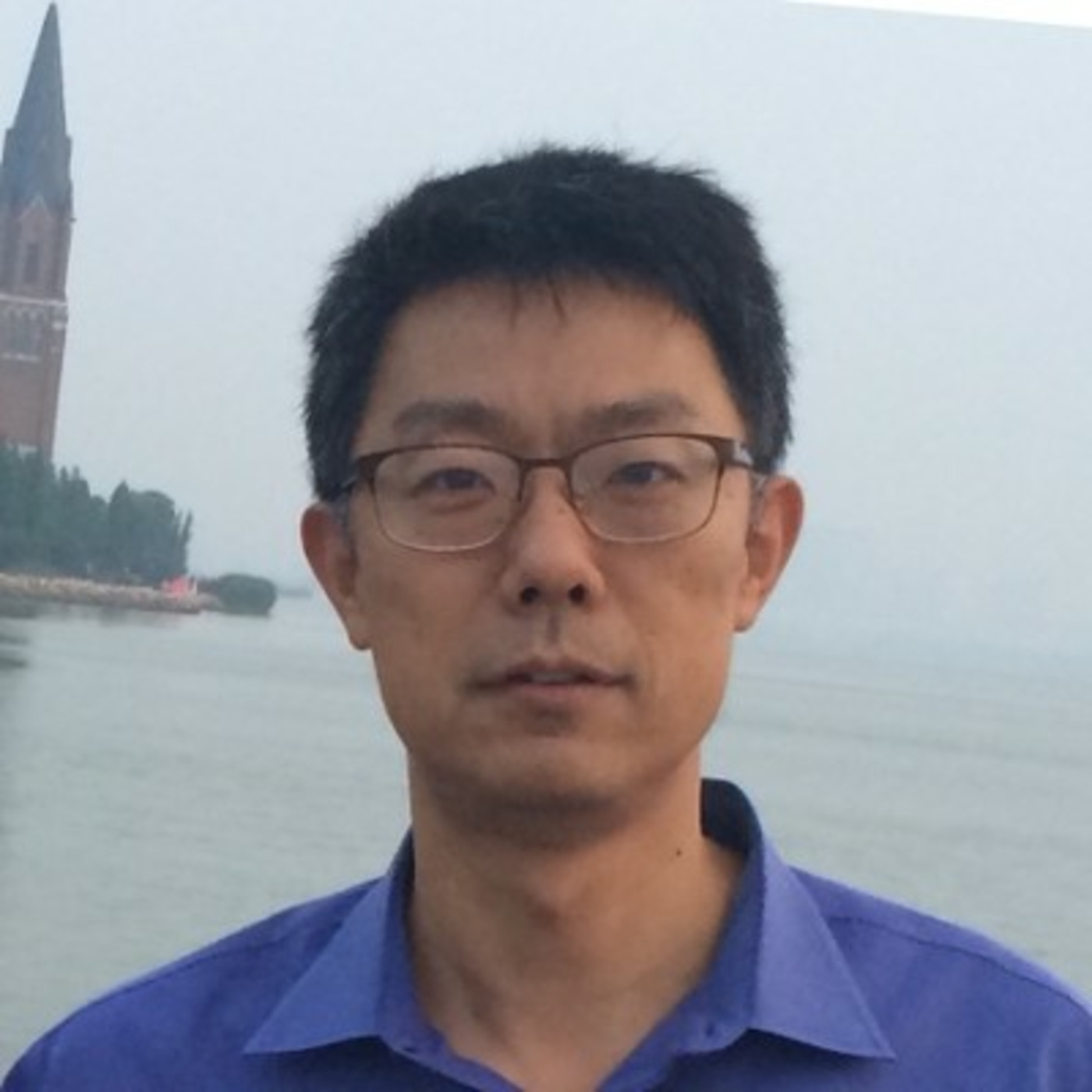
Aoifinn Devitt: I’m Aoifinn Devitt, and welcome to the 50 Faces podcast. A podcast committed to revealing the richness and diversity of the world of investment by focusing on its people and their stories. I’m joined today by Shan Chen, who until recently was a portfolio manager focused on mostly private investments at the Arizona Public Safety Personnel Retirement System, where he spent over 17 years. He previously worked primarily within information technology and did research work in biochemistry. He’s recently retired from the PSPRS and is focusing full-time on developing AI solutions for investment management. Welcome, Shan. Thanks for joining me today.
Shan Chen: Thank you.
Aoifinn Devitt: Let’s start with a little bit about your background. So clearly you didn’t start out in the investing or finance world. Can you talk to us about how you ended up in science initially and how your career took shape from there?
Shan Chen: Yeah, absolutely. So before I come to this country, I got my education in Beijing University, Beijing, China. I come here, as I mentioned, to study chemistry. Did research in biochemistry, actually also get a degree in computer science and be a developer for many years. And around 2004, seeking to broaden my horizon, I went to business school and get an MBA. So after graduate, I joined the PSPRS. That’s Arizona State Pension for Police, Firefighter, and Public Safety Personnel. So my career at PSPRX has spanned over 17 years, quite a long time. So during that time, I actually covered a variety of asset classes, including fixed income, credit, hedge fund, private equity, venture capital, and real assets. So this extensive exposure really gave me diverse and rewarding experience, allowed me to gain deep insight into different asset investment strategies and approach.
Aoifinn Devitt: Yes. And Mark Steed, of course, CIO at PSPRS, was also a guest on this podcast. And I think that kind of rotation has been one of his hallmarks, right, to ensure that the team does get broad exposure. Was that something that you enjoyed, the broad exposure of the rotation?
Shan Chen: Yes, for me, that’s, that’s a blast. So we’re doing that, I think, around year 2010, 2011, the beginning of 2011. So Mark was covering private equity, I was covering fixed income credit opportunity, then we switched. And we have a few other people, we just rotate every 5, 6 years.
Aoifinn Devitt: There’s a lot of a learning curve, but then of course, uh, the ability for cross-fertilization of ideas. And did you always work and live in Chicago, or did you ever work in Arizona? On-site?
Shan Chen: Well, I commute to Arizona for over probably 12 years before COVID And so basically my routine is go there Monday, come back Friday. I still couldn’t believe I did that for such a long time. So it’s very demanding, but this speaks how I love my job and also I love my family. So I have to, I have to do something to make that work.
Aoifinn Devitt: So I’m sure the tickets were a different price in the summer versus the winter, obviously, the Chicago, Chicago-Phoenix commute. And then in In terms of your career pivot, so having started your career in science and investment information technology, how do you think that informs your approach to investing?
Shan Chen: Yeah, so the transition from the IT to investing was a significant and a surprising turn in my career. So it’s really required me to leverage my technical background and will adapt to the nuance of the financial industry. While this unique combination of skills has proved invaluable, you know, especially as the technology and the data analytical became increasingly critical to investment management. So I would say my experience or my background as a science and doing the software development actually helps in a lot of different ways.
Aoifinn Devitt: I know that Mark has always had quite a scientific approach to investing, but he was probably an early adopter down there and you as a team around AI. But when did you first start getting interested in AI AI and using it to inform your investment process?
Shan Chen: Yeah, so markets always be innovative and forward-thinking, and one of the things our group adapted is there’s a program called Superforecasting. So it is the academia program in Northwestern University, and they try to forecast whatever the event, whether it’s the financial or political, And it’s more like calibrate the people who gave the forecast, how confident they are, what kind of information, what the process. So we adopt that approach to our investment decision. So Mark has asked the team to run a similar process, similar exercise for probably 3 years. And we use what they call Breyer score, to keep tracking people’s accuracy, how good they’re making the prediction of certain things, for example, stock price, certain economic like CPI, those kind of measures. So for me, more particularly, this is, this is really nice because I’ve been trained to be quantitative. But later on, we start looking at the AI that was like a few years ago, we have the AI available. And that’s quite interesting. I became interested in using AI partially because English is not my native language. I really use that to improve my writing, my email. So my email can be correct the grammar mistake, make the phrase better. So it’s proved to be an excellent tool for me to communicate with other people. So that’s sparked my curiosity. So now, because my developer background, I use Python, the language, a lot of doing my work because we’re dealing with a lot of Excel. So to use Python to work on Excel just makes the job much easier. Meanwhile, the Python have communicated directly to the OpenAI, what they call API. So instead of just using the web interface, I can write a simple program to interact directly to the ChatGPT engine. So I spent quite a lot of time on YouTube also learning things. So there’s so many free information. People gave their recipe how to do these things. They give you the code so you can basically copy their codes, tweak it a little bit, see how it works. So that’s how I got started.
Aoifinn Devitt: Well, it’s really— we definitely will dig in a little bit as to, okay, beyond it helping with the writing and clearly that that’s a massive enabling effect, how you would use it in asset allocation. But before that, just wanna go back to the prediction exercise that Mark was discussing. What did you learn from that? Did you learn that first of all in terms of how accurate predictions are, but did you find that people when they got the feedback were able to become, to narrow down and become more accurate with their predictions? Did any patterns emerge from those exercises?
Shan Chen: So the whole purpose is not make the prediction more accurate. It’s more like how you calibrate a prediction. For example, you think about employment numbers coming out. So before that, you can make a prediction. You think it’s going to be like, say, below the average, and you’re supposed to attach your confidence level. That’s the trick. You can give a prediction, then then you have to say I’m like 60% confident or 80% confident. If it’s 50% confident, that’s basically a coin toss. That doesn’t give you any information, right? But if you say I’m 60% confident, that means you think that’s going to happen, but it’s not that— you’re not that convinced. But if you’re 80%, 90%, that’s huge. That means you probably know something other people don’t know, or you’ve been doing that a long time, you’re, you’re expert in this area. Let’s tell us something. So by combining the outcome and your confidence level, that was the Breyer score tells you, and we track that. So what do we learn of this process? In the very beginning, our confidence level is really high. It’s like whatever the stock price, economic number, we have 80, 90. When you are right, you got really good score, but when you’re wrong, you got punished because your score is— and that’s not asymmetrical. So you get punished more in your score. And we, as a team, we keep this score for everyone. It’s like competition. Let’s think about Olympic. So in the end, people say, okay, so the best way to improve my score is actually you have to really think about the confidence level. So one of the things I say, investment professional, one of the shortcomings is overconfidence. How to fix that overconfidence problem when you make the investment decision, that exercise really helps. And then the detail is to actually increase your confidence level, you just have to do a lot of hard work and do the study, have the baseline, those kind of lot of techniques how you can make your confidence level and prediction better.
Aoifinn Devitt: And obviously that’s all what we’re seeking to do is, you know, become better at predicting, so therefore we can develop an edge in the investment world. And now that you’re focused on this full-time, it seems, the research developing AI solutions, where do you think AI is going to really impact, say, the allocators’ role? And will it be around prediction? Around things like which asset class to invest in or well, what the— how it’s likely to behave. How do you see it really? I’m just thinking from an allocator standpoint first.
Shan Chen: Yeah, so from allocator point of view, so we have to think about our process. So we get a lot of information as an allocator. I mentioned earlier, when we start today, you know, while I was working, you got hundreds of emails in the morning. Those are the information. And with that, they give you the PDF, the pitchbook. Some, some of them give you the Excel because while you’re in the due diligence phase, they dump you a lot of information. Just think about a data room. So you open any data room, just think about how many files. And the average data room, you’ve got anywhere from 20 megabytes to 100 megabytes of information. And that’s just one fund you need to make an investment. It’s not realistic for a human to review all the documents. Let’s say there’s 50 files and these things are really across a lot of areas like investment strategy, operation, track record, legal. How do you process that information? So one of the things in the early topic we talked about prediction is what would make this focus or decision, we don’t have all the information, right? You only have partial information. You make a sort of informed decision, but you never have 100% of the information. You’ve got probably like 50% and processed or digested. AI can really help. So one of the technology used for that particular purpose is the RAG, Retrievable Augmented Generation. And one of the things what AI good at is you heard about the concept of the context window, like a million token or 100,000 token. That means how much information you can give to the language model and they can process it. So one token is about one word. So you think about one fund, how much worth is there, how much you can give them. There’s a limitation, first of all. So you cannot dump the whole data room to a large language model. Second of all, you probably don’t want to do that because of security reasons. I mean, those are confidential information. That’s to actually doing that, you have to— there’s some risk. So you cannot just uploaded to the internet. You can run your large language model locally, but that’s some technical things you have to figure out. So the RAG, Retrievable Argument Generation, what they do is they take all this information, they chop that to small pieces. Then you ask a certain question. The process will take your question, goes to digest the information. Let’s think about the database. Only retrieval the information related to your question. Then they send that small chunk to the large language model, and they can really write the answer to give you a good, very well-written answer to your particular questions. And you do that many, many times. Think about your DDQs, due diligence questionnaires. You probably have hundreds of that. Different questions. You can do that 100 times. You run that in your background, and that can be very efficient. So with a few hours, you can basically generate the basic understanding of the strategy of the fund. So that’s, I think that’s what they can really help for the investment decision. So here, there you got your information, right? That’s one step.
Aoifinn Devitt: Two main areas that I’m seeing is, uh, certainly RFPs, manager selection comparison, also then the due diligence component. So once you’ve made your selection, getting in there, really shortening. And in a way, it’s probably consultants who need to watch out most because this is often a consultant function as much as an allocator function. There’s clearly that there. And then, is that your focus today, is on the allocator side of things, or are you also looking at how managers themselves say an active equity manager, fixed income manager is using AI in their processes?
Shan Chen: They are, they are. I actually look at a lot of these latest things, especially have been more established. If you— this is resources are constrained, so the larger managers are put a lot of effort behind that. So I just recently noticed the paper put by Man Group. Man is a hedge fund. So they’re trading public equity. So what they found out is they try to harvesting the private information from the private companies to guide their public company trading. And they use AI to doing that because you have to process a large amount of information. So, but again, you talk about group is historically be fund-oriented, have a lot of resources. And talk about private equity, I think Blackstone is making some model internally, and probably all these large ones, they’re all doing that. Smaller ones, I think, is probably disadvantaged. If you have like $500 million, maybe a billion fund, How you justify to have a team to doing these things, but, but their approach is also different. There’ll be more focus on certain industry. For example, if I’m a PE focused on the consumer discretionary, that’s a totally different approach. You have to build a different sort of workflow to harvest that information. So that’s just from the information gathering analysis. Then you have to You know, the decision-making, that’s a different area.
Aoifinn Devitt: Interesting. So then just taking, say, an allocator like a smaller family office, maybe a smaller pension fund, if they’re— I would imagine the OCIO maybe can take advantage of this with scale. But if you’re dealing with a non-OCIO model, are you developing a solution for allocators? What do you— now that you’re at the research stage of your own, where do you think, without letting the genie out of the bottle too much, you would see a niche?
Shan Chen: Yeah, so I’m still debating, should I develop something as a product or just like doing consulting as service, just show people the capability. So these things are technically, if you put some time and I keep mentioning the YouTube video, you could do that yourself. You, you spend a few, maybe like 40 hours to learn a programming language. Presumably Python, and you spend $20 on OpenAI, you just buy the account, and you can play around with that and see how is the technology, see if you’re comfortable with that. One of the issues is, are the people really comfortable to get this information out there? And if you’re not, you have to find a way to run the model in your own computer. That can be done. So for people to use that, I think there’s still many, many years away to make that like real, be integrated to your sort of the day-to-day workflow or process. That’s going to take time. So I don’t know exactly where, where’s the, how to do it. It’s not like I have a product and say, okay, this is a product. You can use that. Maybe somebody have that, but That’s, that’s what I’m kind of worried about.
Aoifinn Devitt: Well, it’s interesting because I know as a public, previous public fund employee, you would’ve been aware of the emerging manager you problem, know, the manager, emerging manager focus. And from what I’m hearing here, scale matters, size matters when it comes to embracing and putting the time and resources into AI. So do you think when you think about the investment management industry and its evolution, you know, we have the, the Mag 7 on the stock market, we have clearly a, a consolidation into the very large names. We have on the barriers to entry in the investment management industry leading to more consolidation in the large names. Will this be a barrier to alpha as well as a barrier to entry that the small funds won’t have a chance to get on this train that is going to be the key to excess return?
Shan Chen: Yeah, that’s a really good question. I never thought about that. I would think that’s going to be an opportunity. Because the bigger funds, you think about the KKR, Blackstone, Apollo, World, they’re huge. They can put a lot of resources behind that. Now, what is against them? What’s their disadvantage? Because they’re already very successful, so the new things are going to be disruptive to their own model. So their business is successful for a reason. They follow a certain model. You put these new things in, you run the risk. So smaller funds do not have that issue. Whatever the tool they can get to make them more competitive, they just should do it. The only problem is they need funded people. They need have the conviction to do that. I think the resources is actually not that— it shouldn’t be an issue because technology-wise it is very cheap to do that. Think about all these like virtual private net, not virtual private server, all this cloud, those are infra— technical infrastructure is available. You you can, can access that, take advantage of that with not a lot of capital. You’re not thinking about like buying the box. You you can, can go to the cloud, subscribe that some of the things is even for free if you just want to try it. The problem is, I think you need to find the people have kind of the full stack technical capability a little bit and also understand the industry. Then you try different things, see what work. And that’s, that’s going to be interesting. So that’s kind of reminded me like the year 2000. At that time I was in the IT industry. There’s a lot of different opportunity. You just never know. You have to, you just have to get into that, work some projects, see how it works.
Aoifinn Devitt: And talk to us about machine learning because we’ve spoken a little bit about AI. What impact do you think machine learning can have on the investment process?
Shan Chen: So one of the things what Mark had been pushed, and just recently I completely get that, is the machine learning. So the machine learning and the AI things is not exactly the same. AI is like a black box. You ask some question or you give some information, ask them to comment on that. They give you a great answer. However, you don’t know what’s going on behind the scenes. It’s just It’s amazing, but it’s a black box or magic, whatever you call it. Machine learning is not. Machine learning, you can explain what’s going on very clearly. It’s not easy. It’s mathematics, but you can explain what’s going on. So machine learning actually can really help the investment decision. A simple thing will be like decision tree. One of the examples or one of the projects we did before I left is we make manager selections. How you make these manager selections more active? Take buyout, for example. We basically, every vintage year, we say this manager ABC’s first quartile XYZ is third quartile, we gave these. This is known, there’s a database. And these managers, you have certain information. For example, the fund size, the team size, and the previous— if it’s the same fund series, same firm, you have the previous history. You can have this information run the decision tree, and our preliminary result is actually increase the prediction accuracy probably by 20 to 30%. ‘Cause think about before, your prediction is you have 4 quartiles, right? First quartile, second quartile, third quartile. That’s how industry score, gave the score to the funds. So you got 25% of chance if you just do that randomly. If you make a very simple decision tree, take some input, for example, the previous fund’s performance, you can increase the prediction to like 33%. I mean, this hasn’t been really tested for the upcoming farm, but at least from the historical data, it seems to help a little bit. So you can use some of these technologies to help your decision-making. That’s, that’s another piece. So there’s actually quite a lot.
Aoifinn Devitt: Machine learning. And then of course the AI itself.
Shan Chen: Yeah. Yeah. The AI getting information, machine learning, help make a better decision. 2 snaps.
Aoifinn Devitt: Just before we finish on the investment management industry, so you’ve been in the industry now over 20 years, with one entity 17. What would you say in terms of— we do focus a little bit on diversity and inclusion in this podcast, in terms of, you know, I spoke about emerging managers, any comments on the industry and its diversity, any thoughts as you were navigating your way through it?
Shan Chen: Yes, yes, I love that topic. And if you ask Mark and my team, I actually have a presentation on that internally. Just talk about that things. I mean, it’s a trend and it’s a reality right now. You see more and more diverse people entered into the investment decision or in investment industry. Like, I’m an example. Given my background, I’m not have the typical track record or the career progress as in the investment industry, right? So that shift makes a lot of sense because people from different backgrounds, so they bring different perspectives and also opportunities. For example, because of my background, I’m really interested in how the AI, the machine learning, going to impact this industry. So I will use a simple analog. That would be a group of people decided where to go for lunch. I think it’s about lunchtime. Well, for you, it’s late days. This is probably different. So go to lunch.. And there is more diversified group, it’s likely consider wide range and ultimately discovered really a great restaurant. So that’s how I look at diversity. You just use those analogs. Of course, there’s other things you have to think about the cost of diversity, because you have people potentially have different, a lot of different background, how they communicate each other, right? That can be things to those details. You need to work out those details to really take advantage of the diversified team.
Aoifinn Devitt: I love that analogy, and at any time of day we can discuss restaurant choices. Always, always fine by me. So looking back at your time at Arizona PSPRS, what were some of the highs and lows there? And also, how did the investment approach evolve? Because you did cycle through the different asset classes. Any takeaways regarding the relative attractiveness?
Shan Chen: Definitely the highs and lows during my time, but reflect on them, I see them all as a valuable experience, even the lows. So the investment approach has evolved tremendously since 2007. So we started like 60/40 public-private, and over the time we add hedge fund, private equity, real estate, and real asset. So today it’s just like $20 billion. There’s also doing the co-investment, separate management account. So, and my focus has always been private equity, seeing even I take over responsibility on different asset class during this time, occasionally when we need more coverage. So really, I think the challenges would be you always have to learn new things. I wouldn’t call that low. It just sometimes you’ll feel It’s overwhelming, but in the end, you’ll find it’s really rewarding.
Aoifinn Devitt: I love that, and it really echoes what we’re hearing about sport now and young people and how specializing too early is a real downside, that actually some of the best sports people are the ones who played every sport as a child and did not specialize too early because there’s always, whether it be strength benefits or coordination, that can come from one angle to another. And I I really, also think sometimes in an organization, there can be challenges with ambitious people who want to grow and learn. And if you keep them in one specialist role, there may be a ceiling there. But if there is that rotation aspect, there can be sort of no ceiling and unbounded opportunity. So really interesting. Looking back at your career, were there any setbacks? You mentioned some of the lows of having to learn. Any investment mistakes that you learned lessons from?
Shan Chen: You’re bound to make mistakes. Think about investment is we’re taking risk and it’s quite common your investment not perform as you expected. And I wouldn’t consider that a mistake. But so what I think about a mistake is there’s something you think you could do differently. Like for me, it’s like the risk-taking. I would take more risk on a lot of things and also be more open-minded to my colleagues’ ideas. So those are the two things. For— I’ll give you a clear example. One, you mentioned Mark wants to do the quantitative things. I’m totally for it. And early days, he’s talking about like decision tree, this type of stuff. I kind of didn’t really take that seriously until I decided I want to retire. So if I taking that seriously and really communicate with you colleagues, sometimes you just, there’s so much good ideas if you just open to communicate with, really be humble, and you can make things make things better or just more productive. Yeah.
Aoifinn Devitt: Yeah, no, I love that. Take more risk. That is definitely good advice. And just as we’re in the advice section, and before we get to the last question though, I’d like to ask about key people. Was there anyone in your career or personal life that had a real impression on you and was formative?
Shan Chen: Yeah, there’s a lot of people, all the people I’ve been working with, I’m really impressed. I want to spend more time with them. And let’s start with the early one, our CIO, because you’re working on the investment team, the CIO is most probably the most important one. And for me, I got like 3 incredible CIOs. The last one is Mark. That’s the longest time I’ve been working with. A lot of ideas and also the style. The style is really amazing. I would argue working on investment and making investment decision is a high-pressure job. And you’re dealing with a lot of the stakeholders. You’ve got to be very, very cool. Not that emotional. And so I learned so much from Mark. You’ve handled all the situations. Don’t get too, like, knee-jerk reaction is definitely a no-no. So that’s why to have a good sale is so hard. That’s kind of really unique combination of talent. Then the first sale we have, one of the things I learned, and he’s keeping telling us, just humility. You just be humble. It took me a while to really to understand that. You know, be nice to people, be open to ideas. That’s the industry really needed. You need teamwork. And we’re dealing with a lot of really smart, successful, good people in the industry because our job is talking to managers. And basically those people are all incredible people. You learn so much and you do that day in, day out. I see the difference after I working there probably 5 years. I feel the difference after 10 years. I realized We’re in a really good position. I’m talking about a public pension, right? Then just take advantage of that.
Aoifinn Devitt: Absolutely. And any last question, any words of wisdom? You’ve already littered this conversation with quite a few around teamwork, around risk-taking. Any creed or motto that you live by or advice maybe for your younger self?
Shan Chen: Again, to my younger self, be open-minded. Seeking feedback, asking people what they think I should do better. And just, you have to build the trust. People are so polite, they won’t tell you anything if they think that’s going to offend you. So be nice to people. And I will also be better organized because before I left, I look at all these emails I which have, is just not very good organized. Again, that’s tied to the information. We’re in the information business. And part of how to make a good decision is how you organize the information. So yeah, those are my advice.
Aoifinn Devitt: Well, thank you so much, Shen. This has been a great conversation. You’ve always been, as we were colleagues in the public fund arena, you were always one of the most helpful and approachable fellow allocators, just like Mark as well, in terms of being generous about sharing ideas, lifting the hood a little bit on the massive innovation going on down there and really being a shining light in the world of public funds. So thank you so much for coming here, for letting us in a little bit on your next chapter, and for advising us of the possibilities that lie ahead. Very much good luck with that, and thank you for sharing your insights with us.
Shan Chen: Yeah, it’s really nice talking to you. Thank you.
Aoifinn Devitt: I’m Aoifinn and David. Thank you for listening to the 50 Phases Podcast. If you liked what you heard and would like to tune in to hear more inspiring investors on their personal journeys, Please subscribe on Apple Podcasts or wherever you get your podcasts. This podcast is for informational purposes only and should not be construed as investment advice, and all views are personal and should not be attributed to the organizations and affiliations of the host or any guest.
Aoifinn Devitt: This series is kindly supported by GCM Grosvenor. GCM Grosvenor is a global alternative asset management firm with a longstanding commitment to supporting small, emerging, and diverse investment managers. For over 30 years, the firm has developed expertise in funding and guiding these managers as part of its broader activity across alternative investments. With over $20 billion in AUM dedicated to small and emerging managers and $16 billion in AUM dedicated to diverse managers, GCM Grosvenor leverages its experienced team, broad network, and proprietary sourcing capabilities to support their success. Through the Small, Emerging, and Diverse Manager Program, the firm creates opportunities for investors to access a wide range of talent while seeking to drive strong returns and impact. For more information, visit www.gcmgrosvenor.com.
Shan Chen: I would take more risk on a lot of things. And also be more open-minded to my colleagues’ ideas.
Aoifinn Devitt: I’m Aoifinn Devitt, and welcome to the 50 Faces podcast. A podcast committed to revealing the richness and diversity of the world of investment by focusing on its people and their stories. I’m joined today by Shan Chen, who until recently was a portfolio manager focused on mostly private investments at the Arizona Public Safety Personnel Retirement System, where he spent over 17 years. He previously worked primarily within information technology and did research work in biochemistry. He’s recently retired from the PSPRS and is focusing full-time on developing AI solutions for investment management. Welcome, Shan. Thanks for joining me today.
Shan Chen: Thank you.
Aoifinn Devitt: Let’s start with a little bit about your background. So clearly you didn’t start out in the investing or finance world. Can you talk to us about how you ended up in science initially and how your career took shape from there?
Shan Chen: Yeah, absolutely. So before I come to this country, I got my education in Beijing University, Beijing, China. I come here, as I mentioned, to study chemistry. Did research in biochemistry, actually also get a degree in computer science and be a developer for many years. And around 2004, seeking to broaden my horizon, I went to business school and get an MBA. So after graduate, I joined the PSPRS. That’s Arizona State Pension for Police, Firefighter, and Public Safety Personnel. So my career at PSPRX has spanned over 17 years, quite a long time. So during that time, I actually covered a variety of asset classes, including fixed income, credit, hedge fund, private equity, venture capital, and real assets. So this extensive exposure really gave me diverse and rewarding experience, allowed me to gain deep insight into different asset investment strategies and approach.
Aoifinn Devitt: Yes. And Mark Steed, of course, CIO at PSPRS, was also a guest on this podcast. And I think that kind of rotation has been one of his hallmarks, right, to ensure that the team does get broad exposure. Was that something that you enjoyed, the broad exposure of the rotation?
Shan Chen: Yes, for me, that’s, that’s a blast. So we’re doing that, I think, around year 2010, 2011, the beginning of 2011. So Mark was covering private equity, I was covering fixed income credit opportunity, then we switched. And we have a few other people, we just rotate every 5, 6 years.
Aoifinn Devitt: There’s a lot of a learning curve, but then of course, uh, the ability for cross-fertilization of ideas. And did you always work and live in Chicago, or did you ever work in Arizona? On-site?
Shan Chen: Well, I commute to Arizona for over probably 12 years before COVID And so basically my routine is go there Monday, come back Friday. I still couldn’t believe I did that for such a long time. So it’s very demanding, but this speaks how I love my job and also I love my family. So I have to, I have to do something to make that work.
Aoifinn Devitt: So I’m sure the tickets were a different price in the summer versus the winter, obviously, the Chicago, Chicago-Phoenix commute. And then in In terms of your career pivot, so having started your career in science and investment information technology, how do you think that informs your approach to investing?
Shan Chen: Yeah, so the transition from the IT to investing was a significant and a surprising turn in my career. So it’s really required me to leverage my technical background and will adapt to the nuance of the financial industry. While this unique combination of skills has proved invaluable, you know, especially as the technology and the data analytical became increasingly critical to investment management. So I would say my experience or my background as a science and doing the software development actually helps in a lot of different ways.
Aoifinn Devitt: I know that Mark has always had quite a scientific approach to investing, but he was probably an early adopter down there and you as a team around AI. But when did you first start getting interested in AI AI and using it to inform your investment process?
Shan Chen: Yeah, so markets always be innovative and forward-thinking, and one of the things our group adapted is there’s a program called Superforecasting. So it is the academia program in Northwestern University, and they try to forecast whatever the event, whether it’s the financial or political, And it’s more like calibrate the people who gave the forecast, how confident they are, what kind of information, what the process. So we adopt that approach to our investment decision. So Mark has asked the team to run a similar process, similar exercise for probably 3 years. And we use what they call Breyer score, to keep tracking people’s accuracy, how good they’re making the prediction of certain things, for example, stock price, certain economic like CPI, those kind of measures. So for me, more particularly, this is, this is really nice because I’ve been trained to be quantitative. But later on, we start looking at the AI that was like a few years ago, we have the AI available. And that’s quite interesting. I became interested in using AI partially because English is not my native language. I really use that to improve my writing, my email. So my email can be correct the grammar mistake, make the phrase better. So it’s proved to be an excellent tool for me to communicate with other people. So that’s sparked my curiosity. So now, because my developer background, I use Python, the language, a lot of doing my work because we’re dealing with a lot of Excel. So to use Python to work on Excel just makes the job much easier. Meanwhile, the Python have communicated directly to the OpenAI, what they call API. So instead of just using the web interface, I can write a simple program to interact directly to the ChatGPT engine. So I spent quite a lot of time on YouTube also learning things. So there’s so many free information. People gave their recipe how to do these things. They give you the code so you can basically copy their codes, tweak it a little bit, see how it works. So that’s how I got started.
Aoifinn Devitt: Well, it’s really— we definitely will dig in a little bit as to, okay, beyond it helping with the writing and clearly that that’s a massive enabling effect, how you would use it in asset allocation. But before that, just wanna go back to the prediction exercise that Mark was discussing. What did you learn from that? Did you learn that first of all in terms of how accurate predictions are, but did you find that people when they got the feedback were able to become, to narrow down and become more accurate with their predictions? Did any patterns emerge from those exercises?
Shan Chen: So the whole purpose is not make the prediction more accurate. It’s more like how you calibrate a prediction. For example, you think about employment numbers coming out. So before that, you can make a prediction. You think it’s going to be like, say, below the average, and you’re supposed to attach your confidence level. That’s the trick. You can give a prediction, then then you have to say I’m like 60% confident or 80% confident. If it’s 50% confident, that’s basically a coin toss. That doesn’t give you any information, right? But if you say I’m 60% confident, that means you think that’s going to happen, but it’s not that— you’re not that convinced. But if you’re 80%, 90%, that’s huge. That means you probably know something other people don’t know, or you’ve been doing that a long time, you’re, you’re expert in this area. Let’s tell us something. So by combining the outcome and your confidence level, that was the Breyer score tells you, and we track that. So what do we learn of this process? In the very beginning, our confidence level is really high. It’s like whatever the stock price, economic number, we have 80, 90. When you are right, you got really good score, but when you’re wrong, you got punished because your score is— and that’s not asymmetrical. So you get punished more in your score. And we, as a team, we keep this score for everyone. It’s like competition. Let’s think about Olympic. So in the end, people say, okay, so the best way to improve my score is actually you have to really think about the confidence level. So one of the things I say, investment professional, one of the shortcomings is overconfidence. How to fix that overconfidence problem when you make the investment decision, that exercise really helps. And then the detail is to actually increase your confidence level, you just have to do a lot of hard work and do the study, have the baseline, those kind of lot of techniques how you can make your confidence level and prediction better.
Aoifinn Devitt: And obviously that’s all what we’re seeking to do is, you know, become better at predicting, so therefore we can develop an edge in the investment world. And now that you’re focused on this full-time, it seems, the research developing AI solutions, where do you think AI is going to really impact, say, the allocators’ role? And will it be around prediction? Around things like which asset class to invest in or well, what the— how it’s likely to behave. How do you see it really? I’m just thinking from an allocator standpoint first.
Shan Chen: Yeah, so from allocator point of view, so we have to think about our process. So we get a lot of information as an allocator. I mentioned earlier, when we start today, you know, while I was working, you got hundreds of emails in the morning. Those are the information. And with that, they give you the PDF, the pitchbook. Some, some of them give you the Excel because while you’re in the due diligence phase, they dump you a lot of information. Just think about a data room. So you open any data room, just think about how many files. And the average data room, you’ve got anywhere from 20 megabytes to 100 megabytes of information. And that’s just one fund you need to make an investment. It’s not realistic for a human to review all the documents. Let’s say there’s 50 files and these things are really across a lot of areas like investment strategy, operation, track record, legal. How do you process that information? So one of the things in the early topic we talked about prediction is what would make this focus or decision, we don’t have all the information, right? You only have partial information. You make a sort of informed decision, but you never have 100% of the information. You’ve got probably like 50% and processed or digested. AI can really help. So one of the technology used for that particular purpose is the RAG, Retrievable Augmented Generation. And one of the things what AI good at is you heard about the concept of the context window, like a million token or 100,000 token. That means how much information you can give to the language model and they can process it. So one token is about one word. So you think about one fund, how much worth is there, how much you can give them. There’s a limitation, first of all. So you cannot dump the whole data room to a large language model. Second of all, you probably don’t want to do that because of security reasons. I mean, those are confidential information. That’s to actually doing that, you have to— there’s some risk. So you cannot just uploaded to the internet. You can run your large language model locally, but that’s some technical things you have to figure out. So the RAG, Retrievable Argument Generation, what they do is they take all this information, they chop that to small pieces. Then you ask a certain question. The process will take your question, goes to digest the information. Let’s think about the database. Only retrieval the information related to your question. Then they send that small chunk to the large language model, and they can really write the answer to give you a good, very well-written answer to your particular questions. And you do that many, many times. Think about your DDQs, due diligence questionnaires. You probably have hundreds of that. Different questions. You can do that 100 times. You run that in your background, and that can be very efficient. So with a few hours, you can basically generate the basic understanding of the strategy of the fund. So that’s, I think that’s what they can really help for the investment decision. So here, there you got your information, right? That’s one step.
Aoifinn Devitt: Two main areas that I’m seeing is, uh, certainly RFPs, manager selection comparison, also then the due diligence component. So once you’ve made your selection, getting in there, really shortening. And in a way, it’s probably consultants who need to watch out most because this is often a consultant function as much as an allocator function. There’s clearly that there. And then, is that your focus today, is on the allocator side of things, or are you also looking at how managers themselves say an active equity manager, fixed income manager is using AI in their processes?
Shan Chen: They are, they are. I actually look at a lot of these latest things, especially have been more established. If you— this is resources are constrained, so the larger managers are put a lot of effort behind that. So I just recently noticed the paper put by Man Group. Man is a hedge fund. So they’re trading public equity. So what they found out is they try to harvesting the private information from the private companies to guide their public company trading. And they use AI to doing that because you have to process a large amount of information. So, but again, you talk about group is historically be fund-oriented, have a lot of resources. And talk about private equity, I think Blackstone is making some model internally, and probably all these large ones, they’re all doing that. Smaller ones, I think, is probably disadvantaged. If you have like $500 million, maybe a billion fund, How you justify to have a team to doing these things, but, but their approach is also different. There’ll be more focus on certain industry. For example, if I’m a PE focused on the consumer discretionary, that’s a totally different approach. You have to build a different sort of workflow to harvest that information. So that’s just from the information gathering analysis. Then you have to You know, the decision-making, that’s a different area.
Aoifinn Devitt: Interesting. So then just taking, say, an allocator like a smaller family office, maybe a smaller pension fund, if they’re— I would imagine the OCIO maybe can take advantage of this with scale. But if you’re dealing with a non-OCIO model, are you developing a solution for allocators? What do you— now that you’re at the research stage of your own, where do you think, without letting the genie out of the bottle too much, you would see a niche?
Shan Chen: Yeah, so I’m still debating, should I develop something as a product or just like doing consulting as service, just show people the capability. So these things are technically, if you put some time and I keep mentioning the YouTube video, you could do that yourself. You, you spend a few, maybe like 40 hours to learn a programming language. Presumably Python, and you spend $20 on OpenAI, you just buy the account, and you can play around with that and see how is the technology, see if you’re comfortable with that. One of the issues is, are the people really comfortable to get this information out there? And if you’re not, you have to find a way to run the model in your own computer. That can be done. So for people to use that, I think there’s still many, many years away to make that like real, be integrated to your sort of the day-to-day workflow or process. That’s going to take time. So I don’t know exactly where, where’s the, how to do it. It’s not like I have a product and say, okay, this is a product. You can use that. Maybe somebody have that, but That’s, that’s what I’m kind of worried about.
Aoifinn Devitt: Well, it’s interesting because I know as a public, previous public fund employee, you would’ve been aware of the emerging manager you problem, know, the manager, emerging manager focus. And from what I’m hearing here, scale matters, size matters when it comes to embracing and putting the time and resources into AI. So do you think when you think about the investment management industry and its evolution, you know, we have the, the Mag 7 on the stock market, we have clearly a, a consolidation into the very large names. We have on the barriers to entry in the investment management industry leading to more consolidation in the large names. Will this be a barrier to alpha as well as a barrier to entry that the small funds won’t have a chance to get on this train that is going to be the key to excess return?
Shan Chen: Yeah, that’s a really good question. I never thought about that. I would think that’s going to be an opportunity. Because the bigger funds, you think about the KKR, Blackstone, Apollo, World, they’re huge. They can put a lot of resources behind that. Now, what is against them? What’s their disadvantage? Because they’re already very successful, so the new things are going to be disruptive to their own model. So their business is successful for a reason. They follow a certain model. You put these new things in, you run the risk. So smaller funds do not have that issue. Whatever the tool they can get to make them more competitive, they just should do it. The only problem is they need funded people. They need have the conviction to do that. I think the resources is actually not that— it shouldn’t be an issue because technology-wise it is very cheap to do that. Think about all these like virtual private net, not virtual private server, all this cloud, those are infra— technical infrastructure is available. You you can, can access that, take advantage of that with not a lot of capital. You’re not thinking about like buying the box. You you can, can go to the cloud, subscribe that some of the things is even for free if you just want to try it. The problem is, I think you need to find the people have kind of the full stack technical capability a little bit and also understand the industry. Then you try different things, see what work. And that’s, that’s going to be interesting. So that’s kind of reminded me like the year 2000. At that time I was in the IT industry. There’s a lot of different opportunity. You just never know. You have to, you just have to get into that, work some projects, see how it works.
Aoifinn Devitt: And talk to us about machine learning because we’ve spoken a little bit about AI. What impact do you think machine learning can have on the investment process?
Shan Chen: So one of the things what Mark had been pushed, and just recently I completely get that, is the machine learning. So the machine learning and the AI things is not exactly the same. AI is like a black box. You ask some question or you give some information, ask them to comment on that. They give you a great answer. However, you don’t know what’s going on behind the scenes. It’s just It’s amazing, but it’s a black box or magic, whatever you call it. Machine learning is not. Machine learning, you can explain what’s going on very clearly. It’s not easy. It’s mathematics, but you can explain what’s going on. So machine learning actually can really help the investment decision. A simple thing will be like decision tree. One of the examples or one of the projects we did before I left is we make manager selections. How you make these manager selections more active? Take buyout, for example. We basically, every vintage year, we say this manager ABC’s first quartile XYZ is third quartile, we gave these. This is known, there’s a database. And these managers, you have certain information. For example, the fund size, the team size, and the previous— if it’s the same fund series, same firm, you have the previous history. You can have this information run the decision tree, and our preliminary result is actually increase the prediction accuracy probably by 20 to 30%. ‘Cause think about before, your prediction is you have 4 quartiles, right? First quartile, second quartile, third quartile. That’s how industry score, gave the score to the funds. So you got 25% of chance if you just do that randomly. If you make a very simple decision tree, take some input, for example, the previous fund’s performance, you can increase the prediction to like 33%. I mean, this hasn’t been really tested for the upcoming farm, but at least from the historical data, it seems to help a little bit. So you can use some of these technologies to help your decision-making. That’s, that’s another piece. So there’s actually quite a lot.
Aoifinn Devitt: Machine learning. And then of course the AI itself.
Shan Chen: Yeah. Yeah. The AI getting information, machine learning, help make a better decision. 2 snaps.
Aoifinn Devitt: Just before we finish on the investment management industry, so you’ve been in the industry now over 20 years, with one entity 17. What would you say in terms of— we do focus a little bit on diversity and inclusion in this podcast, in terms of, you know, I spoke about emerging managers, any comments on the industry and its diversity, any thoughts as you were navigating your way through it?
Shan Chen: Yes, yes, I love that topic. And if you ask Mark and my team, I actually have a presentation on that internally. Just talk about that things. I mean, it’s a trend and it’s a reality right now. You see more and more diverse people entered into the investment decision or in investment industry. Like, I’m an example. Given my background, I’m not have the typical track record or the career progress as in the investment industry, right? So that shift makes a lot of sense because people from different backgrounds, so they bring different perspectives and also opportunities. For example, because of my background, I’m really interested in how the AI, the machine learning, going to impact this industry. So I will use a simple analog. That would be a group of people decided where to go for lunch. I think it’s about lunchtime. Well, for you, it’s late days. This is probably different. So go to lunch.. And there is more diversified group, it’s likely consider wide range and ultimately discovered really a great restaurant. So that’s how I look at diversity. You just use those analogs. Of course, there’s other things you have to think about the cost of diversity, because you have people potentially have different, a lot of different background, how they communicate each other, right? That can be things to those details. You need to work out those details to really take advantage of the diversified team.
Aoifinn Devitt: I love that analogy, and at any time of day we can discuss restaurant choices. Always, always fine by me. So looking back at your time at Arizona PSPRS, what were some of the highs and lows there? And also, how did the investment approach evolve? Because you did cycle through the different asset classes. Any takeaways regarding the relative attractiveness?
Shan Chen: Definitely the highs and lows during my time, but reflect on them, I see them all as a valuable experience, even the lows. So the investment approach has evolved tremendously since 2007. So we started like 60/40 public-private, and over the time we add hedge fund, private equity, real estate, and real asset. So today it’s just like $20 billion. There’s also doing the co-investment, separate management account. So, and my focus has always been private equity, seeing even I take over responsibility on different asset class during this time, occasionally when we need more coverage. So really, I think the challenges would be you always have to learn new things. I wouldn’t call that low. It just sometimes you’ll feel It’s overwhelming, but in the end, you’ll find it’s really rewarding.
Aoifinn Devitt: I love that, and it really echoes what we’re hearing about sport now and young people and how specializing too early is a real downside, that actually some of the best sports people are the ones who played every sport as a child and did not specialize too early because there’s always, whether it be strength benefits or coordination, that can come from one angle to another. And I I really, also think sometimes in an organization, there can be challenges with ambitious people who want to grow and learn. And if you keep them in one specialist role, there may be a ceiling there. But if there is that rotation aspect, there can be sort of no ceiling and unbounded opportunity. So really interesting. Looking back at your career, were there any setbacks? You mentioned some of the lows of having to learn. Any investment mistakes that you learned lessons from?
Shan Chen: You’re bound to make mistakes. Think about investment is we’re taking risk and it’s quite common your investment not perform as you expected. And I wouldn’t consider that a mistake. But so what I think about a mistake is there’s something you think you could do differently. Like for me, it’s like the risk-taking. I would take more risk on a lot of things and also be more open-minded to my colleagues’ ideas. So those are the two things. For— I’ll give you a clear example. One, you mentioned Mark wants to do the quantitative things. I’m totally for it. And early days, he’s talking about like decision tree, this type of stuff. I kind of didn’t really take that seriously until I decided I want to retire. So if I taking that seriously and really communicate with you colleagues, sometimes you just, there’s so much good ideas if you just open to communicate with, really be humble, and you can make things make things better or just more productive. Yeah.
Aoifinn Devitt: Yeah, no, I love that. Take more risk. That is definitely good advice. And just as we’re in the advice section, and before we get to the last question though, I’d like to ask about key people. Was there anyone in your career or personal life that had a real impression on you and was formative?
Shan Chen: Yeah, there’s a lot of people, all the people I’ve been working with, I’m really impressed. I want to spend more time with them. And let’s start with the early one, our CIO, because you’re working on the investment team, the CIO is most probably the most important one. And for me, I got like 3 incredible CIOs. The last one is Mark. That’s the longest time I’ve been working with. A lot of ideas and also the style. The style is really amazing. I would argue working on investment and making investment decision is a high-pressure job. And you’re dealing with a lot of the stakeholders. You’ve got to be very, very cool. Not that emotional. And so I learned so much from Mark. You’ve handled all the situations. Don’t get too, like, knee-jerk reaction is definitely a no-no. So that’s why to have a good sale is so hard. That’s kind of really unique combination of talent. Then the first sale we have, one of the things I learned, and he’s keeping telling us, just humility. You just be humble. It took me a while to really to understand that. You know, be nice to people, be open to ideas. That’s the industry really needed. You need teamwork. And we’re dealing with a lot of really smart, successful, good people in the industry because our job is talking to managers. And basically those people are all incredible people. You learn so much and you do that day in, day out. I see the difference after I working there probably 5 years. I feel the difference after 10 years. I realized We’re in a really good position. I’m talking about a public pension, right? Then just take advantage of that.
Aoifinn Devitt: Absolutely. And any last question, any words of wisdom? You’ve already littered this conversation with quite a few around teamwork, around risk-taking. Any creed or motto that you live by or advice maybe for your younger self?
Shan Chen: Again, to my younger self, be open-minded. Seeking feedback, asking people what they think I should do better. And just, you have to build the trust. People are so polite, they won’t tell you anything if they think that’s going to offend you. So be nice to people. And I will also be better organized because before I left, I look at all these emails I which have, is just not very good organized. Again, that’s tied to the information. We’re in the information business. And part of how to make a good decision is how you organize the information. So yeah, those are my advice.
Aoifinn Devitt: Well, thank you so much, Shen. This has been a great conversation. You’ve always been, as we were colleagues in the public fund arena, you were always one of the most helpful and approachable fellow allocators, just like Mark as well, in terms of being generous about sharing ideas, lifting the hood a little bit on the massive innovation going on down there and really being a shining light in the world of public funds. So thank you so much for coming here, for letting us in a little bit on your next chapter, and for advising us of the possibilities that lie ahead. Very much good luck with that, and thank you for sharing your insights with us.
Shan Chen: Yeah, it’s really nice talking to you. Thank you.
Aoifinn Devitt: I’m Aoifinn and David. Thank you for listening to the 50 Phases Podcast. If you liked what you heard and would like to tune in to hear more inspiring investors on their personal journeys, Please subscribe on Apple Podcasts or wherever you get your podcasts. This podcast is for informational purposes only and should not be construed as investment advice, and all views are personal and should not be attributed to the organizations and affiliations of the host or any guest.