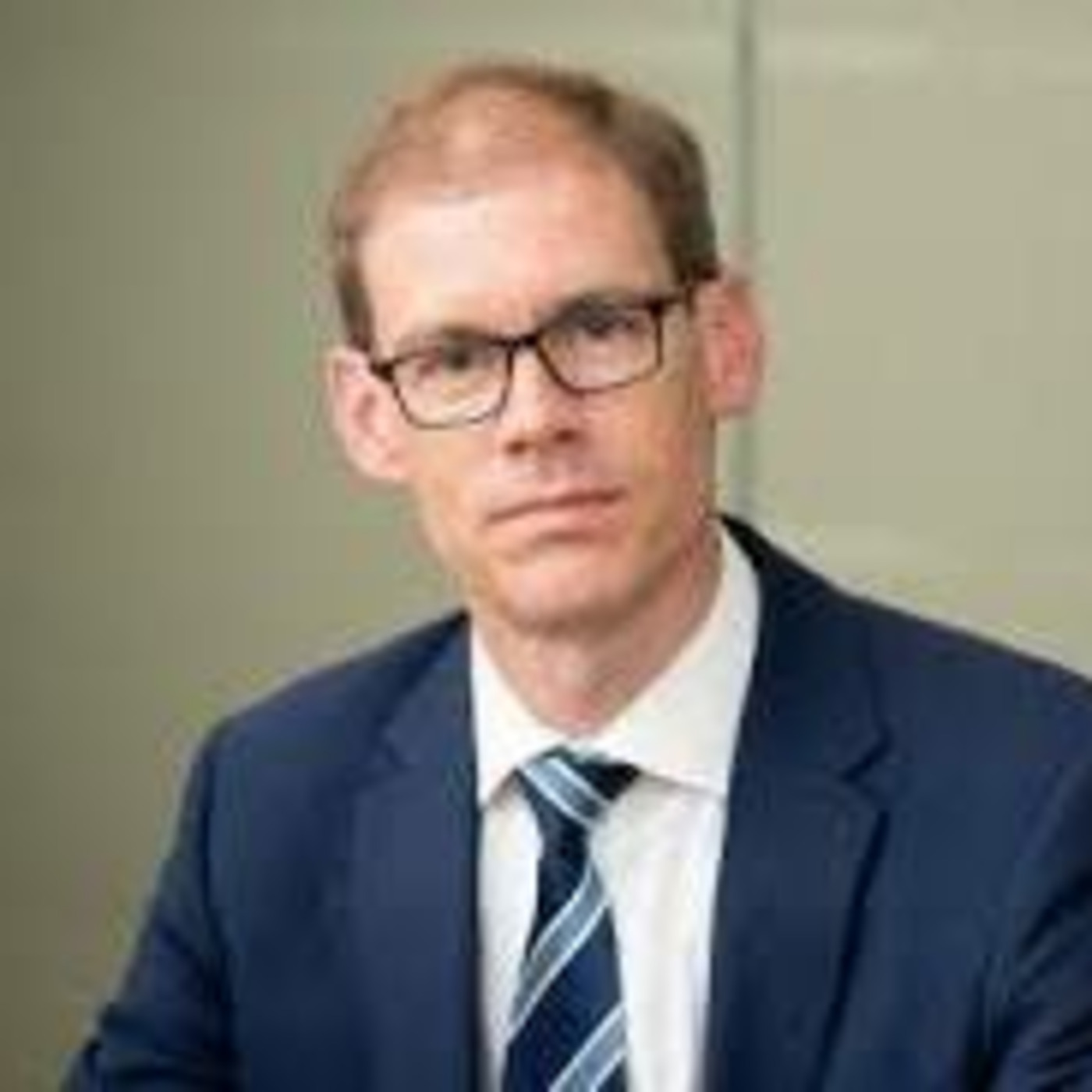
Aoifinn Devitt: The next podcast is another podcast brought to you as part of our special bonus series produced in connection with Always a Pensions Angle by DG Publishing. This next podcast features Peter Wallach. Peter Wallach is another legend on the LGPS circuit, at the helm of Merseyside Pension Fund for many years. He’s always had a particularly thoughtful approach to local government investing, and we hear from him about what pooling means and what the future holds.
Peter Wallach: Hello, ladies and gentlemen, and welcome to the second of a 5-part part series we’re running in partnership with the 50 Faces podcast. I am of course Thomas Parker. I’m joined by my partner in crime, Mr. Nick Reeve.
Speaker C: Hello, Tom. Uh, I like to think of myself as everybody’s partner in crime, although, Your Honor, for legal reasons, I should probably state not actually.
Peter Wallach: Absolutely not. Um, yes, second part of the— of our— of our series. Really interesting interview we’ve got coming today. Um, We’re joined by Mr. Peter Wallach. We’re hearing from Mr. Peter Wallach. Very interesting to hear his thoughts on all things pooling and how everything’s evolving.
Speaker C: Yeah, exactly. I think without wishing to kind of spoil anything, but I think Northern has been on a slightly different journey to a lot of the other pools and a different stage to a lot of the other pools. They’ve all had different paths, but Northern in particular I think is a slightly different beast at the moment. So be interesting to get his perspective on how well that’s playing out.
Peter Wallach: Absolutely. Well, Peter sat down once again with Aoifinn Devitt, host of the 50 Faces podcast at the recent Lapse of February event. And Ethan started by asking Peter, following the guidance in the form of regulations we’ve received from the government, what needs to evolve at the Northern LGPS pool to make sure that it meets the requirements of the new demands of pooling?
Speaker D: Clearly the most fundamental matter for us to address is the need for an FCA authorised entity. Up till now we’ve been working in a collaborative way with a joint committee structure, which is very typical of local government. But clearly the Fit for the Future consultation and the guidance means that we need to create an FCA-authorised entity. Because we don’t have an existing entity, that is starting from scratch. I look at the other pools and there’s a lot going on for them. They’re taking on legacy funds, they’re taking on new partner funds, but in a sense they’re already at pooling 1.0 and they’re moving to pooling 2.0. When I look at us, I recognise we’re at ground zero and we need to go straight into pooling 2.0, which is a very big step for us.
Aoifinn Devitt: I suppose there Northern has had its reasons perhaps for being able to stay the way it was in terms of, as I mentioned, the smaller number of partner funds, each of you quite large. Can you just paint a picture for the current, I suppose, level of assets at Northern Pool, what each of the underlying partner funds represents, and some of the things that you think you’ve done successfully up to now which you’d like to retain as we move into this next chapter?
Speaker D: Yes, looking at the 3 partner funds, current valuations are about £70 billion, of which half is Greater Manchester and then 26 6 is West Yorkshire, and Merseyside represents 1/6. So in a sense, we are 3/6, 2/6, and 1/6 in terms of assets under management. We feel we’ve been very successful in the private markets area, so that we have established in private equity NPEP, which now has more than £3 billion of commitments and £2 billion actually at work. And along with that, we’ve created a co-investment sleeve with Harbourvest. So we feel that’s delivered on both cost savings and a collaborative approach from the 3 funds. And I think that’s been a genesis for us to work perhaps more informally, but still collaborate on other private market areas, such as property, private credit, and of course infrastructure. Gillil is a key component of that for the Three Northern funds, and that’s a collaborative venture with LPP. So on the private market side, we have three in-house teams that have been working on those. In terms of public markets, we have slightly different models across the three funds, but I think as we come together with pooling, we all have large mandates. So there are far more limited opportunities to deliver cost savings on the public market side, but nonetheless, there will be opportunities for us to find some efficiencies.
Aoifinn Devitt: And another area that your, one of your largest, your largest partner fund, Greater Manchester, has, I think, been known for is its early and ambitious local investing strategy. Is that something that Northern is, you mentioned some of the GLIL, some of the other UK-centric investment initiatives, Is that something that Northern is also doing, you think, relatively well at this point, pursuing local investing?
Speaker D: Yes. As you say, Greater Manchester has a justified heritage in local investment. At Merseyside, we have actually been investing locally for a long time, and perhaps in a sense formally for the last 10 years. So we created the Catalyst Fund back in 2016, which invests into the local area. We perhaps have a slightly different model at Merseyside, so our local investment is much more debt-funded, although we do a bit of equity, whereas Greater Manchester is much more equity and property related. Similarly, West Yorkshire are keen to work in a similar way. So yes, the three funds are still working on agreeing a common approach to it. And as you’re very aware, the guidance requires us to look to work as collaboratively as we can in terms of setting local investment objectives. And that has yet to be determined.
Aoifinn Devitt: And clearly a busy period ahead as you do put in place this FCA-regulated entity, you hire new personnel for that. Can you walk us through a little bit about what’s going on behind the scenes, behind the headlines, as Northern works on its upgrade, I suppose, to the new status required?
Speaker D: Yes, so it’s kept the 3 directors very busy. As I say, because we don’t have a separate entity, it has fallen to the 3 directors and our teams so that we have, say, a very well-coordinated work programme. We’re working with PwC to deliver the entity, so we have a number of work streams. All three funds are represented on those work streams. They’re supported by subject matter experts with a focus on delivering the entity. Along with that, as you say, we need to recruit. We have good investment expertise across the three funds, but there are areas such as risk and compliance, where we don’t really have the depth of experience that we need. And as well as that, we need the C-suite to, both to create a board and the executive of the company. And that remains ongoing. We’re currently advertising, but there have been no appointments yet.
Aoifinn Devitt: And when you think about the government’s objectives, we’ve talked about the local investing or how prescriptive that is. We know that the overarching objective is scale, cost savings, most of which you probably were already achieving due to your size in the current form. Do you think that there is sufficient clarity? There was a question yesterday at the conference about whether there will be another round of pooling, and I think only about 8% of the audience thought it would be left alone with the current 6 pools. Looking into your crystal ball now, do you think— where do we go from here in terms of the government’s objectives? Are they clear? Can they be delivered upon? What’s next?
Speaker D: I hate forecasting because I’m always going to be wrong when I try and guess something. But being serious about the question, I think collaboration between pools will be the most effective way of delivering the government’s agenda. So you’ll be aware, as you know, in addition to GLIL, Northern is working with LPP on a housing initiative. And again, scale in housing is an area where I do believe, you know, cost savings and benefits can be delivered, not just in financial terms for the funds and for their beneficiaries, but also for the tenants or the residents of those houses. So there are things like that that we can do between the two of us. And hopefully there are other initiatives between other pools. And I think that’ll be one way of delivering the government’s objectives. Along with that, and of course DC is falling into the same objectives really as LGPS. And I think that as master trusts perhaps grow in scale, there’ll be conversations potentially between the LGPS pools and those as well. Because we share common objectives in terms of the ambitions that we have.
Aoifinn Devitt: And I suppose a key difference between Northern, the Northern Pool, and some of the other pools is you are not growing necessarily your number of partner funds. There is that additional integration and transition needed. What are the steps that you think will be most critical? You mentioned the pooling of the public funds. As you look to the governance parts, you mentioned that, do you think that this will, how do you think governance will work and will look? And how different will that be in the next chapter?
Speaker D: Governance will be fundamental to Northern Working, I think in two ways. One is in terms of us as partner funds, we’re handing over assets and implementation to the pool company. And it’s very important that as shareholders and as clients, we’re able to continue a collaborative interaction with the pool company. I think within the pool itself, because we are retaining three offices but it’ll be one team, you know, delivering investment management and all the other related services. It’d be really important that the coordination of those offices, the coordination of the teams is managed in an effective way. That will take time, but I see that as a critical component as well.
Aoifinn Devitt: Now we’re sitting here at the Strategic Allocation Conference, going by DG Publishing. So thinking about strategic asset allocation, there’ve been a lot of questions about what’s the next asset class that we will be focusing on. On, and you mentioned already that Northern Pool is quite advanced in terms of the use of private assets, and Merseyside is as well. Anything on the horizon in terms of your strategic asset allocation shift? And just to mention again that this is going to still remain in your domain as an administering authority, that will still be the decision of the pension fund panel and your stakeholders.
Speaker D: In terms of the split between public and private assets, certainly for Merseyside, I think we’ve reached as far as we are going to go in terms of private market assets. But I think the mix within private market will continue to evolve. Our need for income continues to grow, so that as well as skewing within different asset classes to more income-producing assets, which is obviously achievable in infrastructure, property, and private credit, less so in private equity. But I think the other area is things like natural capital, which I have some concerns about. I mean, not concerns in terms of investing in it, but the fact is that it doesn’t feature in the template that government’s given We have made initial allocations to natural capital. We’re very keen that those continue to grow if the right opportunities present themselves. So, I think I wait to see how that will evolve in terms of the way that the pool, you know, will recognise the ambitions of MyPensions Committee and how member views are taken into account. And then again, in terms of public market assets, yes, they’re more liquid. I think we will continue to see some further move from equities into fixed income. Personally, I have some significant concerns about sovereign bonds, but nonetheless, there are opportunities in fixed income. I think we’ve heard a few notes of caution from yesterday and, and this morning as well. So although equities should absolutely be the long-term engine of growth, and as an open DB scheme, we should have a significant allocation to equities, I think perhaps tactically, if not strategically, there’s an opportunity for a bit more in fixed income in the short to medium term.
Aoifinn Devitt: Just a few threads I’d love to pull on briefly here with respect to that. One is the natural capital as an expression of what I presume is a responsible investment policy that you have in place at Merseyside. Can you talk to us a little bit about just the, where that policy, the state of that policy right now? And that will still also remain in your domain once pooling is fully effectuated.
Speaker D: Yes, as you say, Responsible investment remains with the fund, although I’ve been surprised with the extent to which the implementation of RI has moved to the pool so effectively. Other than setting a policy, the fund really has no role at all in stewardship or engagement or all those activities. And perhaps it makes sense that those can be coordinated more effectively by a pool with more resources across the partner funds, but nonetheless, that surprises me. We do have a commitment to being net zero by 2050 or sooner. We have set interim milestones of a 50% reduction from a 2019 baseline by 2030. Where we are now, I’m not sure that’s achievable. And I think there’s increasing recognition that perhaps these targets shouldn’t be too rigid. You know, they’re ambitious and we need to have regard to them. But so that’s why we have been starting to allocate to natural capital that We see that as both an asset that has financial viability to it, but it helps us in terms of sustainability. It has the longer-term characteristics that we like as a pension fund investor, you know, and importantly, it is potentially very effective in helping us offset some of the hard-to-abate sectors.
Aoifinn Devitt: And you mentioned your focus on cash flow and an increasing need for cash flow, obviously, as your fund matures. How, and to just add, what does that represent in terms of the shift in advice function, say? Because often being mindful of cash flow used to be the role of the administering authority. They would focus on their cash flow and how they need to adjust the allocation. Will this now move to the pool to look after investment advice and asset allocation advice and thinking about your cash flow needs?
Speaker D: Yes, it will. At the moment, we are looking for a fairly plain vanilla approach to investment advice. As I’ve indicated earlier, we’ve got a lot of different plates that we’re trying to spin. Now, advice is another one, but perhaps it’s less immediate so that we’re able to give that less focus at the moment. But absolutely going forward, we’ll be looking for the pool to focus on our income requirements. They’ll be aware of the cash flows that that we’ll be needing from them on a monthly basis to pay pensions. And yes, we’ll be looking for them to advise us on perhaps the most optimal asset mix to deliver that.
Aoifinn Devitt: And one of the ingredients of the government policy and response regulations has been suggestion around external advisers. Again, this comes from a cost-saving drive to perhaps have less use or more pooled use of those advisers. How do you see your own governance evolving and your use of external advisers?
Speaker D: We wait to see the final guidance. I think as big funds, and I can’t, in one sense, I can’t speak for my fellow directors, but I would say that, you know, we do feel it’s a fiduciary responsibility to have oversight of the pool company. And I think external advice is very helpful in supporting that oversight. For ourselves, we obviously have advisors at the moment. That will change, but how it changes, I don’t know at the moment.
Aoifinn Devitt: And just to close out, just in terms of a snapshot of Merseyside itself, because you mentioned its funding level, does that lead you to think about de-risking in the future with respect to maybe these cash flow needs or perhaps the funding level you have? Or do you think, given your output status, you will need to have a firm anchor of growth assets within that portfolio?
Speaker D: Yes. I’m reluctant for us to de-risk much further than we have. I think that the asset mix is the most effective way of managing risk so that having a bit less in equities, a bit more in fixed income, and obviously it needs to be the right kind of fixed income. And who knows, as we heard yesterday, UK gilts have been the worst performing asset class for the last 5 years. So things that are notionally safe don’t necessarily deliver the risk-adjusted returns that one needs. But I think a mixture of a modest further adjustment to our allocation. We’re quite— I shouldn’t say big fans, but we have made use of equity protection strategies. Like all insurance, they’ve cost us rather than been giving us any returns, but we’re not investing in them for return. And perhaps at the moment, that’s something that we will look to to reimplement.
Aoifinn Devitt: Well, thank you so much, Peter. We’ve known each other for, I think, close on 2 decades, and you always struck me as one of the most open-minded, gracious, and thought leaders of the, uh, LGNPS landscape. So thank you for coming here and sharing your insights with us.
Speaker D: That’s very kind, Ethan. It’s, uh, been nice to have a conversation.
Peter Wallach: Thank you, Ethan, and thank you, Peter, for what was another really fascinating discussion. I think you’ll agree with me there, Nick.
Speaker C: It was, uh, interesting to hear him speak about, um, Northern’s slightly different path towards pooling, because as I say, I think they’re at the very start of a lot of the work that needs to be done in terms of setting up an FCA-authorized entity and recruiting and all that kind of thing. So, yeah, it’s a big challenge. It’ll be really interesting to see how that develops.
Peter Wallach: Absolutely. Absolutely. Thank you very much, Nick.
Speaker C: Thank you, Tom.
Peter Wallach: LGPS interview special was hosted in collaboration with the 50 Faces podcast. Interview was conducted by Aoifinn Devitt, with the music being “Drive Me Now” by Mood Mode from Storyblocks.com.
Aoifinn Devitt: The next podcast is another podcast brought to you as part of our special bonus series produced in connection with Always a Pensions Angle by DG Publishing. This next podcast features Peter Wallach. Peter Wallach is another legend on the LGPS circuit, at the helm of Merseyside Pension Fund for many years. He’s always had a particularly thoughtful approach to local government investing, and we hear from him about what pooling means and what the future holds.
Peter Wallach: Hello, ladies and gentlemen, and welcome to the second of a 5-part part series we’re running in partnership with the 50 Faces podcast. I am of course Thomas Parker. I’m joined by my partner in crime, Mr. Nick Reeve.
Speaker C: Hello, Tom. Uh, I like to think of myself as everybody’s partner in crime, although, Your Honor, for legal reasons, I should probably state not actually.
Peter Wallach: Absolutely not. Um, yes, second part of the— of our— of our series. Really interesting interview we’ve got coming today. Um, We’re joined by Mr. Peter Wallach. We’re hearing from Mr. Peter Wallach. Very interesting to hear his thoughts on all things pooling and how everything’s evolving.
Speaker C: Yeah, exactly. I think without wishing to kind of spoil anything, but I think Northern has been on a slightly different journey to a lot of the other pools and a different stage to a lot of the other pools. They’ve all had different paths, but Northern in particular I think is a slightly different beast at the moment. So be interesting to get his perspective on how well that’s playing out.
Peter Wallach: Absolutely. Well, Peter sat down once again with Aoifinn Devitt, host of the 50 Faces podcast at the recent Lapse of February event. And Ethan started by asking Peter, following the guidance in the form of regulations we’ve received from the government, what needs to evolve at the Northern LGPS pool to make sure that it meets the requirements of the new demands of pooling?
Speaker D: Clearly the most fundamental matter for us to address is the need for an FCA authorised entity. Up till now we’ve been working in a collaborative way with a joint committee structure, which is very typical of local government. But clearly the Fit for the Future consultation and the guidance means that we need to create an FCA-authorised entity. Because we don’t have an existing entity, that is starting from scratch. I look at the other pools and there’s a lot going on for them. They’re taking on legacy funds, they’re taking on new partner funds, but in a sense they’re already at pooling 1.0 and they’re moving to pooling 2.0. When I look at us, I recognise we’re at ground zero and we need to go straight into pooling 2.0, which is a very big step for us.
Aoifinn Devitt: I suppose there Northern has had its reasons perhaps for being able to stay the way it was in terms of, as I mentioned, the smaller number of partner funds, each of you quite large. Can you just paint a picture for the current, I suppose, level of assets at Northern Pool, what each of the underlying partner funds represents, and some of the things that you think you’ve done successfully up to now which you’d like to retain as we move into this next chapter?
Speaker D: Yes, looking at the 3 partner funds, current valuations are about £70 billion, of which half is Greater Manchester and then 26 6 is West Yorkshire, and Merseyside represents 1/6. So in a sense, we are 3/6, 2/6, and 1/6 in terms of assets under management. We feel we’ve been very successful in the private markets area, so that we have established in private equity NPEP, which now has more than £3 billion of commitments and £2 billion actually at work. And along with that, we’ve created a co-investment sleeve with Harbourvest. So we feel that’s delivered on both cost savings and a collaborative approach from the 3 funds. And I think that’s been a genesis for us to work perhaps more informally, but still collaborate on other private market areas, such as property, private credit, and of course infrastructure. Gillil is a key component of that for the Three Northern funds, and that’s a collaborative venture with LPP. So on the private market side, we have three in-house teams that have been working on those. In terms of public markets, we have slightly different models across the three funds, but I think as we come together with pooling, we all have large mandates. So there are far more limited opportunities to deliver cost savings on the public market side, but nonetheless, there will be opportunities for us to find some efficiencies.
Aoifinn Devitt: And another area that your, one of your largest, your largest partner fund, Greater Manchester, has, I think, been known for is its early and ambitious local investing strategy. Is that something that Northern is, you mentioned some of the GLIL, some of the other UK-centric investment initiatives, Is that something that Northern is also doing, you think, relatively well at this point, pursuing local investing?
Speaker D: Yes. As you say, Greater Manchester has a justified heritage in local investment. At Merseyside, we have actually been investing locally for a long time, and perhaps in a sense formally for the last 10 years. So we created the Catalyst Fund back in 2016, which invests into the local area. We perhaps have a slightly different model at Merseyside, so our local investment is much more debt-funded, although we do a bit of equity, whereas Greater Manchester is much more equity and property related. Similarly, West Yorkshire are keen to work in a similar way. So yes, the three funds are still working on agreeing a common approach to it. And as you’re very aware, the guidance requires us to look to work as collaboratively as we can in terms of setting local investment objectives. And that has yet to be determined.
Aoifinn Devitt: And clearly a busy period ahead as you do put in place this FCA-regulated entity, you hire new personnel for that. Can you walk us through a little bit about what’s going on behind the scenes, behind the headlines, as Northern works on its upgrade, I suppose, to the new status required?
Speaker D: Yes, so it’s kept the 3 directors very busy. As I say, because we don’t have a separate entity, it has fallen to the 3 directors and our teams so that we have, say, a very well-coordinated work programme. We’re working with PwC to deliver the entity, so we have a number of work streams. All three funds are represented on those work streams. They’re supported by subject matter experts with a focus on delivering the entity. Along with that, as you say, we need to recruit. We have good investment expertise across the three funds, but there are areas such as risk and compliance, where we don’t really have the depth of experience that we need. And as well as that, we need the C-suite to, both to create a board and the executive of the company. And that remains ongoing. We’re currently advertising, but there have been no appointments yet.
Aoifinn Devitt: And when you think about the government’s objectives, we’ve talked about the local investing or how prescriptive that is. We know that the overarching objective is scale, cost savings, most of which you probably were already achieving due to your size in the current form. Do you think that there is sufficient clarity? There was a question yesterday at the conference about whether there will be another round of pooling, and I think only about 8% of the audience thought it would be left alone with the current 6 pools. Looking into your crystal ball now, do you think— where do we go from here in terms of the government’s objectives? Are they clear? Can they be delivered upon? What’s next?
Speaker D: I hate forecasting because I’m always going to be wrong when I try and guess something. But being serious about the question, I think collaboration between pools will be the most effective way of delivering the government’s agenda. So you’ll be aware, as you know, in addition to GLIL, Northern is working with LPP on a housing initiative. And again, scale in housing is an area where I do believe, you know, cost savings and benefits can be delivered, not just in financial terms for the funds and for their beneficiaries, but also for the tenants or the residents of those houses. So there are things like that that we can do between the two of us. And hopefully there are other initiatives between other pools. And I think that’ll be one way of delivering the government’s objectives. Along with that, and of course DC is falling into the same objectives really as LGPS. And I think that as master trusts perhaps grow in scale, there’ll be conversations potentially between the LGPS pools and those as well. Because we share common objectives in terms of the ambitions that we have.
Aoifinn Devitt: And I suppose a key difference between Northern, the Northern Pool, and some of the other pools is you are not growing necessarily your number of partner funds. There is that additional integration and transition needed. What are the steps that you think will be most critical? You mentioned the pooling of the public funds. As you look to the governance parts, you mentioned that, do you think that this will, how do you think governance will work and will look? And how different will that be in the next chapter?
Speaker D: Governance will be fundamental to Northern Working, I think in two ways. One is in terms of us as partner funds, we’re handing over assets and implementation to the pool company. And it’s very important that as shareholders and as clients, we’re able to continue a collaborative interaction with the pool company. I think within the pool itself, because we are retaining three offices but it’ll be one team, you know, delivering investment management and all the other related services. It’d be really important that the coordination of those offices, the coordination of the teams is managed in an effective way. That will take time, but I see that as a critical component as well.
Aoifinn Devitt: Now we’re sitting here at the Strategic Allocation Conference, going by DG Publishing. So thinking about strategic asset allocation, there’ve been a lot of questions about what’s the next asset class that we will be focusing on. On, and you mentioned already that Northern Pool is quite advanced in terms of the use of private assets, and Merseyside is as well. Anything on the horizon in terms of your strategic asset allocation shift? And just to mention again that this is going to still remain in your domain as an administering authority, that will still be the decision of the pension fund panel and your stakeholders.
Speaker D: In terms of the split between public and private assets, certainly for Merseyside, I think we’ve reached as far as we are going to go in terms of private market assets. But I think the mix within private market will continue to evolve. Our need for income continues to grow, so that as well as skewing within different asset classes to more income-producing assets, which is obviously achievable in infrastructure, property, and private credit, less so in private equity. But I think the other area is things like natural capital, which I have some concerns about. I mean, not concerns in terms of investing in it, but the fact is that it doesn’t feature in the template that government’s given We have made initial allocations to natural capital. We’re very keen that those continue to grow if the right opportunities present themselves. So, I think I wait to see how that will evolve in terms of the way that the pool, you know, will recognise the ambitions of MyPensions Committee and how member views are taken into account. And then again, in terms of public market assets, yes, they’re more liquid. I think we will continue to see some further move from equities into fixed income. Personally, I have some significant concerns about sovereign bonds, but nonetheless, there are opportunities in fixed income. I think we’ve heard a few notes of caution from yesterday and, and this morning as well. So although equities should absolutely be the long-term engine of growth, and as an open DB scheme, we should have a significant allocation to equities, I think perhaps tactically, if not strategically, there’s an opportunity for a bit more in fixed income in the short to medium term.
Aoifinn Devitt: Just a few threads I’d love to pull on briefly here with respect to that. One is the natural capital as an expression of what I presume is a responsible investment policy that you have in place at Merseyside. Can you talk to us a little bit about just the, where that policy, the state of that policy right now? And that will still also remain in your domain once pooling is fully effectuated.
Speaker D: Yes, as you say, Responsible investment remains with the fund, although I’ve been surprised with the extent to which the implementation of RI has moved to the pool so effectively. Other than setting a policy, the fund really has no role at all in stewardship or engagement or all those activities. And perhaps it makes sense that those can be coordinated more effectively by a pool with more resources across the partner funds, but nonetheless, that surprises me. We do have a commitment to being net zero by 2050 or sooner. We have set interim milestones of a 50% reduction from a 2019 baseline by 2030. Where we are now, I’m not sure that’s achievable. And I think there’s increasing recognition that perhaps these targets shouldn’t be too rigid. You know, they’re ambitious and we need to have regard to them. But so that’s why we have been starting to allocate to natural capital that We see that as both an asset that has financial viability to it, but it helps us in terms of sustainability. It has the longer-term characteristics that we like as a pension fund investor, you know, and importantly, it is potentially very effective in helping us offset some of the hard-to-abate sectors.
Aoifinn Devitt: And you mentioned your focus on cash flow and an increasing need for cash flow, obviously, as your fund matures. How, and to just add, what does that represent in terms of the shift in advice function, say? Because often being mindful of cash flow used to be the role of the administering authority. They would focus on their cash flow and how they need to adjust the allocation. Will this now move to the pool to look after investment advice and asset allocation advice and thinking about your cash flow needs?
Speaker D: Yes, it will. At the moment, we are looking for a fairly plain vanilla approach to investment advice. As I’ve indicated earlier, we’ve got a lot of different plates that we’re trying to spin. Now, advice is another one, but perhaps it’s less immediate so that we’re able to give that less focus at the moment. But absolutely going forward, we’ll be looking for the pool to focus on our income requirements. They’ll be aware of the cash flows that that we’ll be needing from them on a monthly basis to pay pensions. And yes, we’ll be looking for them to advise us on perhaps the most optimal asset mix to deliver that.
Aoifinn Devitt: And one of the ingredients of the government policy and response regulations has been suggestion around external advisers. Again, this comes from a cost-saving drive to perhaps have less use or more pooled use of those advisers. How do you see your own governance evolving and your use of external advisers?
Speaker D: We wait to see the final guidance. I think as big funds, and I can’t, in one sense, I can’t speak for my fellow directors, but I would say that, you know, we do feel it’s a fiduciary responsibility to have oversight of the pool company. And I think external advice is very helpful in supporting that oversight. For ourselves, we obviously have advisors at the moment. That will change, but how it changes, I don’t know at the moment.
Aoifinn Devitt: And just to close out, just in terms of a snapshot of Merseyside itself, because you mentioned its funding level, does that lead you to think about de-risking in the future with respect to maybe these cash flow needs or perhaps the funding level you have? Or do you think, given your output status, you will need to have a firm anchor of growth assets within that portfolio?
Speaker D: Yes. I’m reluctant for us to de-risk much further than we have. I think that the asset mix is the most effective way of managing risk so that having a bit less in equities, a bit more in fixed income, and obviously it needs to be the right kind of fixed income. And who knows, as we heard yesterday, UK gilts have been the worst performing asset class for the last 5 years. So things that are notionally safe don’t necessarily deliver the risk-adjusted returns that one needs. But I think a mixture of a modest further adjustment to our allocation. We’re quite— I shouldn’t say big fans, but we have made use of equity protection strategies. Like all insurance, they’ve cost us rather than been giving us any returns, but we’re not investing in them for return. And perhaps at the moment, that’s something that we will look to to reimplement.
Aoifinn Devitt: Well, thank you so much, Peter. We’ve known each other for, I think, close on 2 decades, and you always struck me as one of the most open-minded, gracious, and thought leaders of the, uh, LGNPS landscape. So thank you for coming here and sharing your insights with us.
Speaker D: That’s very kind, Ethan. It’s, uh, been nice to have a conversation.
Peter Wallach: Thank you, Ethan, and thank you, Peter, for what was another really fascinating discussion. I think you’ll agree with me there, Nick.
Speaker C: It was, uh, interesting to hear him speak about, um, Northern’s slightly different path towards pooling, because as I say, I think they’re at the very start of a lot of the work that needs to be done in terms of setting up an FCA-authorized entity and recruiting and all that kind of thing. So, yeah, it’s a big challenge. It’ll be really interesting to see how that develops.
Peter Wallach: Absolutely. Absolutely. Thank you very much, Nick.
Speaker C: Thank you, Tom.
Peter Wallach: LGPS interview special was hosted in collaboration with the 50 Faces podcast. Interview was conducted by Aoifinn Devitt, with the music being “Drive Me Now” by Mood Mode from Storyblocks.com.