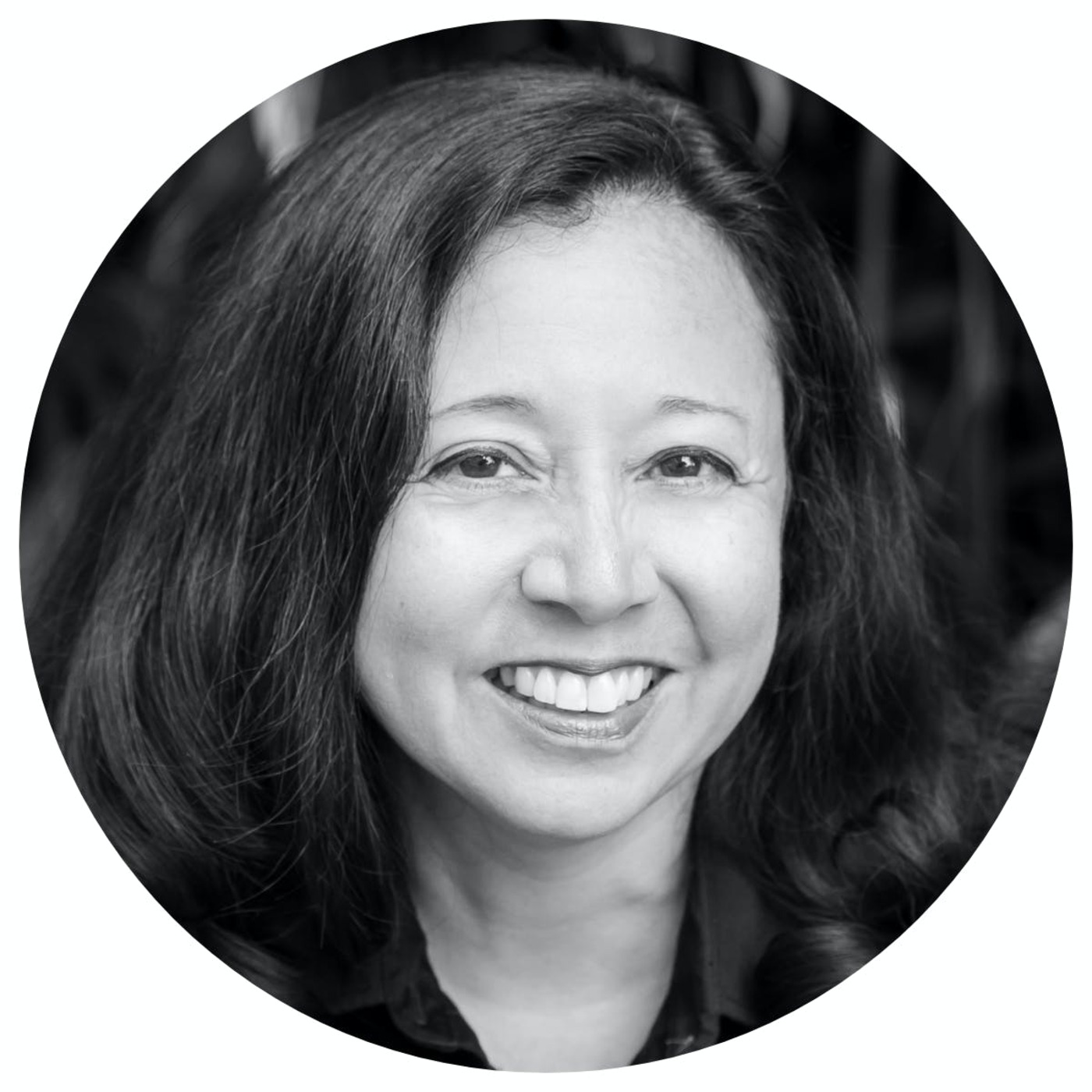
Aoifinn Devitt: Our next guest is Chief Investment Officer at Fordham University based in New York City and previously headed an investment team at a health system. Hear from her about her focus and mission at Fordham and why she never lets go of the golden rule. I’m Aoifinn Devitt, and welcome to the 50 Faces Podcast, a podcast committed to revealing the richness and diversity of the world of investment by focusing on its people and their stories. I’m joined today by Geeta Kapadia, who’s Chief Investment Officer at Fordham University, a role she’s held since August 2022. She was previously Associate Treasurer and Director of Investments at Yale New Haven Health where she headed a 5-person investment team. Welcome, Geeta. Thanks for joining me today.
Geeta Kapadia: Thanks so much for having me.
Aoifinn Devitt: Well, let’s start with your background. Where did you grow up? What did you study and how did you come to the world of investing? Yes.
Geeta Kapadia: So I grew up in the suburbs of Chicago, a city you know well, and really just had a lovely upbringing, had everything I could have asked for, enjoyed school, enjoyed being out there, and then went to the University of Chicago as an undergrad. I was a math major, and at the time I was really a pre-med. And so because Chicago doesn’t have a dedicated pre-med track, I was taking science courses whilst fulfilling my requirements for the math degree because I really enjoyed math. And so I graduated in December of 1994 and started working in the clinical field. And so was working in cancer research and trying to continue to think about medical school. And then decided after a few years that maybe I should try something different. And so that’s how I ended up in investments.
Aoifinn Devitt: And it’s interesting that you did spend part of your career in a health system. So I suppose a little bit of overlap, at least understanding the language or speaking the language of the professionals there. Do you think you imported anything from those years studying and working in the scientific field into your analysis style and investing?
Geeta Kapadia: Yeah, I mean, I think what I— I was a data analyst. And so what I think I really enjoyed about being in that clinical setting is seeing the impact you had on patients. Who were going through at the time a rigorous chemotherapy trial. And so being able to kind of use that analytical part of what I studied and what I enjoyed in the clinical setting was really very positive to me. When I moved over to investments full-time, in some ways I used some of that analysis framework in a similar way. And I think as I’ve gained experience in investing, that has continued to sort of be some of the foundation of the work that I do on, on managers, on asset allocation, on strategy, capital markets, it kind of all comes back to that baseline foundation of analytical research.
Aoifinn Devitt: And in the journey then from entering investing to now being at the helm of Fordham, were there any twists or turns there, or was it a fairly straight-line trajectory?
Geeta Kapadia: Well, you know, I think one of the best experiences I’ve had is the ability to work in different countries. So, I started out in Chicago in investment consulting, really enjoyed that. My husband and I got married and we moved to India for a year and I was working in investing there. Then I had the opportunity to move to the UK to work in investment consulting there, which we did, living in London as well as in Scotland and Edinburgh. And those experiences really just in some ways transformed the way I think about not only investing in the States, but investing internationally, the way I deal with investment managers, all of those kind of soft skills around creating a portfolio and running a team. I think all of that, that experience has really come to bear and helped me in that journey. And I’ve been very grateful for that opportunity.
Aoifinn Devitt: It’s a kind of an underappreciated global passport, I think, the talent or skills of investing, because they are translatable. They may be slightly different in translation in different countries, but they’re at least common principles. As opposed to something like law maybe where the regulatory environment and the legal codes are different. So I think if I’d known then when I was in college about how international a career investing could be, I might have been more interested. So moving now to Fordham, so what’s at the forefront of your mind now? Can you just give us, paint a picture as to what you do in the CIO role?
Geeta Kapadia: Yeah, so it’s been an amazing experience. I’m really grateful to be a part of this community We have really spent the last year just— I have spent the last year acclimating myself to the portfolio and the stakeholders, the community, the mission, all of those things that I feel are really the foundation of how we’re going to run this endowment in the future. And so I’ve been grateful to have wonderful partners, both internal and external, all of my former colleagues who I’ve reached out to numerous times to get thoughts on what I’ve been thinking about. I’ve been fortunate to work with some great investment managers, some great investment consultants, and thankfully my network has been robust and I’ve been able to draw upon some of those people to think through different plans I have, as well as our amazing investment committee and our board. And so the last year has really been sort of that building year, you know, thinking through strategy, investment strategy, team strategy, how the office will operate, putting all of the building blocks in place to now move towards the actual transformation of the portfolio. So I’ve been very fortunate. I’ve got the team now all hired, which is just a very recent development. We are working towards hiring a new investment consulting firm. We have a brand new investment committee with a new investment committee chair. So all of these pieces feel very exciting and, and I think they’re going to help us navigate the undoubtedly uncertain waters over the next few months and few years.
Aoifinn Devitt: And maybe just speaking about the structure of the endowment, size-wise, asset allocation, can you give a bit of detail there?
Geeta Kapadia: Yeah, so it’s a relatively, I want to say traditional, but no endowments are traditional in some sense. But you know, it’s a very perpetually invested sort of asset allocation. So heavily invested in alternatives, a very good size investment in private markets, including private equity, venture capital, real estate, infrastructure. We have a good size absolute return portfolio. Again, trying to look at diversification, learning about different sources of return other than traditional equities and fixed income, and then a really good healthy investment in public equities. So it’s a very much of a growth portfolio focused on growth for the future. We have a small allocation to inflation-sensitive investments, but for the most part, really kind of high octane, which is keeping in line with most university endowments.
Aoifinn Devitt: When you say high-octane, how high? Have you invested in venture capital? Seems to be flavor of the month when it comes to university endowments. Everyone’s looked at the Yale experience that perhaps has has, some of the froth has come out of that segment. Do you look at venture capital? When you say your private equity allocation, what would that comprise?
Geeta Kapadia: Yeah, it’s a relatively diversified private equity portfolio. So we have a good amount in venture. We have buyout and growth. We have kind of your traditional middle market exposure. I think the portfolio could use a little bit more on the growth side of things, but given our allocation to venture, I’m pretty comfortable with where we sit at the moment. We’ve had a small allocation to private debt. It has done what it’s supposed to do. And so I’ve been fortunate enough not to have to worry about it. But I think when I review the areas that I need to spend the most time on and the team needs to spend the most time on over the next 6 to 9 months, it’s probably going to be the growth segment of the private equity market.
Aoifinn Devitt: And then thinking about the expressing the mission of the university in its investment portfolio, is that something that you try to do? And what does that look like in terms of maybe emphasizing certain areas for investment, de-emphasizing others? How do you go about that?
Geeta Kapadia: Yeah, I think that’s a great question. And when I spoke earlier about the traditional university endowment, I think this is the part that individualizes each endowment is how do you think about the mission of your institution and how does that manifest itself in the portfolio? So historically at Fordham, the portfolio has had some expression of that mission, but maybe not as much alignment as I think our team and the new president who has been on board for just over a year now and our newly formed investment committee would like. And so I’m really excited about the opportunity to infuse that mission throughout the endowment. Historically, it’s been more of a segment of the portfolio that’s been mission-focused. And I think what we’re trying to do is make it more holistic in that each of the institutional investments that we have in the portfolio are going to express that mission in some way or another, whether it’s diversity, whether it’s sustainability, whether it’s investing in the local community. Whether it’s higher education, there are so many flavors of that mission that we can put into the portfolio. And I think there’s great opportunity for us to think through interesting ways to do that.
Aoifinn Devitt: Any specific examples, maybe given the community, we just talked about how your campus is spread between the Bronx, Manhattan, and Westchester, as well as other maybe aspects. Are you trying to back university-led ventures or university-sourced scientific endeavors?
Geeta Kapadia: Yeah, so we do have a couple ways that we invest specifically at Fordham. One is we have a student-run investment fund, and so that is an undergrad-run fund, and they are investing in publicly listed companies, but it’s a whole university class and a program. And so the professor who runs it, he interviews candidates. The eventual selected candidates create an investment committee with a chair, a CIO, very much run like a traditional money management investment firm or strategy. So that’s one way in which the endowment participates in the growth of students. The other way is that we have what’s called our Angel Investment Fund. And so that is run by graduate students where it’s much more of a traditional private equity approach to seeding new investment opportunities. And so that has been a newer initiative at the university, but another way that university students can draw upon their expertise and the expertise of other professors and experts at the university to identify emerging companies. I think through that fund, they’re also particularly trying to look at companies that are focused in the New York area, particularly in the Bronx if they can, to try and identify ways to support the community.
Aoifinn Devitt: And do you get caught up in some of the, I suppose, the zeitgeist around other large New York-based institutions, money, the public funds, which have in some cases got quite distinct divestment policies in place, or they maybe have emerging manager targets in place around some of this diversity that you mentioned earlier. I don’t like to use the term ESG anymore since it’s getting a little bit vexed and controversial, but we still think of things under those heads. Across those heads, would you say that you are listening to your stakeholders, making change in areas perhaps that you wouldn’t have done in the past?
Geeta Kapadia: It’s a very topical question, timely question for Fordham. We have had recently students come to us with a proposal about divestment. And so it’s not the first time that it’s come up at Fordham. And it’s not the first time that it’s come up since I’ve been the CIO and not necessarily from students either. It’s really been more of a faculty/staff/community question. To what extent is Fordham invested in fossil fuels? To what extent are the Board of Trustees willing to think about divestment? And I think adding to that is the fact that we are a Jesuit university, we’re a Catholic university, and so we have that layer of guidance from Rome and the Vatican that we need to think about as well. So I spend a lot of time talking to my peers across the US and outside of the US who are also faced with some of these challenges and have thought through them perhaps a little bit earlier than I have at Fordham. I think it’s something that’s going to come to a head this year in the calendar year, the, the school year, I should say. And so there are a lot of sources from which we can draw, and some of them, such as the ones you’ve mentioned— pension plans in the New York area, universities in the New York area, Catholic institutions in our area, Catholic institutions outside of our area. We have an amazing sustainability program at Fordham, so we have great professors, graduate students, undergrad students who have studied this in much more detail than I have. So I’m really looking forward to spending time with representatives from those different groups and those different communities to be able to understand how we can come up with a policy that makes sense for Fordham and its community and its stakeholders.
Aoifinn Devitt: And when it comes to the partnerships that you have with managers and how they will perhaps evolve to reflect this evolving focus and mission, How important are the manager partnerships in this?
Geeta Kapadia: Yeah, they’re extremely important. We think very seriously about each investment that we make and each firm that we partner with. And that applies across the board, not to just investment managers, but to consulting firms, to lawyers, legal firms, to suppliers, all of those partners that we think about at Fordham. We all want to make sure that they’re aligned with our mission. Vision and values. And so there are so many ways that we can analyze that, and maybe not all of them are great and not all of them are perfect, but I think going through the effort of identifying firms that really understand our mission and want to help us achieve the objectives that we’ve set out, it’s just vitally important. I think about it, having just hired a team, in a very similar way, in that you want everyone to kind of be all in, right? If you are going to be a part of our organization, whether it’s as an employee, a board member, a staff member, a booster, whatever you wanna think about, you wanna make sure that you’re all in with Fordham. And so we really try and tease that out in a lot of different ways. And to be honest, it’s just kind of true bottom-up research, talking through ideas, talking through scenarios, talking through what is important to them as a firm, as individuals, and figuring out where those synergies exist and to what extent we feel comfortable partnering as an organization with those firms.
Aoifinn Devitt: And when you compare your function now and what’s important now to the time at a health system, just given listeners may not know necessarily the differences between how those two institutions are run, how would you say your priorities have shifted? What were they like then? And do those same things matter now?
Geeta Kapadia: Yeah, it’s a great thing to think about for me because I worked at a health system for 13 years, and it wasn’t until COVID that it really felt like, wow, we really work for a hospital. An investment team in any institution, but particularly I think at a healthcare institution, you’re a bit removed from the day-to-day workings of what the organization does, right? So obviously a health system such as Yale New Haven, their job is to provide healthcare to the community that they serve and Although we worked for the institution, in some ways we were a bit isolated relative to what the business of Yale New Haven was. When COVID hit, suddenly we were no longer isolated. We were all in. I was scheduling patients for telemedicine visits. My boss was helping to volunteer at vaccine clinics. You know, we were all part of it. And that was a really rewarding time, a challenging time, no doubt. We are still very far removed from the front lines, but it was a very rewarding time in that it really made you feel like this is why we do what we do. It’s to do this very basic mission of providing healthcare to communities who need it. And I think being at a university, the difference is that we’re never removed from that. You know, there’s no way to be removed from the students that we serve, the alumni, the board, the donors. We are there all the time. My office is in a building with classes, so every day when I go to the office, those students right there in the elevator with me, and that mission is walking there right in front of me. And it’s a wonderful thing to be a part of. It’s very energizing. It’s very invigorating, motivating. And so I’m grateful to be even closer to that mission than I was previously.
Aoifinn Devitt: I’m picking up on one of the mission statements that you mentioned around diversity. What’s been your impression of your experience as a woman in investment management and just the industry’s own diversity and inclusion gestures and progress? Because we’ve met on many of these dedicated conferences and whether it be affinity groups, etc. What’s your experience been?
Geeta Kapadia: Yeah, it’s not to bring a negative tone to our, to our discussion, but it’s very frustrating, I would say. I think the awareness is there. No one will argue that the number— we’re analysts, right? So at the end of the day, it comes down to numbers for us. A lot of the time. And so the numbers are very disappointing when you look at fundraising, you look at new leadership at firms, ownership, all of those metrics by which you measure how much progress we have made as an industry in diversifying the landscape. And it’s, it’s just really disappointing to see that those numbers move so slowly. And clearly there’s a lot of good efforts that have been put in place to change that. And it doesn’t all manifest itself right away. So of course, you know, it’s going to be bad before it gets good, I guess. At the same time, it gets very tiring to see, you know, hires being made and boards and management committees and investment committees, and they all look the same. And that doesn’t preclude diversity of thought at all. And so I wouldn’t want to make that argument. But at the same time, it feels like no one really cares. So, and, and you know, maybe, maybe that’s not true for many organizations. I’m sure it’s not true for many, but unfortunately I feel like until you get diverse leadership, that diversity at that top level, it’s gonna continue to perpetuate itself. And so I’m thrilled to be able to lead a team. My team is 80% women of color, which is just— I’m just so excited about that and so thrilled by that because I truly believe that’s going to help us identify opportunities that other organizations may not see or may not find. I’ve been so fortunate at Fordham to work for a reporting line that’s all women until very recently, and to see President Tetlow at Fordham as the leader of our organization has just been a very life-affirming sort of thing. She’s a mom, she’s an attorney, she’s been a working mom for many, many years. And so she understands the challenges that working mothers face. And she doesn’t understand the challenges maybe that a white man in leadership faces, but she has a separate set of experiences that she brings to the table that for me make it a wonderful place to be.
Aoifinn Devitt: That’s great. We should probably advertise these all-female reporting lines and actually profile them because I think they’re rare and we need to know they do exist. And that’s true. It’s a has its own great dynamic of support, spoken and unspoken, which you, you talk about. Given we talked about this journey and being in a minority in the world of investing, can you look back at your journey? Were there any particular setbacks or challenges there? Nothing to do with necessarily being a woman, but just the course of investing can have its ups and downs. Anything you learned lessons from?
Geeta Kapadia: I would say going back to my experience working out of the United States, That set of opportunities came with challenges as well. Of course, living apart from your family, living away from the town that you grew up in, the city that you know very well, those are all exciting, but they’re also challenging when you have news you want to go share with someone. You know, your immediate family might not be right there to be able to do that. And COVID brought this all to the forefront too. Couldn’t go see your family. It was a wonderful thing, and I’m so grateful that I did it, but it wasn’t easy as well. And I did a podcast, or a quick podcast last year about the idea of walking into a British office, and theoretically we should all kind of speak the same language, but clearly we don’t. And learning all of those little things that I had no idea, you know, silly things that I had no idea what they meant, and yet I should have known because everyone was using these terms. And so That was a very uncomfortable experience for me, but a great one because it gave me the opportunity to learn more about my clients, about my coworkers, my colleagues, my peers. And the same thing happened when I lived in India and worked in an Indian office. It was a very similar situation with the added wrinkle that people were speaking a different language as well that I didn’t understand. But all of those experiences lead us to having that diversity of thought. And so I’m so fortunate to have been able to do that. And, you know, I strongly encourage students and young people when they have those opportunities to seize them and take them and go for it, because they will not be easy, but they will be good. And I think that feeling of being uncomfortable is actually a good one. It’s not fun, but it actually leads you to a lot of learning and a lot of growth. And so I, I try and encourage students and people that I speak with who are looking for some advice to embrace that. If you’re uncomfortable, you’re probably doing something right.
Aoifinn Devitt: I love that. That’s come up time and time again in these podcasts, that getting comfortable about being uncomfortable, and also the benefit of just diverse experiences to really improve one’s empathy and in general adaptability. Well, you mentioned this female reporting line and how motivating that is. Were there any key people across the course of your career that particularly had an influence on you, or any mentor or sponsor?
Geeta Kapadia: Yeah, well, I’ll start with my mom, who was a working mom and at the age of 54 went back and got her doctorate degree in pharmacy. And that was not an easy thing for someone to do, particularly back in the ’90s, because there was even less support for working moms than there is now. So I see pictures of her graduating and remember what it was like to see you her, know, walk across the stage and really feel a lot of pride in that and gratitude for her modeling that for me at a very young age. In addition, there have been a lot of wonderful bosses, women and men, who have really helped me to work towards being the leader I want to be. And I’ll mention a couple of them. Fiona Dunsire, who was my supervisor, my head at Mercer in London, she was amazing, still amazing. And I think a lot about the advice that she gave me as I worked there. And moved on. And then a number of people at the very first firm where I started at Stratford Advisory Group, which is actually now part of Mercer, there are a number of senior leaders there who really shaped what it meant to be a consultant and helped me to think about things in ways that perhaps I hadn’t before.
Aoifinn Devitt: That’s so impressive about your mom and gives me hope for the pursuit of further studies as I approach my 50s. Was there any maybe piece of advice, words of wisdom, or creed or motto that you have brought with you based on these experiences?
Geeta Kapadia: Yeah, this goes back way back to when I was really small, and my dad actually always used to tell my sister and I this concept of the Golden Rule, right? Do unto others as others— you’d have others do unto you. And it sounds very preachy and all of that, but I think about it a lot when I am in a situation where I feel a bit defensive or threatened or someone’s trying to take something from me, or I’m not being treated fairly. And I try and put myself with some success, not a lot, but some, put myself in that other person’s shoes to think about. So they’re reacting in a way towards me, and what is it that’s making them act that way? And so rather than kind of reacting and being defensive back and thinking through, well, that’s not fair, and why am I being treated this way, to think through this. So there’s a reason why this is happening and what is making it manifest itself in this confrontation or this situation. So it’s something I think about a lot to remind myself, try and be a little slower to judgment. Try and put yourself in the other person’s shoes. Maybe they’re going through something you don’t even know about. So trying to have that empathy, which you mentioned earlier, that’s something I, I work on. And I think we all probably could use a little bit more of.
Aoifinn Devitt: Well, Geeta, you’ve always been in the background because we never really knew each other, such an amazingly warm, supportive, and kind presence in our industry. I felt your support even though we didn’t know each other, and I was delighted to gather you and in this podcast to hear about your career and about your focus now at Fordham. Fordham is lucky to have you. Thank you for coming here and sharing your insights with us.
Geeta Kapadia: Well, thank you so much. It’s been a pleasure, and I appreciate the opportunity.
Aoifinn Devitt: I’m Aoifinn Devitt. Thank you for listening to the 50 Faces podcast. If you liked what you heard and would like to tune in to hear more inspiring investors on their personal journeys, please subscribe on Apple Podcasts or wherever you get your podcasts. You can find all of our content on the 50 Faces Hub, where you’ll find a library of role models, resources, and other solutions to enhance your career. This podcast is for informational purposes only and should not be construed as investment advice, and all views are personal and should not be attributed to to the organizations and affiliations of the host or any guest.
Aoifinn Devitt: Our next guest is Chief Investment Officer at Fordham University based in New York City and previously headed an investment team at a health system. Hear from her about her focus and mission at Fordham and why she never lets go of the golden rule. I’m Aoifinn Devitt, and welcome to the 50 Faces Podcast, a podcast committed to revealing the richness and diversity of the world of investment by focusing on its people and their stories. I’m joined today by Geeta Kapadia, who’s Chief Investment Officer at Fordham University, a role she’s held since August 2022. She was previously Associate Treasurer and Director of Investments at Yale New Haven Health where she headed a 5-person investment team. Welcome, Geeta. Thanks for joining me today.
Geeta Kapadia: Thanks so much for having me.
Aoifinn Devitt: Well, let’s start with your background. Where did you grow up? What did you study and how did you come to the world of investing? Yes.
Geeta Kapadia: So I grew up in the suburbs of Chicago, a city you know well, and really just had a lovely upbringing, had everything I could have asked for, enjoyed school, enjoyed being out there, and then went to the University of Chicago as an undergrad. I was a math major, and at the time I was really a pre-med. And so because Chicago doesn’t have a dedicated pre-med track, I was taking science courses whilst fulfilling my requirements for the math degree because I really enjoyed math. And so I graduated in December of 1994 and started working in the clinical field. And so was working in cancer research and trying to continue to think about medical school. And then decided after a few years that maybe I should try something different. And so that’s how I ended up in investments.
Aoifinn Devitt: And it’s interesting that you did spend part of your career in a health system. So I suppose a little bit of overlap, at least understanding the language or speaking the language of the professionals there. Do you think you imported anything from those years studying and working in the scientific field into your analysis style and investing?
Geeta Kapadia: Yeah, I mean, I think what I— I was a data analyst. And so what I think I really enjoyed about being in that clinical setting is seeing the impact you had on patients. Who were going through at the time a rigorous chemotherapy trial. And so being able to kind of use that analytical part of what I studied and what I enjoyed in the clinical setting was really very positive to me. When I moved over to investments full-time, in some ways I used some of that analysis framework in a similar way. And I think as I’ve gained experience in investing, that has continued to sort of be some of the foundation of the work that I do on, on managers, on asset allocation, on strategy, capital markets, it kind of all comes back to that baseline foundation of analytical research.
Aoifinn Devitt: And in the journey then from entering investing to now being at the helm of Fordham, were there any twists or turns there, or was it a fairly straight-line trajectory?
Geeta Kapadia: Well, you know, I think one of the best experiences I’ve had is the ability to work in different countries. So, I started out in Chicago in investment consulting, really enjoyed that. My husband and I got married and we moved to India for a year and I was working in investing there. Then I had the opportunity to move to the UK to work in investment consulting there, which we did, living in London as well as in Scotland and Edinburgh. And those experiences really just in some ways transformed the way I think about not only investing in the States, but investing internationally, the way I deal with investment managers, all of those kind of soft skills around creating a portfolio and running a team. I think all of that, that experience has really come to bear and helped me in that journey. And I’ve been very grateful for that opportunity.
Aoifinn Devitt: It’s a kind of an underappreciated global passport, I think, the talent or skills of investing, because they are translatable. They may be slightly different in translation in different countries, but they’re at least common principles. As opposed to something like law maybe where the regulatory environment and the legal codes are different. So I think if I’d known then when I was in college about how international a career investing could be, I might have been more interested. So moving now to Fordham, so what’s at the forefront of your mind now? Can you just give us, paint a picture as to what you do in the CIO role?
Geeta Kapadia: Yeah, so it’s been an amazing experience. I’m really grateful to be a part of this community We have really spent the last year just— I have spent the last year acclimating myself to the portfolio and the stakeholders, the community, the mission, all of those things that I feel are really the foundation of how we’re going to run this endowment in the future. And so I’ve been grateful to have wonderful partners, both internal and external, all of my former colleagues who I’ve reached out to numerous times to get thoughts on what I’ve been thinking about. I’ve been fortunate to work with some great investment managers, some great investment consultants, and thankfully my network has been robust and I’ve been able to draw upon some of those people to think through different plans I have, as well as our amazing investment committee and our board. And so the last year has really been sort of that building year, you know, thinking through strategy, investment strategy, team strategy, how the office will operate, putting all of the building blocks in place to now move towards the actual transformation of the portfolio. So I’ve been very fortunate. I’ve got the team now all hired, which is just a very recent development. We are working towards hiring a new investment consulting firm. We have a brand new investment committee with a new investment committee chair. So all of these pieces feel very exciting and, and I think they’re going to help us navigate the undoubtedly uncertain waters over the next few months and few years.
Aoifinn Devitt: And maybe just speaking about the structure of the endowment, size-wise, asset allocation, can you give a bit of detail there?
Geeta Kapadia: Yeah, so it’s a relatively, I want to say traditional, but no endowments are traditional in some sense. But you know, it’s a very perpetually invested sort of asset allocation. So heavily invested in alternatives, a very good size investment in private markets, including private equity, venture capital, real estate, infrastructure. We have a good size absolute return portfolio. Again, trying to look at diversification, learning about different sources of return other than traditional equities and fixed income, and then a really good healthy investment in public equities. So it’s a very much of a growth portfolio focused on growth for the future. We have a small allocation to inflation-sensitive investments, but for the most part, really kind of high octane, which is keeping in line with most university endowments.
Aoifinn Devitt: When you say high-octane, how high? Have you invested in venture capital? Seems to be flavor of the month when it comes to university endowments. Everyone’s looked at the Yale experience that perhaps has has, some of the froth has come out of that segment. Do you look at venture capital? When you say your private equity allocation, what would that comprise?
Geeta Kapadia: Yeah, it’s a relatively diversified private equity portfolio. So we have a good amount in venture. We have buyout and growth. We have kind of your traditional middle market exposure. I think the portfolio could use a little bit more on the growth side of things, but given our allocation to venture, I’m pretty comfortable with where we sit at the moment. We’ve had a small allocation to private debt. It has done what it’s supposed to do. And so I’ve been fortunate enough not to have to worry about it. But I think when I review the areas that I need to spend the most time on and the team needs to spend the most time on over the next 6 to 9 months, it’s probably going to be the growth segment of the private equity market.
Aoifinn Devitt: And then thinking about the expressing the mission of the university in its investment portfolio, is that something that you try to do? And what does that look like in terms of maybe emphasizing certain areas for investment, de-emphasizing others? How do you go about that?
Geeta Kapadia: Yeah, I think that’s a great question. And when I spoke earlier about the traditional university endowment, I think this is the part that individualizes each endowment is how do you think about the mission of your institution and how does that manifest itself in the portfolio? So historically at Fordham, the portfolio has had some expression of that mission, but maybe not as much alignment as I think our team and the new president who has been on board for just over a year now and our newly formed investment committee would like. And so I’m really excited about the opportunity to infuse that mission throughout the endowment. Historically, it’s been more of a segment of the portfolio that’s been mission-focused. And I think what we’re trying to do is make it more holistic in that each of the institutional investments that we have in the portfolio are going to express that mission in some way or another, whether it’s diversity, whether it’s sustainability, whether it’s investing in the local community. Whether it’s higher education, there are so many flavors of that mission that we can put into the portfolio. And I think there’s great opportunity for us to think through interesting ways to do that.
Aoifinn Devitt: Any specific examples, maybe given the community, we just talked about how your campus is spread between the Bronx, Manhattan, and Westchester, as well as other maybe aspects. Are you trying to back university-led ventures or university-sourced scientific endeavors?
Geeta Kapadia: Yeah, so we do have a couple ways that we invest specifically at Fordham. One is we have a student-run investment fund, and so that is an undergrad-run fund, and they are investing in publicly listed companies, but it’s a whole university class and a program. And so the professor who runs it, he interviews candidates. The eventual selected candidates create an investment committee with a chair, a CIO, very much run like a traditional money management investment firm or strategy. So that’s one way in which the endowment participates in the growth of students. The other way is that we have what’s called our Angel Investment Fund. And so that is run by graduate students where it’s much more of a traditional private equity approach to seeding new investment opportunities. And so that has been a newer initiative at the university, but another way that university students can draw upon their expertise and the expertise of other professors and experts at the university to identify emerging companies. I think through that fund, they’re also particularly trying to look at companies that are focused in the New York area, particularly in the Bronx if they can, to try and identify ways to support the community.
Aoifinn Devitt: And do you get caught up in some of the, I suppose, the zeitgeist around other large New York-based institutions, money, the public funds, which have in some cases got quite distinct divestment policies in place, or they maybe have emerging manager targets in place around some of this diversity that you mentioned earlier. I don’t like to use the term ESG anymore since it’s getting a little bit vexed and controversial, but we still think of things under those heads. Across those heads, would you say that you are listening to your stakeholders, making change in areas perhaps that you wouldn’t have done in the past?
Geeta Kapadia: It’s a very topical question, timely question for Fordham. We have had recently students come to us with a proposal about divestment. And so it’s not the first time that it’s come up at Fordham. And it’s not the first time that it’s come up since I’ve been the CIO and not necessarily from students either. It’s really been more of a faculty/staff/community question. To what extent is Fordham invested in fossil fuels? To what extent are the Board of Trustees willing to think about divestment? And I think adding to that is the fact that we are a Jesuit university, we’re a Catholic university, and so we have that layer of guidance from Rome and the Vatican that we need to think about as well. So I spend a lot of time talking to my peers across the US and outside of the US who are also faced with some of these challenges and have thought through them perhaps a little bit earlier than I have at Fordham. I think it’s something that’s going to come to a head this year in the calendar year, the, the school year, I should say. And so there are a lot of sources from which we can draw, and some of them, such as the ones you’ve mentioned— pension plans in the New York area, universities in the New York area, Catholic institutions in our area, Catholic institutions outside of our area. We have an amazing sustainability program at Fordham, so we have great professors, graduate students, undergrad students who have studied this in much more detail than I have. So I’m really looking forward to spending time with representatives from those different groups and those different communities to be able to understand how we can come up with a policy that makes sense for Fordham and its community and its stakeholders.
Aoifinn Devitt: And when it comes to the partnerships that you have with managers and how they will perhaps evolve to reflect this evolving focus and mission, How important are the manager partnerships in this?
Geeta Kapadia: Yeah, they’re extremely important. We think very seriously about each investment that we make and each firm that we partner with. And that applies across the board, not to just investment managers, but to consulting firms, to lawyers, legal firms, to suppliers, all of those partners that we think about at Fordham. We all want to make sure that they’re aligned with our mission. Vision and values. And so there are so many ways that we can analyze that, and maybe not all of them are great and not all of them are perfect, but I think going through the effort of identifying firms that really understand our mission and want to help us achieve the objectives that we’ve set out, it’s just vitally important. I think about it, having just hired a team, in a very similar way, in that you want everyone to kind of be all in, right? If you are going to be a part of our organization, whether it’s as an employee, a board member, a staff member, a booster, whatever you wanna think about, you wanna make sure that you’re all in with Fordham. And so we really try and tease that out in a lot of different ways. And to be honest, it’s just kind of true bottom-up research, talking through ideas, talking through scenarios, talking through what is important to them as a firm, as individuals, and figuring out where those synergies exist and to what extent we feel comfortable partnering as an organization with those firms.
Aoifinn Devitt: And when you compare your function now and what’s important now to the time at a health system, just given listeners may not know necessarily the differences between how those two institutions are run, how would you say your priorities have shifted? What were they like then? And do those same things matter now?
Geeta Kapadia: Yeah, it’s a great thing to think about for me because I worked at a health system for 13 years, and it wasn’t until COVID that it really felt like, wow, we really work for a hospital. An investment team in any institution, but particularly I think at a healthcare institution, you’re a bit removed from the day-to-day workings of what the organization does, right? So obviously a health system such as Yale New Haven, their job is to provide healthcare to the community that they serve and Although we worked for the institution, in some ways we were a bit isolated relative to what the business of Yale New Haven was. When COVID hit, suddenly we were no longer isolated. We were all in. I was scheduling patients for telemedicine visits. My boss was helping to volunteer at vaccine clinics. You know, we were all part of it. And that was a really rewarding time, a challenging time, no doubt. We are still very far removed from the front lines, but it was a very rewarding time in that it really made you feel like this is why we do what we do. It’s to do this very basic mission of providing healthcare to communities who need it. And I think being at a university, the difference is that we’re never removed from that. You know, there’s no way to be removed from the students that we serve, the alumni, the board, the donors. We are there all the time. My office is in a building with classes, so every day when I go to the office, those students right there in the elevator with me, and that mission is walking there right in front of me. And it’s a wonderful thing to be a part of. It’s very energizing. It’s very invigorating, motivating. And so I’m grateful to be even closer to that mission than I was previously.
Aoifinn Devitt: I’m picking up on one of the mission statements that you mentioned around diversity. What’s been your impression of your experience as a woman in investment management and just the industry’s own diversity and inclusion gestures and progress? Because we’ve met on many of these dedicated conferences and whether it be affinity groups, etc. What’s your experience been?
Geeta Kapadia: Yeah, it’s not to bring a negative tone to our, to our discussion, but it’s very frustrating, I would say. I think the awareness is there. No one will argue that the number— we’re analysts, right? So at the end of the day, it comes down to numbers for us. A lot of the time. And so the numbers are very disappointing when you look at fundraising, you look at new leadership at firms, ownership, all of those metrics by which you measure how much progress we have made as an industry in diversifying the landscape. And it’s, it’s just really disappointing to see that those numbers move so slowly. And clearly there’s a lot of good efforts that have been put in place to change that. And it doesn’t all manifest itself right away. So of course, you know, it’s going to be bad before it gets good, I guess. At the same time, it gets very tiring to see, you know, hires being made and boards and management committees and investment committees, and they all look the same. And that doesn’t preclude diversity of thought at all. And so I wouldn’t want to make that argument. But at the same time, it feels like no one really cares. So, and, and you know, maybe, maybe that’s not true for many organizations. I’m sure it’s not true for many, but unfortunately I feel like until you get diverse leadership, that diversity at that top level, it’s gonna continue to perpetuate itself. And so I’m thrilled to be able to lead a team. My team is 80% women of color, which is just— I’m just so excited about that and so thrilled by that because I truly believe that’s going to help us identify opportunities that other organizations may not see or may not find. I’ve been so fortunate at Fordham to work for a reporting line that’s all women until very recently, and to see President Tetlow at Fordham as the leader of our organization has just been a very life-affirming sort of thing. She’s a mom, she’s an attorney, she’s been a working mom for many, many years. And so she understands the challenges that working mothers face. And she doesn’t understand the challenges maybe that a white man in leadership faces, but she has a separate set of experiences that she brings to the table that for me make it a wonderful place to be.
Aoifinn Devitt: That’s great. We should probably advertise these all-female reporting lines and actually profile them because I think they’re rare and we need to know they do exist. And that’s true. It’s a has its own great dynamic of support, spoken and unspoken, which you, you talk about. Given we talked about this journey and being in a minority in the world of investing, can you look back at your journey? Were there any particular setbacks or challenges there? Nothing to do with necessarily being a woman, but just the course of investing can have its ups and downs. Anything you learned lessons from?
Geeta Kapadia: I would say going back to my experience working out of the United States, That set of opportunities came with challenges as well. Of course, living apart from your family, living away from the town that you grew up in, the city that you know very well, those are all exciting, but they’re also challenging when you have news you want to go share with someone. You know, your immediate family might not be right there to be able to do that. And COVID brought this all to the forefront too. Couldn’t go see your family. It was a wonderful thing, and I’m so grateful that I did it, but it wasn’t easy as well. And I did a podcast, or a quick podcast last year about the idea of walking into a British office, and theoretically we should all kind of speak the same language, but clearly we don’t. And learning all of those little things that I had no idea, you know, silly things that I had no idea what they meant, and yet I should have known because everyone was using these terms. And so That was a very uncomfortable experience for me, but a great one because it gave me the opportunity to learn more about my clients, about my coworkers, my colleagues, my peers. And the same thing happened when I lived in India and worked in an Indian office. It was a very similar situation with the added wrinkle that people were speaking a different language as well that I didn’t understand. But all of those experiences lead us to having that diversity of thought. And so I’m so fortunate to have been able to do that. And, you know, I strongly encourage students and young people when they have those opportunities to seize them and take them and go for it, because they will not be easy, but they will be good. And I think that feeling of being uncomfortable is actually a good one. It’s not fun, but it actually leads you to a lot of learning and a lot of growth. And so I, I try and encourage students and people that I speak with who are looking for some advice to embrace that. If you’re uncomfortable, you’re probably doing something right.
Aoifinn Devitt: I love that. That’s come up time and time again in these podcasts, that getting comfortable about being uncomfortable, and also the benefit of just diverse experiences to really improve one’s empathy and in general adaptability. Well, you mentioned this female reporting line and how motivating that is. Were there any key people across the course of your career that particularly had an influence on you, or any mentor or sponsor?
Geeta Kapadia: Yeah, well, I’ll start with my mom, who was a working mom and at the age of 54 went back and got her doctorate degree in pharmacy. And that was not an easy thing for someone to do, particularly back in the ’90s, because there was even less support for working moms than there is now. So I see pictures of her graduating and remember what it was like to see you her, know, walk across the stage and really feel a lot of pride in that and gratitude for her modeling that for me at a very young age. In addition, there have been a lot of wonderful bosses, women and men, who have really helped me to work towards being the leader I want to be. And I’ll mention a couple of them. Fiona Dunsire, who was my supervisor, my head at Mercer in London, she was amazing, still amazing. And I think a lot about the advice that she gave me as I worked there. And moved on. And then a number of people at the very first firm where I started at Stratford Advisory Group, which is actually now part of Mercer, there are a number of senior leaders there who really shaped what it meant to be a consultant and helped me to think about things in ways that perhaps I hadn’t before.
Aoifinn Devitt: That’s so impressive about your mom and gives me hope for the pursuit of further studies as I approach my 50s. Was there any maybe piece of advice, words of wisdom, or creed or motto that you have brought with you based on these experiences?
Geeta Kapadia: Yeah, this goes back way back to when I was really small, and my dad actually always used to tell my sister and I this concept of the Golden Rule, right? Do unto others as others— you’d have others do unto you. And it sounds very preachy and all of that, but I think about it a lot when I am in a situation where I feel a bit defensive or threatened or someone’s trying to take something from me, or I’m not being treated fairly. And I try and put myself with some success, not a lot, but some, put myself in that other person’s shoes to think about. So they’re reacting in a way towards me, and what is it that’s making them act that way? And so rather than kind of reacting and being defensive back and thinking through, well, that’s not fair, and why am I being treated this way, to think through this. So there’s a reason why this is happening and what is making it manifest itself in this confrontation or this situation. So it’s something I think about a lot to remind myself, try and be a little slower to judgment. Try and put yourself in the other person’s shoes. Maybe they’re going through something you don’t even know about. So trying to have that empathy, which you mentioned earlier, that’s something I, I work on. And I think we all probably could use a little bit more of.
Aoifinn Devitt: Well, Geeta, you’ve always been in the background because we never really knew each other, such an amazingly warm, supportive, and kind presence in our industry. I felt your support even though we didn’t know each other, and I was delighted to gather you and in this podcast to hear about your career and about your focus now at Fordham. Fordham is lucky to have you. Thank you for coming here and sharing your insights with us.
Geeta Kapadia: Well, thank you so much. It’s been a pleasure, and I appreciate the opportunity.
Aoifinn Devitt: I’m Aoifinn Devitt. Thank you for listening to the 50 Faces podcast. If you liked what you heard and would like to tune in to hear more inspiring investors on their personal journeys, please subscribe on Apple Podcasts or wherever you get your podcasts. You can find all of our content on the 50 Faces Hub, where you’ll find a library of role models, resources, and other solutions to enhance your career. This podcast is for informational purposes only and should not be construed as investment advice, and all views are personal and should not be attributed to to the organizations and affiliations of the host or any guest.