Aoifinn Devitt: So that sort of drive to do your best is an amazing thing, but it also, it can have a negative side to it as well.
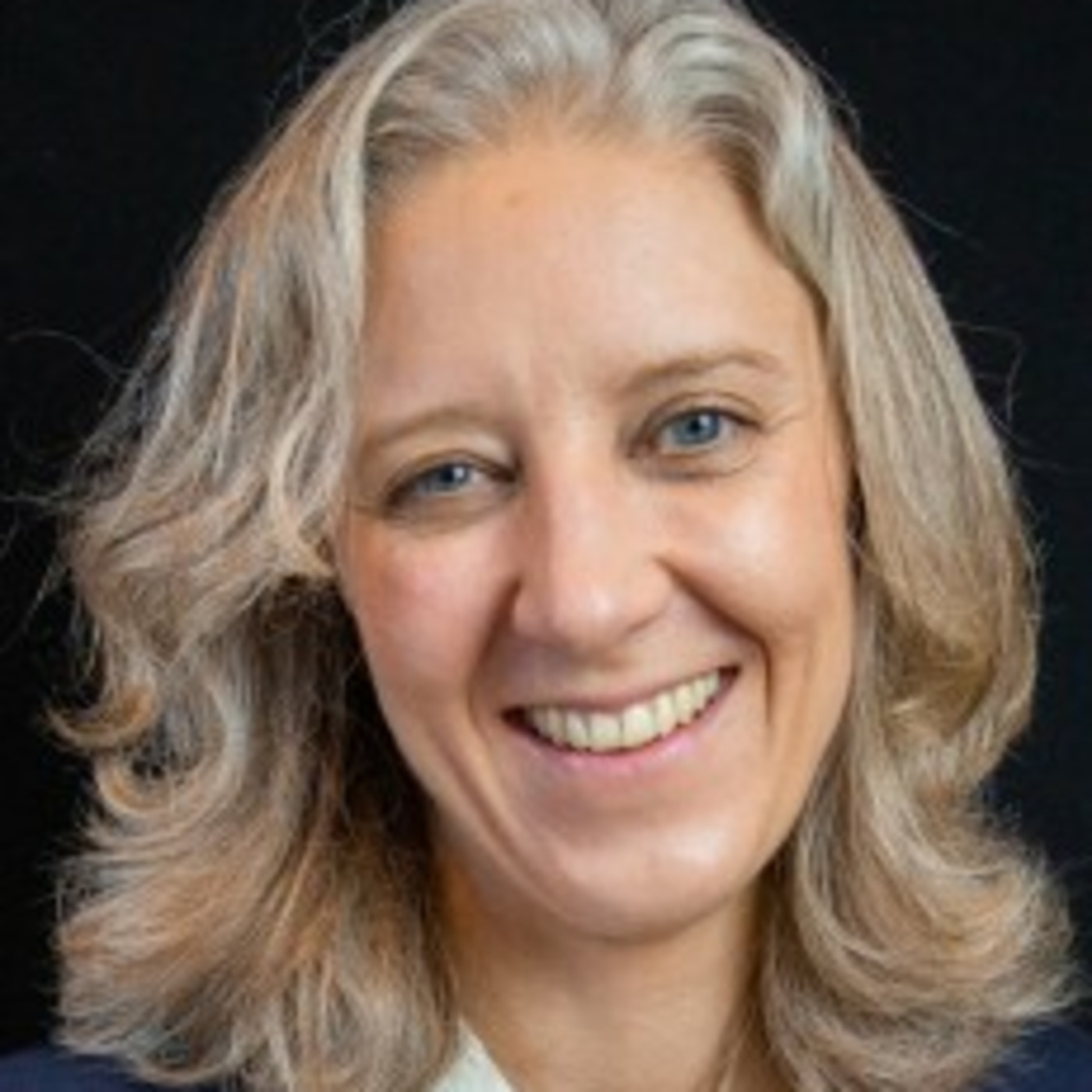
Tammy: I’m Aoifinn Devitt, and welcome to the 50 Faces Podcast. A podcast committed to revealing the richness and diversity of the world of investment and beyond by focusing on its people and their stories. I’m joined today by Tammy Parlor, who’s the co-founder of Women’s Sports Trust. She works with leaders from across sports, media, and business to understand how to practically raise visibility, increase impact, and create a stronger women’s sport ecosystem, and was awarded an MBE in 2019 for services to gender equality in sport. She’s a master in the Korean martial art of Hapkido, having practiced for over 40 years, and currently runs a club in central London. She loves learning and is a club rep on the FA Women’s National League board since the end of 2023. Welcome, Tammy. Thanks for joining me today.
Aoifinn Devitt: Oh, it’s lovely to be here. Thank you.
Tammy: Well, let’s start with a little bit about your background. Can you tell us about your journey into sports and now the work you do as an advocate for women in sport? How did it start and did it take any unusual turns along the way?
Aoifinn Devitt: Gosh, I think life is unusual sometimes. I think beginnings of something can sometimes be quite subtle. So it wasn’t about ever really about creating an organization or creating transformational change of a system. It was just life. I grew up in America. We moved there because of my dad’s work. There’s a phrase that I’ve heard called third culture kids, and I really think that applies to me. These are people people who are raised in a culture other than their parents or their country of nationality during a significant part of their child development years. And for me, that was age 11 to 22. And one of the challenges of being a third culture individual is sometimes a feeling of being other or not belonging. But it also means that you’re aware of other perspectives and may look at things slightly differently. And these factors can play a big part into identity and self-esteem when growing up. So I don’t know where it came from, but age sort of 12, 13, I suddenly decided that I wanted to do a martial art. And it so happened that there was a Korean grandmaster who was about a 20-minute drive from the, the suburb of Chicago where I was growing up. And I started there and I never stopped. I found my identity there. I found I grew in self-esteem doing this martial art, and it became a massive part of my life. I left America unexpectedly. I had immigration problems in ’93, and by that time, Hapkido was just— as I say, it was part of my identity. It was a big part of my life, and the only way really to continue it and to continue being a student of this, um, amazing grandmaster was if I started to teach. And by that time I had been teaching classes at his studio. I was black belt multiple times by that time as well. So I started a club and I just continued. And come— I think it was around about 2004, I— for a long time I had felt that I want to be a master of the art. I wanted to do this full-time. I just— it was me.. And I, I thought, if I don’t do this full-time, I’m gonna get to an older age and I’m gonna regret it. So I took the plunge and started full-time running my martial arts academy. And I you was, know, incredibly successful. I still run that academy, not on a, a full-time basis anymore. Being a sportswoman, a coach, was my identity. But when London 2012 hit, the Olympics, I came to London, sport took on a totally different, an additional purpose to me. And that’s where the sort of foundations of the charity that I run, the Women’s Sport Trust, started to develop.
Tammy: That’s fascinating. Well, I want to dive in quite a bit to martial arts and what it does to a personality and how it infiltrates the rest of one’s life. But you mentioned you made the decision to go full-time But did you have other interests and other professional pursuits before you made that decision?
Aoifinn Devitt: Yeah, so my background is learning development, which I suppose that the constant thread in my life, you can look at my career and is, it it’s kind of a bit, some maybe a bit higgledy-piggledy, for instance, but I think the constant thread is that learning and that desire to unlock potential. So first in my learning development role, I spent, gosh, almost a decade with The Prince’s Trust, which was all about young people and unlocking potential. Then as martial arts master, now as Chief Exec of the Women’s Sport Trust. So this has been— that whole learning has been a constant sort of side to me. I mean, when I was a kid, I wanted to be a computer programmer, an accountant, or a teacher. And I think actually all of those bits are actually in what I do. I’m, I’d say, a little bit of a jack of all trades. I’m a bit of a geek, but this theme that runs through is just all about unlocking potential in the individual, and, and now in my role with Women’s Sport Trust, in a system.
Tammy: Well, let’s go back to that now, the unlocking of potential. So I also know intimately the suburbs of Chicago and finding that studio to find hapkido. What I suppose drew you to martial arts and how did it form you?
Aoifinn Devitt: Gosh, I don’t know what drew me. I mean, I often get asked this question. I have no idea. All I remember is I woke up and I was saying to my parents, I want to start karate. I hadn’t heard of hapkido before, so I, I honestly don’t know where this came from. But what I found within the studio was not just the physical pursuit, but also its martial arts, particularly the way where I was learning with a Korean grandmaster, was very much about mind and body. So he is the son of a Buddhist monk, and very much, as well as the physical side, very much lectured on Taoist philosophy, Buddhist philosophy, etc. So I was quite an unusual kid. So from, well, once I began to be able to drive by myself, which is in the US at 16, I would be at his daybreak meditation classes that started at 5 o’clock in the morning. I mean, that’s unusual for a 16-year-old, but there was something that— it really spoke to me on every level. And what I love about it now, it continues to challenge me. It’s a martial art that has many different aspects to it, and so there’s always something that you’re bad at, there’s always something that you improve. And intellectually, it keeps me interested. It’s, it’s all about how a body moves, how a system moves, and how by just the principles of things like non-resistance, circular motion, etc. It’s about life, it’s about understanding life, and, and the club and the school is almost a petri dish for life. So it’s really touched me on so many levels. And also, if we go back to my original story about sort of moving to another country, it was— it touched me on identity. It was where I, I felt comfortable as an immigrant. It was somewhere where I was accepted. I’m an introvert, so it was a place where I could quite happily just sit there and not talk, but people would still like me. So yeah, funny old thing.
Tammy: And I suppose when you think of martial arts, there’s some initial things we think about in terms of, say, discipline, respect for oneself, for the self as well as for the master. I suppose goals, resilience, Any of these things that you think are particularly important today for young women and for the work world we’re in today?
Aoifinn Devitt: Yeah, I think martial arts are really interesting. As I say, the petri dish, the idea of discipline through the Buddhist and Taoist philosophy, etc., the importance of self-awareness and introspection, the, the importance of mastering oneself, letting go of attachment to external conditions, whatever, whatever you want to call it, and, and the Beauty with martial arts as well is this grading system, whether these goals— you go for another belt, etc. So there’s that motivation is almost sort of built into it. And the other thing, particularly in the traditional martial arts, is there’s an expectation as you move towards black belt, and definitely as black belt, that you start to become a leader as well. The simple things, but they’re massive. Like, for instance, whenever anybody comes to the club to watch a class, to, to see what it’s about, Everybody will go up and introduce themselves and please welcome, et cetera. So there’s a real culture about helping others and being interested in other people’s improvements, which is a wonderful, wonderful thing to develop.
Tammy: It’s so interesting. It’s that whole lift as we climb philosophy that a lot of women on this podcast have demonstrated in their work life and basically kind of climbing the ladder with one hand stretched behind you. Is the image I have in mind. And then in your own competitive sport journey, tell us a little bit about that, maybe some of the high points and low points that you experienced competing at the level you did.
Aoifinn Devitt: Yes, well, my martial arts— I was going to say unique, not necessarily unique, there are others as well— but it doesn’t actually have competition in it. The competition is— it’s, it’s a martial art of self-defense, so it’s about constantly improving, but the competition is seen as yourself and not somebody else. But that definitely been highs and lows, and there were many days that I didn’t want to go, many, but I never gave myself a choice. It’s a funny old thing. I just, this is what I did. So even on those days where you don’t feel like it, etc., that is, you just continue to do. And also through that whole belt system, as a black belt or as, as a master, for me it’s sort of, and I noticed this when people get different color belts as well, they start to inhabit that level. So as you get your black belt, a black belt does certain things, and it was the same with me, you know. I might lack confidence in leading a class, but a black belt does lead class, so I’m just going to have to do it. So those kind of things. When you talk about sort of low points and things, a big struggle was when I had to leave America and had to leave my grandmaster, and it was a case of For me, I thought that was the end. Well, kind of. I also knew that it couldn’t be. Again, this idea of I didn’t ever give myself choice. I was always going to do something. I just had to figure out how. So that, I suppose, the positive side, because it’s driving you forward. But also there’s a negative side to some of that, if I’m totally honest. I was a driven perfectionist, very self-critical of myself. I suffered from anorexia and bulimia between the ages of 19 to, I think, around about 24. So that sort of drive to do your best is an amazing thing, but it also, it can have a negative side to it as well. It’s the joy of learning and striving and teaching, and also the loneliness of, I suppose, when you’re in that leadership position as well, there’s a loneliness that sometimes can come in. So a real mishmash, but I think that’s life as well. I think that’s sort of how life kind of unfolds.
Tammy: And the rough with the smooth, the lows and the highs. And it’s so interesting. So you kind of touched on it a little, but I would imagine there are some mental tricks that you need to stay the course there because, I mean, it’s particularly martial arts is a resilience almost embodied in the practice. So how did you have mental tricks that you use to— it doesn’t seem like you had much motivation issue in terms of going to practice, but in terms of moving on, progressing, sticking at it, which I think for especially for teens, for women in particular. I see this through my own children. There’s a big fall away of women from sports into their high school years and beyond.
Aoifinn Devitt: Absolutely. There’s a big drop-off then. And I’ve been doing my martial arts now consistently for 40 years, which I recognize is unusual. There’s so many points where you can decide not to, and I didn’t. I just kept doing it. It goes back to the one thing what I said before, that idea of for a long time I, I didn’t realize I had choice. I thought that if I made a decision, well, then that was my decision. So I had had to, I to stick at it. So I didn’t realize that. I mean, I know it must sound absolutely bonkers, but that was kind of the approach that I took. I’ve decided, so I would. Later in life, I know I have choice now. I do know I, I could, I could stop it, but I recognize how good it is for me. It’s, it’s not just about the physical practice. It enables me to create good both mental and physical practice. And if we want to be healthy in life, we do need to keep practicing these things. So understanding the benefits, I suppose.
Tammy: I’d love to talk then about the work you’re doing to build a women’s sports ecosystem, and you’ve been recognized for your contribution and services to gender equality. Tell us about the challenges there. And I suppose, what does that look like? And I just harken back to your US background as well, because there is, of course, Title IX there and I funding, suppose, mandates around women’s sport. We also hear a little bit about the increased attention to, say, women’s basketball, women’s tennis, although we’re not there yet with all the sports. Where are we on the spectrum, maybe, of where we could be? And what is Women’s Sports Trust aiming to do about that?
Aoifinn Devitt: Yes, when we started, when we founded the Women’s Sports Trust in 2012, we had this phrase. It was my co-founder Jo that actually coined the phrase, that we wanted to move women’s sport from worthy to irresistible. And really, over the past decade, that has been our journey and our goal. And you look at women’s sport now, and it is in, oh, such an incredible space if you compare how we were 10 years ago, 20 years ago, etc. So we— the charity focuses on the visibility, commercial viability of women’s sport, and also role models. So role models, the media landscape, and the funding landscape as well. What we’ve done over the past decade has really changed as the industry has grown as well. At the start, it was around bringing the ecosystem together. We recognized that the system was in silos. People were pointing fingers, blaming each other. You know, the media isn’t doing this, or brands aren’t doing whatever, but no one’s actually talking together. The other thing was that a lot of the focus on women’s sport was all around grassroots and participation. Now, that’s incredibly important, But what about the elite side? What about leadership? What about commerciality? These parts of the, I suppose, flywheel of the women’s sport industry were in atrophy, or weren’t really being— it wasn’t a space where women’s sport occupied. So the charity, that was our goal, to focus on those areas through elite athlete role models, media, looking at media coverage and, and then the commercial landscape as well. We started by bringing the ecosystem together through awards campaigns, et cetera. Once they started to coalesce, then we were recognizing that the platform for elite athletes was growing, but they didn’t necessarily know how to take full advantage of that. So we developed a program called Unlocked, which was all about giving them a place to understand their voice. Get them heard by senior decision makers, etc. Most recently, we are focusing on data and insight. We did some research, I think it was 2021, that really pointed to the lack of data within the industry. So we took it on board to start bringing this data together, broadcast data, visibility data, and using that as a way to bring together the broadcasters at BBC Channel 4, ITV, DAZN, Sky Sports, whoever, and then the rights holders, social platforms, etc. Everybody, all the decision makers involved in visibility and have those behind closed doors conversations around what’s, what are the blockers, what are the opportunities, and start to sort of shift mindsets. We also started pushing this data out into the ether, and what that’s done is started to change the narrative in that area as well. It’s given the system confidence. And encourage them to take advantage of the opportunity that was being missed. Now we’re also working in the commercial space because, um, there’s still a lot of work to be done. We’ve come an extraordinary journey, women’s sport, but still— there’s we still need more investment, we still need visibility in more prominent spots, etc. As an organization, success for me, for us, is about seeing women’s sport valued, seeing that the industry being inclusive of society, and also seeing women’s sport as leading society positively.
Tammy: And how about the visibility point? Because obviously we are on a journey here to build awareness, get more visibility. How important is it when you have maybe a— the likes of Caitlin Clark in the or, US, you know, Serena Williams, when you have these outstanding performers to move the needle that way, it’s so important.
Aoifinn Devitt: Visibility creates engagement. If you haven’t got a platform, if people can’t see you, they don’t engage. So having that platform in prominent spots, and also these amazing role models— women’s athletes are fascinating, often because they’ve had to get to that point through so many hardships, etc., because of the differences in support for women’s women’s sport sport versus men’s sport, et cetera. So having these role models such as Caitlin Clark sort of come to the fore is really making a difference.
Tammy: And I’d love to move now to speak on another aspect of sport, applied sports psychology, which you’re studying. And psychology, of course, is not only infiltrating the world of sports, but also the world of investing and pretty much every world. But what is it about that What is applied sports psychology anyway? What is the definition and how is it gaining more traction across all sports?
Aoifinn Devitt: Well, I’ve long been interested in psychology, how understanding how, how the mind works and how to again unlock potential in that way. So of course the applied sports psychology course was something. So a decade or so ago, I did decided to do a master’s degree in strength and conditioning. Which really pushed me to the edge. It was a fantastic program, all to become a better coach, a better martial arts master, that I would understand more. After completing that, I still had the bug and I loved learning. I wanted to do more, and I decided to start another master’s degree, the Applied Sports Psychology. I didn’t finish that one. I completed the first year. The second year was all about doing another dissertation and things, and I thought, I’ve just done a dissertation, I I can’t, can’t put myself through another one. So decided to stop that. That said, as a layman, I am incredibly interested in the area, and it’s all about motivation and confidence and dealing with stress and anxiety and those psychological techniques. And it’s essential in sport. It’s all about wellbeing in sport and improving performance. And with the Olympics coming up, I’m sure it’s a, a key part of every athlete’s program to be the best.
Tammy: And I know we’ve seen a lot more attention on mental health as well as also performance in sports through menstruation, which is a problem unique, I suppose, to female athletes. So I think getting more attention of the nuances of women’s sport is also a sign of progress.
Aoifinn Devitt: Hmm, definitely.
Tammy: Moving to some reflections of your own now. So were there any setbacks or challenges across the course of either your practice of sports, your work within sport, or just in life in general that you think you learned lessons from that you can share?
Aoifinn Devitt: Oh my I, gosh, I, I don’t know whether I’ve got a, a set of top 10 lessons or anything, but I can tell you there’s been loads of setbacks. So decided to— after being inspired by London 2012 and the— hadn’t really seen female athletes and, and women’s sport before, knew had to do something, so decided to set up a charity having never done that before, but thought, you know, I’m not stupid, other people have done it, I’m sure I can figure it out, I’m sure that— I’m sure there’s a YouTube video on that somewhere. So it’s been a massive learning curve, from getting charity status to building boards to networking within and understanding an industry that I wasn’t directly involved with, to leading an organization. And I’d say I don’t think the podcast is long enough to list all the challenges and mistakes I’ve made along the way, but thankfully motivated by constant learning.
Tammy: Yeah, so you mentioned working with a grandmaster in hapkido, and I found when I interview anyone who’s played sports at a high level that there is often a massive influence of a coach in terms of the life lessons, just the learnings that come from them, whether it be a grandmaster or other teachers or anyone else. Was there any particular mentor along your journey?
Aoifinn Devitt: Yes, definitely. I started with him when I was 12, 13, so he you became, know, almost like a, a second father. He was very influential. And when I started my club here in the UK, well, I remember writing to him and said, I want to stay your student, I don’t know what to do. And he called me and the conversation went, you set up club, I visit. That was it, that was the conversation. So, okay, okay, I’m setting up a club now. And since that time, 2 to 3 times a year he would come over and grade my students, etc., for many, many years. And that is— that’s huge, especially when you’ve had immigration problems and you’ve been brought back to the UK by yourself. That was a massive, massive influence on my life. We’re setting up the WST. I mean, there’s an industry full of trailblazers, too many to name. That have taught me so much about the industry and so much about how we— and what we need to make change in. But perhaps unusual, but probably a massive influence as well, is my ex-wife, who I set up the Women’s Sport Trust with. She’s a leadership— she runs a leadership consultancy in diversity and inclusion, and, and still an important person in my life. And she has a way of seeing into people and pulling out their best qualities, which has been massive to be able to be seen and the good qualities be seen. So that, that’s sort of huge as well. But I’m motivated less by people and more by vision. If I see purpose in something, then I can see how it can unlock potential.
Tammy: I love that this focus, this core focus on unlocking potential. And I suppose just as a, as a final question, it’s maybe it’s relating to that purpose, But any key creed or motto or purpose statement, word of advice?
Aoifinn Devitt: Yeah, I want to do Nike’s “Just do it,” probably, as most.
Tammy: Well, I think we will leave it in the quiet wisdom of your master, Iviszett. I think that that is, is enough in terms of the vote of confidence and the absolute trust in you and your enterprise. So thank you so much, Tammy, for the service you are continuing to provide to women’s sports to raise visibility and for continuing to rise to the tremendous challenge we have. But I think it’s, it’s so wonderful to have a role model of your stature flying the flag for women in sports and moving it to the next level. So thank you for coming here and sharing your insights with us.
Aoifinn Devitt: Oh, thank you for having me.
Tammy: I’m Aoifinn Devitt. Thank you for listening to the 50 Faces podcast. If you liked what you heard and would like to tune in to hear more inspiring personal journeys, please subscribe on Apple Podcasts, wherever you get your podcasts. You can find all of our content on the 50 Faces Hub, where you will find a library of role models, resources, and other solutions to enhance your career. This podcast is for informational purposes only and should not be construed as investment advice, and all views are personal and should not be attributed to the organizations and affiliations of the host or any guest.
Aoifinn Devitt: So that sort of drive to do your best is an amazing thing, but it also, it can have a negative side to it as well.
Tammy: I’m Aoifinn Devitt, and welcome to the 50 Faces Podcast. A podcast committed to revealing the richness and diversity of the world of investment and beyond by focusing on its people and their stories. I’m joined today by Tammy Parlor, who’s the co-founder of Women’s Sports Trust. She works with leaders from across sports, media, and business to understand how to practically raise visibility, increase impact, and create a stronger women’s sport ecosystem, and was awarded an MBE in 2019 for services to gender equality in sport. She’s a master in the Korean martial art of Hapkido, having practiced for over 40 years, and currently runs a club in central London. She loves learning and is a club rep on the FA Women’s National League board since the end of 2023. Welcome, Tammy. Thanks for joining me today.
Aoifinn Devitt: Oh, it’s lovely to be here. Thank you.
Tammy: Well, let’s start with a little bit about your background. Can you tell us about your journey into sports and now the work you do as an advocate for women in sport? How did it start and did it take any unusual turns along the way?
Aoifinn Devitt: Gosh, I think life is unusual sometimes. I think beginnings of something can sometimes be quite subtle. So it wasn’t about ever really about creating an organization or creating transformational change of a system. It was just life. I grew up in America. We moved there because of my dad’s work. There’s a phrase that I’ve heard called third culture kids, and I really think that applies to me. These are people people who are raised in a culture other than their parents or their country of nationality during a significant part of their child development years. And for me, that was age 11 to 22. And one of the challenges of being a third culture individual is sometimes a feeling of being other or not belonging. But it also means that you’re aware of other perspectives and may look at things slightly differently. And these factors can play a big part into identity and self-esteem when growing up. So I don’t know where it came from, but age sort of 12, 13, I suddenly decided that I wanted to do a martial art. And it so happened that there was a Korean grandmaster who was about a 20-minute drive from the, the suburb of Chicago where I was growing up. And I started there and I never stopped. I found my identity there. I found I grew in self-esteem doing this martial art, and it became a massive part of my life. I left America unexpectedly. I had immigration problems in ’93, and by that time, Hapkido was just— as I say, it was part of my identity. It was a big part of my life, and the only way really to continue it and to continue being a student of this, um, amazing grandmaster was if I started to teach. And by that time I had been teaching classes at his studio. I was black belt multiple times by that time as well. So I started a club and I just continued. And come— I think it was around about 2004, I— for a long time I had felt that I want to be a master of the art. I wanted to do this full-time. I just— it was me.. And I, I thought, if I don’t do this full-time, I’m gonna get to an older age and I’m gonna regret it. So I took the plunge and started full-time running my martial arts academy. And I you was, know, incredibly successful. I still run that academy, not on a, a full-time basis anymore. Being a sportswoman, a coach, was my identity. But when London 2012 hit, the Olympics, I came to London, sport took on a totally different, an additional purpose to me. And that’s where the sort of foundations of the charity that I run, the Women’s Sport Trust, started to develop.
Tammy: That’s fascinating. Well, I want to dive in quite a bit to martial arts and what it does to a personality and how it infiltrates the rest of one’s life. But you mentioned you made the decision to go full-time But did you have other interests and other professional pursuits before you made that decision?
Aoifinn Devitt: Yeah, so my background is learning development, which I suppose that the constant thread in my life, you can look at my career and is, it it’s kind of a bit, some maybe a bit higgledy-piggledy, for instance, but I think the constant thread is that learning and that desire to unlock potential. So first in my learning development role, I spent, gosh, almost a decade with The Prince’s Trust, which was all about young people and unlocking potential. Then as martial arts master, now as Chief Exec of the Women’s Sport Trust. So this has been— that whole learning has been a constant sort of side to me. I mean, when I was a kid, I wanted to be a computer programmer, an accountant, or a teacher. And I think actually all of those bits are actually in what I do. I’m, I’d say, a little bit of a jack of all trades. I’m a bit of a geek, but this theme that runs through is just all about unlocking potential in the individual, and, and now in my role with Women’s Sport Trust, in a system.
Tammy: Well, let’s go back to that now, the unlocking of potential. So I also know intimately the suburbs of Chicago and finding that studio to find hapkido. What I suppose drew you to martial arts and how did it form you?
Aoifinn Devitt: Gosh, I don’t know what drew me. I mean, I often get asked this question. I have no idea. All I remember is I woke up and I was saying to my parents, I want to start karate. I hadn’t heard of hapkido before, so I, I honestly don’t know where this came from. But what I found within the studio was not just the physical pursuit, but also its martial arts, particularly the way where I was learning with a Korean grandmaster, was very much about mind and body. So he is the son of a Buddhist monk, and very much, as well as the physical side, very much lectured on Taoist philosophy, Buddhist philosophy, etc. So I was quite an unusual kid. So from, well, once I began to be able to drive by myself, which is in the US at 16, I would be at his daybreak meditation classes that started at 5 o’clock in the morning. I mean, that’s unusual for a 16-year-old, but there was something that— it really spoke to me on every level. And what I love about it now, it continues to challenge me. It’s a martial art that has many different aspects to it, and so there’s always something that you’re bad at, there’s always something that you improve. And intellectually, it keeps me interested. It’s, it’s all about how a body moves, how a system moves, and how by just the principles of things like non-resistance, circular motion, etc. It’s about life, it’s about understanding life, and, and the club and the school is almost a petri dish for life. So it’s really touched me on so many levels. And also, if we go back to my original story about sort of moving to another country, it was— it touched me on identity. It was where I, I felt comfortable as an immigrant. It was somewhere where I was accepted. I’m an introvert, so it was a place where I could quite happily just sit there and not talk, but people would still like me. So yeah, funny old thing.
Tammy: And I suppose when you think of martial arts, there’s some initial things we think about in terms of, say, discipline, respect for oneself, for the self as well as for the master. I suppose goals, resilience, Any of these things that you think are particularly important today for young women and for the work world we’re in today?
Aoifinn Devitt: Yeah, I think martial arts are really interesting. As I say, the petri dish, the idea of discipline through the Buddhist and Taoist philosophy, etc., the importance of self-awareness and introspection, the, the importance of mastering oneself, letting go of attachment to external conditions, whatever, whatever you want to call it, and, and the Beauty with martial arts as well is this grading system, whether these goals— you go for another belt, etc. So there’s that motivation is almost sort of built into it. And the other thing, particularly in the traditional martial arts, is there’s an expectation as you move towards black belt, and definitely as black belt, that you start to become a leader as well. The simple things, but they’re massive. Like, for instance, whenever anybody comes to the club to watch a class, to, to see what it’s about, Everybody will go up and introduce themselves and please welcome, et cetera. So there’s a real culture about helping others and being interested in other people’s improvements, which is a wonderful, wonderful thing to develop.
Tammy: It’s so interesting. It’s that whole lift as we climb philosophy that a lot of women on this podcast have demonstrated in their work life and basically kind of climbing the ladder with one hand stretched behind you. Is the image I have in mind. And then in your own competitive sport journey, tell us a little bit about that, maybe some of the high points and low points that you experienced competing at the level you did.
Aoifinn Devitt: Yes, well, my martial arts— I was going to say unique, not necessarily unique, there are others as well— but it doesn’t actually have competition in it. The competition is— it’s, it’s a martial art of self-defense, so it’s about constantly improving, but the competition is seen as yourself and not somebody else. But that definitely been highs and lows, and there were many days that I didn’t want to go, many, but I never gave myself a choice. It’s a funny old thing. I just, this is what I did. So even on those days where you don’t feel like it, etc., that is, you just continue to do. And also through that whole belt system, as a black belt or as, as a master, for me it’s sort of, and I noticed this when people get different color belts as well, they start to inhabit that level. So as you get your black belt, a black belt does certain things, and it was the same with me, you know. I might lack confidence in leading a class, but a black belt does lead class, so I’m just going to have to do it. So those kind of things. When you talk about sort of low points and things, a big struggle was when I had to leave America and had to leave my grandmaster, and it was a case of For me, I thought that was the end. Well, kind of. I also knew that it couldn’t be. Again, this idea of I didn’t ever give myself choice. I was always going to do something. I just had to figure out how. So that, I suppose, the positive side, because it’s driving you forward. But also there’s a negative side to some of that, if I’m totally honest. I was a driven perfectionist, very self-critical of myself. I suffered from anorexia and bulimia between the ages of 19 to, I think, around about 24. So that sort of drive to do your best is an amazing thing, but it also, it can have a negative side to it as well. It’s the joy of learning and striving and teaching, and also the loneliness of, I suppose, when you’re in that leadership position as well, there’s a loneliness that sometimes can come in. So a real mishmash, but I think that’s life as well. I think that’s sort of how life kind of unfolds.
Tammy: And the rough with the smooth, the lows and the highs. And it’s so interesting. So you kind of touched on it a little, but I would imagine there are some mental tricks that you need to stay the course there because, I mean, it’s particularly martial arts is a resilience almost embodied in the practice. So how did you have mental tricks that you use to— it doesn’t seem like you had much motivation issue in terms of going to practice, but in terms of moving on, progressing, sticking at it, which I think for especially for teens, for women in particular. I see this through my own children. There’s a big fall away of women from sports into their high school years and beyond.
Aoifinn Devitt: Absolutely. There’s a big drop-off then. And I’ve been doing my martial arts now consistently for 40 years, which I recognize is unusual. There’s so many points where you can decide not to, and I didn’t. I just kept doing it. It goes back to the one thing what I said before, that idea of for a long time I, I didn’t realize I had choice. I thought that if I made a decision, well, then that was my decision. So I had had to, I to stick at it. So I didn’t realize that. I mean, I know it must sound absolutely bonkers, but that was kind of the approach that I took. I’ve decided, so I would. Later in life, I know I have choice now. I do know I, I could, I could stop it, but I recognize how good it is for me. It’s, it’s not just about the physical practice. It enables me to create good both mental and physical practice. And if we want to be healthy in life, we do need to keep practicing these things. So understanding the benefits, I suppose.
Tammy: I’d love to talk then about the work you’re doing to build a women’s sports ecosystem, and you’ve been recognized for your contribution and services to gender equality. Tell us about the challenges there. And I suppose, what does that look like? And I just harken back to your US background as well, because there is, of course, Title IX there and I funding, suppose, mandates around women’s sport. We also hear a little bit about the increased attention to, say, women’s basketball, women’s tennis, although we’re not there yet with all the sports. Where are we on the spectrum, maybe, of where we could be? And what is Women’s Sports Trust aiming to do about that?
Aoifinn Devitt: Yes, when we started, when we founded the Women’s Sports Trust in 2012, we had this phrase. It was my co-founder Jo that actually coined the phrase, that we wanted to move women’s sport from worthy to irresistible. And really, over the past decade, that has been our journey and our goal. And you look at women’s sport now, and it is in, oh, such an incredible space if you compare how we were 10 years ago, 20 years ago, etc. So we— the charity focuses on the visibility, commercial viability of women’s sport, and also role models. So role models, the media landscape, and the funding landscape as well. What we’ve done over the past decade has really changed as the industry has grown as well. At the start, it was around bringing the ecosystem together. We recognized that the system was in silos. People were pointing fingers, blaming each other. You know, the media isn’t doing this, or brands aren’t doing whatever, but no one’s actually talking together. The other thing was that a lot of the focus on women’s sport was all around grassroots and participation. Now, that’s incredibly important, But what about the elite side? What about leadership? What about commerciality? These parts of the, I suppose, flywheel of the women’s sport industry were in atrophy, or weren’t really being— it wasn’t a space where women’s sport occupied. So the charity, that was our goal, to focus on those areas through elite athlete role models, media, looking at media coverage and, and then the commercial landscape as well. We started by bringing the ecosystem together through awards campaigns, et cetera. Once they started to coalesce, then we were recognizing that the platform for elite athletes was growing, but they didn’t necessarily know how to take full advantage of that. So we developed a program called Unlocked, which was all about giving them a place to understand their voice. Get them heard by senior decision makers, etc. Most recently, we are focusing on data and insight. We did some research, I think it was 2021, that really pointed to the lack of data within the industry. So we took it on board to start bringing this data together, broadcast data, visibility data, and using that as a way to bring together the broadcasters at BBC Channel 4, ITV, DAZN, Sky Sports, whoever, and then the rights holders, social platforms, etc. Everybody, all the decision makers involved in visibility and have those behind closed doors conversations around what’s, what are the blockers, what are the opportunities, and start to sort of shift mindsets. We also started pushing this data out into the ether, and what that’s done is started to change the narrative in that area as well. It’s given the system confidence. And encourage them to take advantage of the opportunity that was being missed. Now we’re also working in the commercial space because, um, there’s still a lot of work to be done. We’ve come an extraordinary journey, women’s sport, but still— there’s we still need more investment, we still need visibility in more prominent spots, etc. As an organization, success for me, for us, is about seeing women’s sport valued, seeing that the industry being inclusive of society, and also seeing women’s sport as leading society positively.
Tammy: And how about the visibility point? Because obviously we are on a journey here to build awareness, get more visibility. How important is it when you have maybe a— the likes of Caitlin Clark in the or, US, you know, Serena Williams, when you have these outstanding performers to move the needle that way, it’s so important.
Aoifinn Devitt: Visibility creates engagement. If you haven’t got a platform, if people can’t see you, they don’t engage. So having that platform in prominent spots, and also these amazing role models— women’s athletes are fascinating, often because they’ve had to get to that point through so many hardships, etc., because of the differences in support for women’s women’s sport sport versus men’s sport, et cetera. So having these role models such as Caitlin Clark sort of come to the fore is really making a difference.
Tammy: And I’d love to move now to speak on another aspect of sport, applied sports psychology, which you’re studying. And psychology, of course, is not only infiltrating the world of sports, but also the world of investing and pretty much every world. But what is it about that What is applied sports psychology anyway? What is the definition and how is it gaining more traction across all sports?
Aoifinn Devitt: Well, I’ve long been interested in psychology, how understanding how, how the mind works and how to again unlock potential in that way. So of course the applied sports psychology course was something. So a decade or so ago, I did decided to do a master’s degree in strength and conditioning. Which really pushed me to the edge. It was a fantastic program, all to become a better coach, a better martial arts master, that I would understand more. After completing that, I still had the bug and I loved learning. I wanted to do more, and I decided to start another master’s degree, the Applied Sports Psychology. I didn’t finish that one. I completed the first year. The second year was all about doing another dissertation and things, and I thought, I’ve just done a dissertation, I I can’t, can’t put myself through another one. So decided to stop that. That said, as a layman, I am incredibly interested in the area, and it’s all about motivation and confidence and dealing with stress and anxiety and those psychological techniques. And it’s essential in sport. It’s all about wellbeing in sport and improving performance. And with the Olympics coming up, I’m sure it’s a, a key part of every athlete’s program to be the best.
Tammy: And I know we’ve seen a lot more attention on mental health as well as also performance in sports through menstruation, which is a problem unique, I suppose, to female athletes. So I think getting more attention of the nuances of women’s sport is also a sign of progress.
Aoifinn Devitt: Hmm, definitely.
Tammy: Moving to some reflections of your own now. So were there any setbacks or challenges across the course of either your practice of sports, your work within sport, or just in life in general that you think you learned lessons from that you can share?
Aoifinn Devitt: Oh my I, gosh, I, I don’t know whether I’ve got a, a set of top 10 lessons or anything, but I can tell you there’s been loads of setbacks. So decided to— after being inspired by London 2012 and the— hadn’t really seen female athletes and, and women’s sport before, knew had to do something, so decided to set up a charity having never done that before, but thought, you know, I’m not stupid, other people have done it, I’m sure I can figure it out, I’m sure that— I’m sure there’s a YouTube video on that somewhere. So it’s been a massive learning curve, from getting charity status to building boards to networking within and understanding an industry that I wasn’t directly involved with, to leading an organization. And I’d say I don’t think the podcast is long enough to list all the challenges and mistakes I’ve made along the way, but thankfully motivated by constant learning.
Tammy: Yeah, so you mentioned working with a grandmaster in hapkido, and I found when I interview anyone who’s played sports at a high level that there is often a massive influence of a coach in terms of the life lessons, just the learnings that come from them, whether it be a grandmaster or other teachers or anyone else. Was there any particular mentor along your journey?
Aoifinn Devitt: Yes, definitely. I started with him when I was 12, 13, so he you became, know, almost like a, a second father. He was very influential. And when I started my club here in the UK, well, I remember writing to him and said, I want to stay your student, I don’t know what to do. And he called me and the conversation went, you set up club, I visit. That was it, that was the conversation. So, okay, okay, I’m setting up a club now. And since that time, 2 to 3 times a year he would come over and grade my students, etc., for many, many years. And that is— that’s huge, especially when you’ve had immigration problems and you’ve been brought back to the UK by yourself. That was a massive, massive influence on my life. We’re setting up the WST. I mean, there’s an industry full of trailblazers, too many to name. That have taught me so much about the industry and so much about how we— and what we need to make change in. But perhaps unusual, but probably a massive influence as well, is my ex-wife, who I set up the Women’s Sport Trust with. She’s a leadership— she runs a leadership consultancy in diversity and inclusion, and, and still an important person in my life. And she has a way of seeing into people and pulling out their best qualities, which has been massive to be able to be seen and the good qualities be seen. So that, that’s sort of huge as well. But I’m motivated less by people and more by vision. If I see purpose in something, then I can see how it can unlock potential.
Tammy: I love that this focus, this core focus on unlocking potential. And I suppose just as a, as a final question, it’s maybe it’s relating to that purpose, But any key creed or motto or purpose statement, word of advice?
Aoifinn Devitt: Yeah, I want to do Nike’s “Just do it,” probably, as most.
Tammy: Well, I think we will leave it in the quiet wisdom of your master, Iviszett. I think that that is, is enough in terms of the vote of confidence and the absolute trust in you and your enterprise. So thank you so much, Tammy, for the service you are continuing to provide to women’s sports to raise visibility and for continuing to rise to the tremendous challenge we have. But I think it’s, it’s so wonderful to have a role model of your stature flying the flag for women in sports and moving it to the next level. So thank you for coming here and sharing your insights with us.
Aoifinn Devitt: Oh, thank you for having me.
Tammy: I’m Aoifinn Devitt. Thank you for listening to the 50 Faces podcast. If you liked what you heard and would like to tune in to hear more inspiring personal journeys, please subscribe on Apple Podcasts, wherever you get your podcasts. You can find all of our content on the 50 Faces Hub, where you will find a library of role models, resources, and other solutions to enhance your career. This podcast is for informational purposes only and should not be construed as investment advice, and all views are personal and should not be attributed to the organizations and affiliations of the host or any guest.